The Greatest Lethwei Fighters of All Time
Lethwei, Myanmar's bare-knuckle boxing, allows punches, kicks, knees, elbows and headbutts, which is why it is called the art of nine limbs. Under traditional rules there are no points: a fight is won by knockout or ends in a draw. This guide profiles the fighters most often named among the greatest, from Tun Tun Min, Saw Nga Man and Too Too to Canada's Dave Leduc, explains the traditional and tournament rules, and traces how the sport reached international cards.
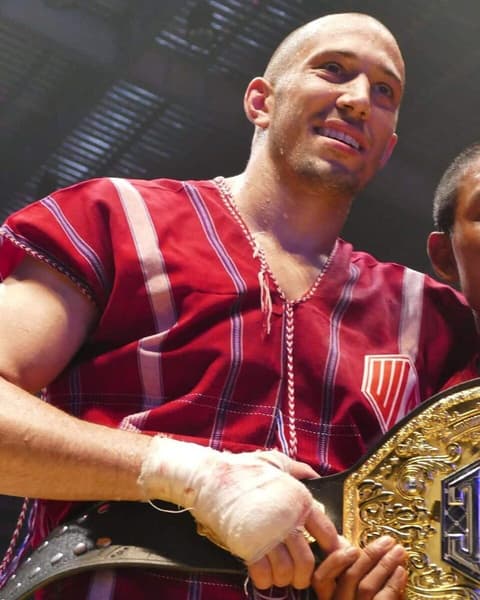
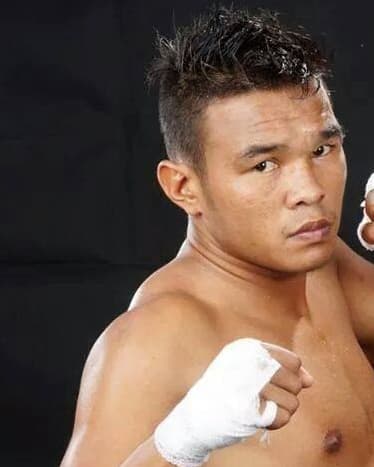
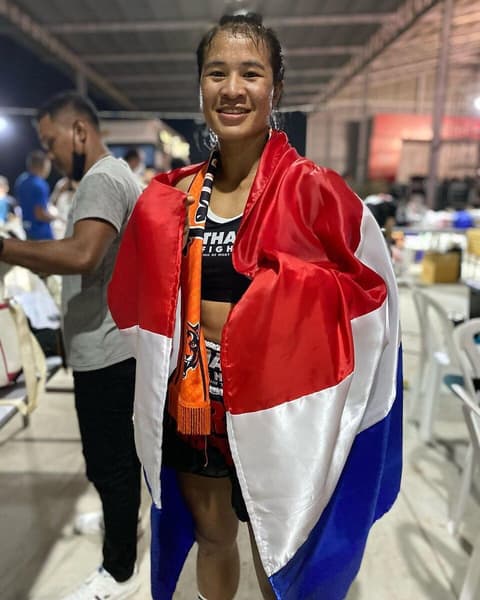
The legends


 c. 2014–2023
A short history of Lethwei
Lethwei belongs to thaing, the traditional martial arts of Myanmar, which researchers trace to the Pagan kingdom of the 12th century, and temple carvings at Bagan suggest the sport may be a thousand years old. In old matches fighters wrapped their hands in hemp or gauze, fought in sand pits rather than rings, and kept going until one was knocked out or could not continue. Champions would step into the ring and call out open challenges.
The sport was suppressed under British colonial rule and revived under General Ne Win's government, and it remains a fixture of festivals such as Thingyan. Kyar Ba Nyein, who boxed at the 1952 Olympics, helped modernize it by introducing new rules and bringing fighters from the Mon and Karen states to compete in Mandalay and Yangon. In 1996 the Myanmar Traditional Lethwei Federation created tournament rules for the Golden Belt Championship in Yangon, removing the injury time-out and adding judges so that every bout would have a winner.
Foreign fighters began arriving in July 2001, when three American professionals lost to Burmese opponents in Yangon. In 2004 Japan's Akitoshi Tamura became the first foreigner to beat a Myanmar Lethwei fighter in an official match, and in 2015 ONE Championship staged its first Lethwei bout, inside a cage in Yangon.
Canadian fighter Dave Leduc, from Gatineau, Quebec, beat champion Tun Tun Min in 2016 to become the first non-Burmese winner of the Lethwei Golden Belt, and international coverage of the sport grew after his arrival. The World Lethwei Championship held its first event in 2017, and in 2019 its seventh card was broadcast live on UFC Fight Pass. Because of the headbutts and bare knuckles, Lethwei is still illegal in most countries outside Myanmar.
- Fighters wear no gloves; hands and feet are wrapped only in tape and gauze.
- Punches, kicks, knees, elbows and headbutts are all legal, along with clinching, sweeps and throws.
- Under traditional rules only a knockout wins; if both fighters finish standing, the bout is a draw.
- Traditional rules give each fighter one two-minute injury time-out, which cannot be used in the fifth round.
- Tournament rules add three judges, who score aggression, damage, blood drawn and significant strikes.
- Championship bouts are five three-minute rounds with two-minute breaks.
Milestones
- 1996Myanmar's Lethwei federation introduces tournament rules with judges for the Golden Belt Championship
- 2001The first international Lethwei event pits three American professionals against Burmese fighters in Yangon
- 2004Japan's Akitoshi Tamura becomes the first foreigner to beat a Myanmar Lethwei fighter officially
- 2015ONE Championship stages its first Lethwei bout, inside a cage in Yangon
- 2016Canada's Dave Leduc beats Tun Tun Min, becoming the first non-Burmese Golden Belt winner
- 2017The World Lethwei Championship holds its first event, WLC 1, in Yangon
- 2017Dave Leduc and Adem Yilmaz fight the first Lethwei world title bout between two non-Burmese
- 2019WLC 7 becomes the first Lethwei event broadcast live internationally, on UFC Fight Pass
Techniques to steal
The jab is a fast, straight punch with your lead hand. It starts closest to the target and needs the least…
RangeThe cross is the straight punch with your rear hand: the right for an orthodox fighter, the left for a southpaw. The…
RangeThe hook is a bent-arm punch that travels on a short horizontal arc into the side of the jaw or the body. Its power…
RangeThe uppercut is a close-range punch that rises vertically from below the opponent's line of sight into the chin or…
RangeThe overhand is a looping rear-hand punch that arcs over the opponent's lead hand or jab and drops onto the head from…
RangeThe body hook is a hook driven into the side of the ribcage. The classic version is the lead hook to the liver, which…
RangeA combination is a planned chain of punches in which each one sets up the next: the jab blinds and measures, the…
RangeThe spinning backfist turns the body a full circle and lands the back of the fist on the side of the head. The spin…
RangeThe teep is a straight push kick with the ball of the foot to the belly, hips or thigh. Thai boxers call it the foot…
RangeThe roundhouse kick swings the leg in an arc into the opponent's side, powered by turning the standing foot and the…
RangeThe low kick is a roundhouse kick with the shin to the opponent's thigh or calf. It is hard to see, costs little…
RangeThe head kick is a roundhouse kick aimed at the neck or jaw, usually with the rear leg. It needs hip flexibility and…
Questions people ask
Records are hard to compare because unfinished traditional bouts are draws, but a few fighters stand out. Tun Tun Min has 59 wins, every one by knockout, and held the openweight Golden Belt from 2014 to 2016. Saw Nga Man made 15 defences of that belt between 2009 and 2014, Too Too was never beaten under traditional rules, and Canada's Dave Leduc held the openweight Golden Belt from 2016 to 2023.
Lethwei is fought bare-knuckle, with only tape and gauze on the hands, and it allows headbutts, which Muay Thai bans. Punches are generally favoured over kicks because they draw blood more easily. Under traditional rules there is no scoring: a bout ends in a knockout or a draw, and a hurt fighter can take a two-minute time-out to recover.
Muay Thai is known as the art of eight limbs because it uses the fists, elbows, knees and shins. Lethwei adds the head: headbutts are legal and are an important weapon, thrown forward, upward, sideways, from the clinch and even while jumping. That ninth weapon, together with bare knuckles, is why Lethwei is often described as one of the most brutal combat sports.
Only in a few places. Because of the bare knuckles and headbutts the sport is hard to sanction, and as of 2022 it was legal in Myanmar, Japan, Singapore, Slovakia, Austria, Thailand, Taiwan, the United Kingdom, New Zealand, Poland and the U.S. state of Wyoming. The World Lethwei Federation works to sanction and grow the sport outside Myanmar.
The traditional Golden Belt is the most prestigious title in Lethwei. There is one Golden Belt champion in each weight category, and the openweight champion is regarded as the strongest fighter in Myanmar, the sport's equivalent of a pound-for-pound title. It should not be confused with the annual Golden Belt Championship, a tournament for rising fighters under points rules.
More disciplines
Muay Thai and kickboxing: punches, kicks, knees, elbows and the clinch. Join now and book your first class for $20, paid online. A coach calls you within a day to answer questions.