Karate & Taekwondo: 鉤突き Kagi-zuki (“hook punch”) · Savate: Crochet (“hook”) · Muay Thai: หมัดเหวี่ยงสั้น Mat wiang san (“short swinging punch”)
Also called Lead hook, Left hook (orthodox), Rear hook, The 3 (lead) and the 4 (rear)
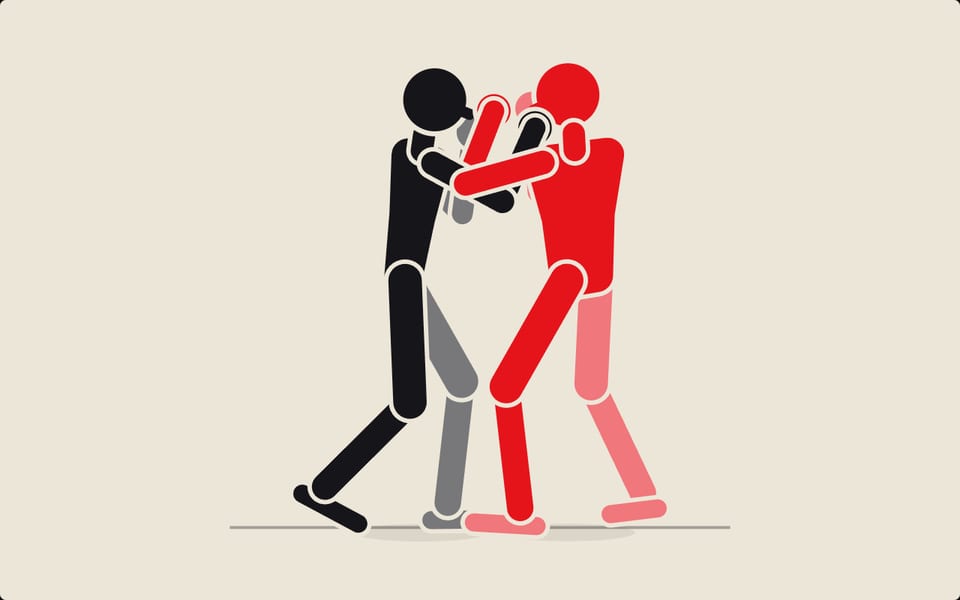
The hook is a bent-arm punch that travels on a short horizontal arc into the side of the jaw or the body. Its power comes from turning the foot, hip and shoulder together with the arm held rigid, not from swinging the arm. Thrown short and tight, the lead hook is one of the most reliable finishing punches in combat sports; the rear hook is a close-range power punch.
Satori's coaches are filming every technique, full speed and slow motion from two angles. Until it's up, the diagram shows the movement step by step.
Watch it
How to do it
Start: Mid to close range: the hook is shorter than the jab, so you are usually a step inside jab range, often right after a straight punch has shifted your weight. Rear hand on your cheek, chin down.
- 1Shift a little weight onto your lead leg; a cross thrown first does this for you.
- 2Lift the lead elbow toward shoulder height with the arm bent at about 90 degrees, without pulling the hand back first.
- 3Pivot on the ball of the lead foot, heel turning out, and turn your hips and shoulders through together.
- 4Keep fist, elbow and shoulder on one level so the arm moves as one piece with your body.
- 5Land on the side of the jaw with the big knuckles while the rear glove stays glued to your cheek.
- 6Stop the turn at the target instead of swinging past the centre line.
- 7Bring the hand straight back to guard, or turn back into a cross.
- Turn the foot, turn the hip; the hand comes along.
- Elbow up, arm locked.
- Short and tight: hit with it, don't reach with it.
- Palm-down or thumb-up? Coaches differ; land with the big knuckles either way.
- Rear hand stays on the cheek.
- Pulling the arm back before throwing. Fix: start from the guard and let the body turn supply the power.
- Opening the arm wide so the hook loops into a swing. Fix: keep the elbow bent near 90 degrees and the steps short.
- Not turning the lead foot. Fix: pivot on the ball of the foot so the hip can turn.
- Dropping the rear hand as you turn. Fix: pin the rear glove to your cheek; your own chin is open on that side.
- Landing with the inside of the glove. Fix: turn the fist so the knuckles land; slapping with the inside of the glove is a foul.
Safety: Learn the hook on pads before sparring and keep the wrist and fist aligned; a loose wrist or a wide hook that lands on the thumb side is how hands get hurt. Spar hooks light and with headgear.
When to use it
- After a straight punch has already loaded your lead side (the 1-2-3).
- Against an opponent who rushes straight in or guards only the front of the face.
- At close range, when straight punches have no room.
- To the body when the opponent lifts the elbows to protect the head.
- Jab-cross-hook: the turn of the cross loads the hook.
- Jab to the body, then hook to the head.
- Slip outside a cross, then hook.
- Roll under their hook and come up with your own.
- Cross
- Rear uppercut
- Second hook to the body (double hook)
- A straight punch down the middle beats a wide hook, because it travels the shorter path.
- Rolling under it and coming up with a hook or uppercut.
- Stepping back and countering as the puncher over-turns.
- Raise the rear glove to the temple and tuck the chin (the high guard or "telephone" block).
- Bob and weave under it, moving with the direction of the punch.
- Step or pull back out of range, then counter.
The physics
The hook is a rotation punch: your body turns like a door on its hinges and the bent arm is carried around with it. Push off the lead foot and pivot on its ball, turning the heel out, so the lead hip and shoulder swing toward the centre line while the elbow stays bent and locked and the fist rides the turn instead of swinging on its own.
Because the fist sits far from the axis of your turning body, a quick rotation of the trunk becomes a very fast fist, which is why the hook measures among the fastest punches. Landing from the side, it pushes the head sideways and also twists it on the neck, and that rotational acceleration is linked to concussion, so keep your own chin down and your rear glove at your cheek while you throw it. The catch is geometry: the curved path is longer than a straight line, so the hook takes longer to arrive and works best at close range or behind a set-up.
- Myth: the hook is a slow punch. The fist actually moves fastest in the hook, but its curved path takes longer to reach the target than a straight punch does (Piorkowski et al. 2011), so it needs a set-up rather than more arm speed.
- Myth: the hook is an arm punch. Junior boxers took more of their hook speed from the shoulder than elite boxers did, and hit with far less force (Dinu & Louis 2020).
Switch on Physics and the punch on the diagram is worked out by a physics engine: the arm, the 10 oz glove and the head have their real masses, the glove is padded and the neck gives. We tuned it to a few numbers from the studies below; everything else is the engine's own answer, next to what was measured.
| Engine | Lab | Study | ||
|---|---|---|---|---|
| punch force on the head | 4,663N | 4,405 N | +6% | Viano et al., Neurosurgery 2005 |
| head acceleration | 86g | 71 g | +21% | Viano et al., Neurosurgery 2005 |
| head rotational acceleration | 7,203rad/s² | 9,306 rad/s² | −23% | Viano et al., Neurosurgery 2005 |
| top fist speed (lead hook at a bag) | 11.4m/s | 11.95 m/s | −4% | Stanley, Thomson, Smith & Lamb, Int J Perform Anal Sport 2018 |
Tuned to: fist speed at contact 11 m/s (Viano et al., Neurosurgery 2005); first movement to contact 477 ms (Piorkowski, Lees & Barton, Sports Biomech 2011).
Masters and famous moments
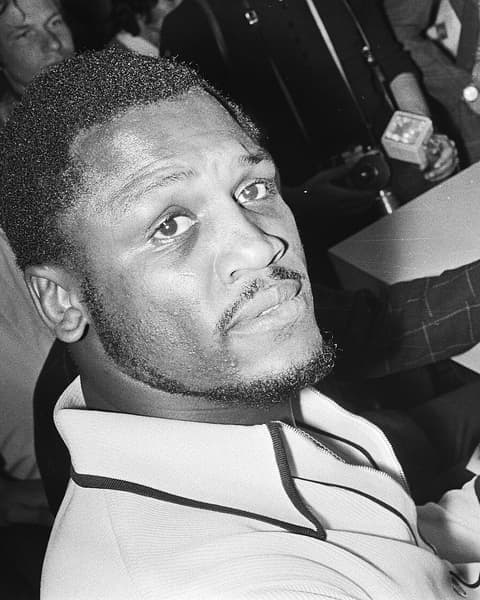
Frazier's left hook was the punch of the night: it staggered Ali in the 11th round and dropped him early in the 15th, sealing a unanimous decision and handing Ali his first professional loss.

After losing the first fight, Robinson noticed Fullmer was open to the left hook; in the rematch he knocked him out with one in the fifth round to win the title back. Critics have called it "the perfect punch".

The southpaw Pacquiao dropped Hatton with his lead right hook in the first round, then knocked him unconscious with a heavy left hook at the end of the second: lead and rear hooks in under six minutes.
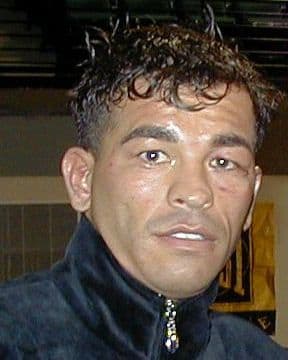
Rocked by an uppercut in the fourth and hit with more than 15 straight punches, the Montreal-raised Gatti came back in the fifth with a left hook that lifted Ruelas off the canvas: The Ring's Knockout of the Year.
Across the arts
Thrown with the lead hand (left for orthodox), pivoting on the lead foot. It is what "hook" means on its own, and the classic finishing punch.
Thrown with the rear hand at close range, powered by turning the rear foot and hips as in a cross. The elbow stays bent at about 90 degrees and the fist can be palm-down or thumb-up.
The short hook is thrown tight from close range with a sharply bent elbow: this is the knockout version. A longer hook with a straighter arm reaches further but is slower, easier to see and weaker; Jack Dempsey warned that long steps turn hooks into swings.
Karate's hook punch arcs in from the side, the fist twisting and the elbow opening out, and strikes the target at an angle. It appears in kata such as Bassai and Jion.
Savate's bent-arm hook, thrown with either hand; one of the four punches allowed in competition savate.
Mat wiang san, the "short swinging punch". Early Thai boxing used few punches; hooks, uppercuts and the rest of the Western set came in through cross-training with boxing.
History
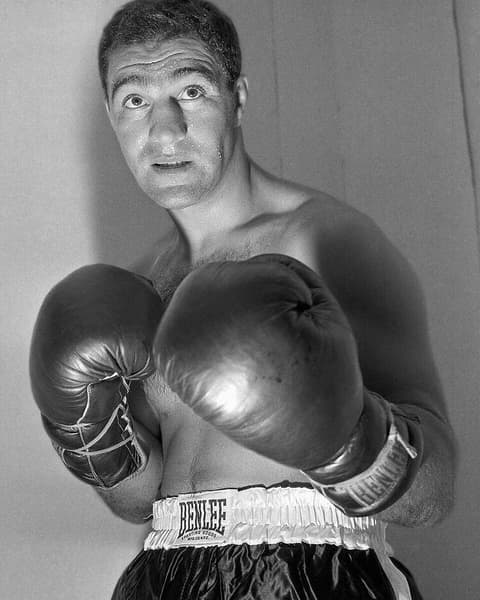
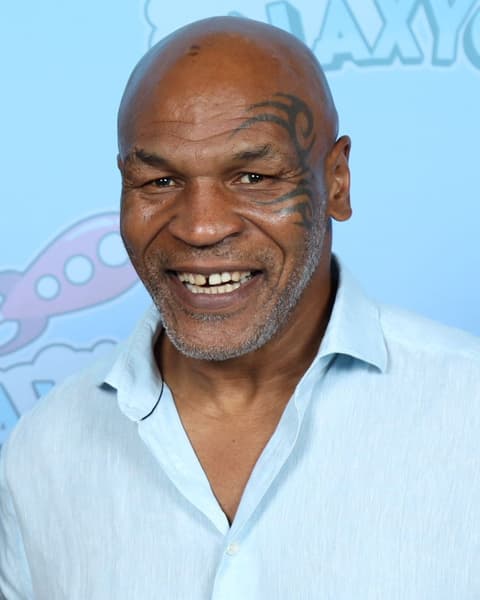
Jack Dempsey's 1950 manual split hooks into short "shovel hooks" thrown with the elbow in and "outside hooks" thrown with the elbow out, and warned that an outside hook opened too wide degenerates into a swing. Boxers known for the hook include Joe Frazier, Bob Foster, Jack Dempsey, Henry Cooper, Félix Trinidad and Mike Tyson. Frazier's left hook floored Muhammad Ali in the 15th round of their 1971 Fight of the Century, and Sugar Ray Robinson's left hook against Gene Fullmer in 1957 is remembered as "the perfect punch". In karate the hook punch is called kagi-zuki.
In the rules
Drills
Stand on a line on the floor and throw slow lead hooks, checking that the lead heel turns out and your hips finish facing across the line. Do 50 reps, then add a cross before each hook.
Three rounds on the heavy bag: jab, cross, lead hook, then move off at an angle. Every fourth rep, double the hook: body, then head.
Your partner holds a mitt at jaw height with the pad facing in. Throw lead and rear hooks on the call, then roll under their slow return hook.
Legends known for it





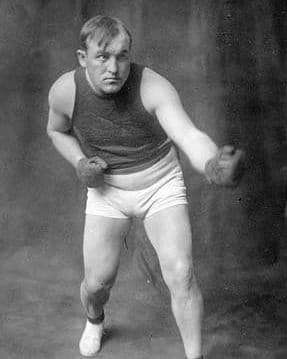

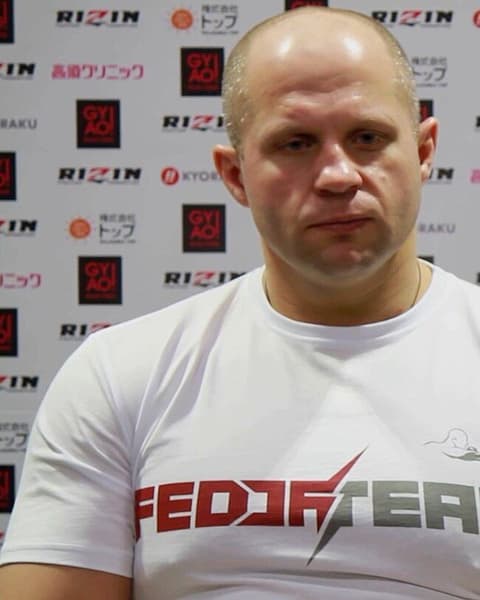







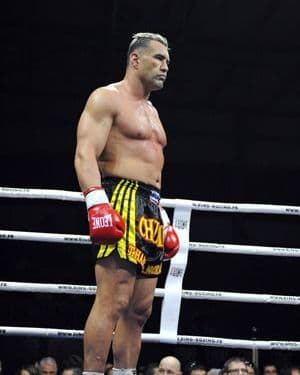

 1972–1999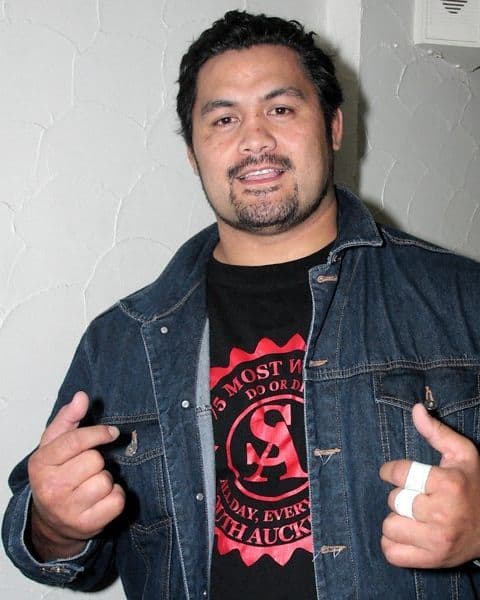

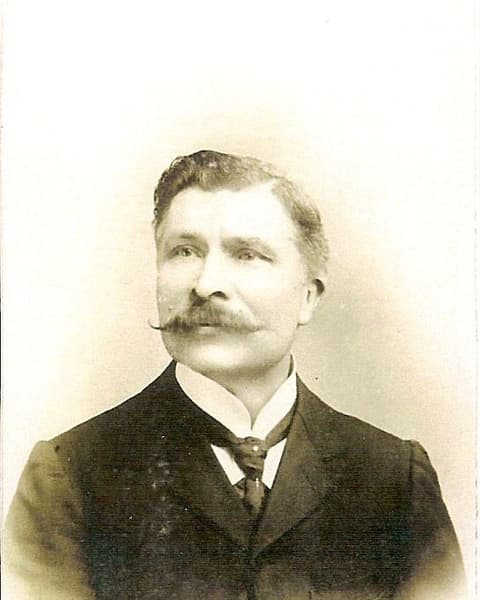
 1997–2009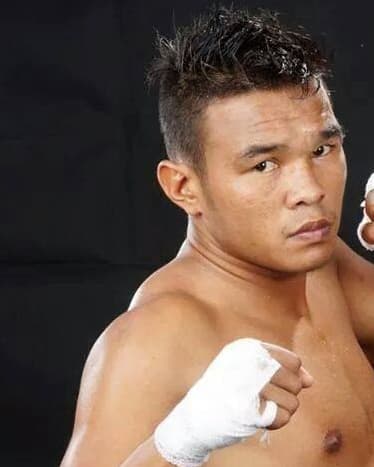

We teach it in Boxing. A coach will fix the details you can't see yourself. Join now and book your first class for $20, paid online.
Related techniques
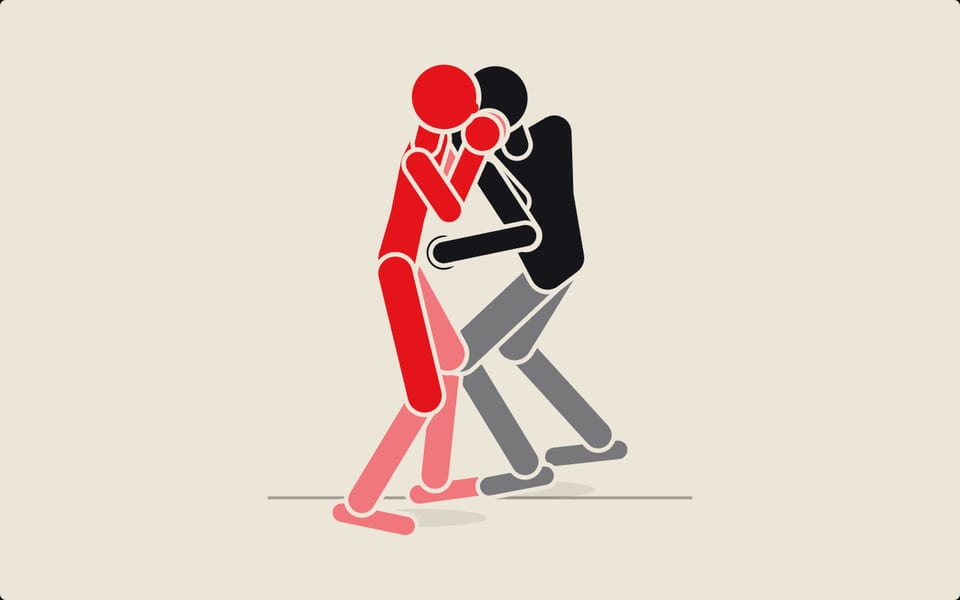
The body hook is a hook driven into the side of the ribcage. The classic version is the lead hook to the liver, which sits under the ribs on the…

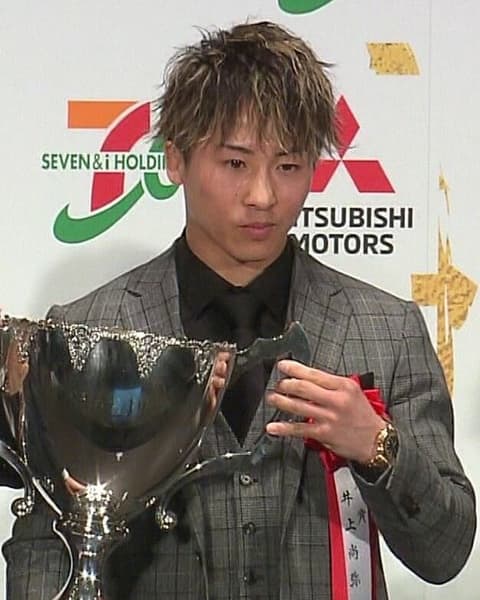
The check hook is a lead hook thrown as the opponent rushes in, combined with a pivot that takes you off their line. They run onto the punch and…

The shovel hook is a short hybrid of the hook and the uppercut: it travels forward and upward on a diagonal, with the elbow tucked and the fist…
The uppercut is a close-range punch that rises vertically from below the opponent's line of sight into the chin or the solar plexus. It is the…
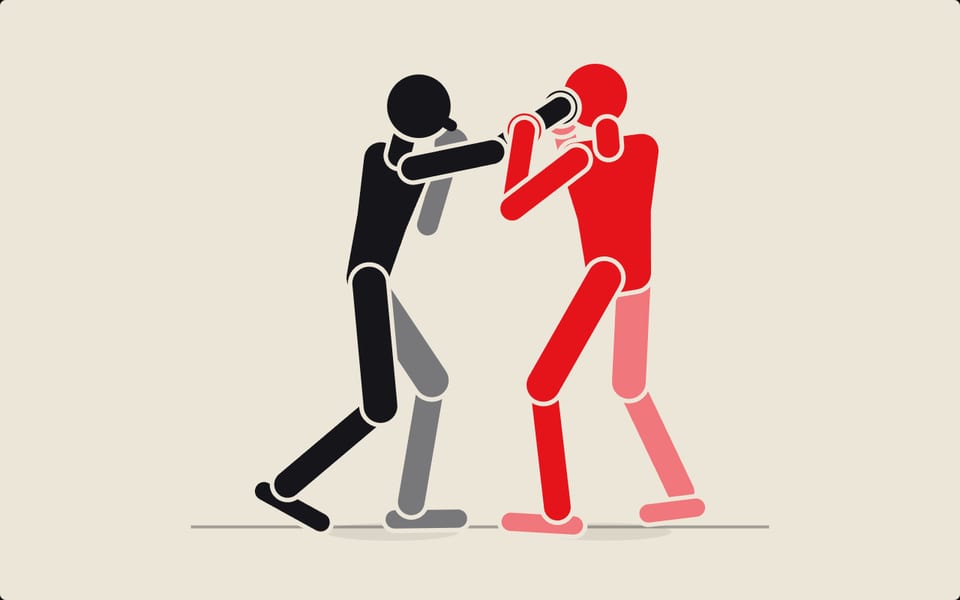
The cross is the straight punch with your rear hand: the right for an orthodox fighter, the left for a southpaw. The rear foot, hips and shoulders…
A combination is a planned chain of punches in which each one sets up the next: the jab blinds and measures, the cross turns the hips, and that…