腕挫十字固Ude-hishigi-juji-gatame · say “OO-deh hee-SHEE-gee JOO-jee gah-TAH-meh” · “cross lock, usually shortened to juji-gatame ('cross hold', after the kanji for a cross)”
Judo: 飛び十字固 Tobi-juji-gatame (“flying cross lock”) · Sambo: рычаг локтя Rychag loktya (“elbow lever”) · Grappling & BJJ: Chave de braço (“armlock (literally 'arm key')”)
Also called Juji-gatame, Ude-hishigi-juji-gatame, Cross armlock, Straight armlock, Cross lock
The armbar traps your partner's arm between your thighs, holds their wrist against your chest and lifts your hips so the elbow is forced straight, then backward, across your body. It is juji-gatame, judo's cross lock, and it is used in jiu-jitsu, sambo and MMA too. It is a lever: a slow, small lift of the hips puts a great deal of force on the elbow, so control and a quick tap matter more than strength.
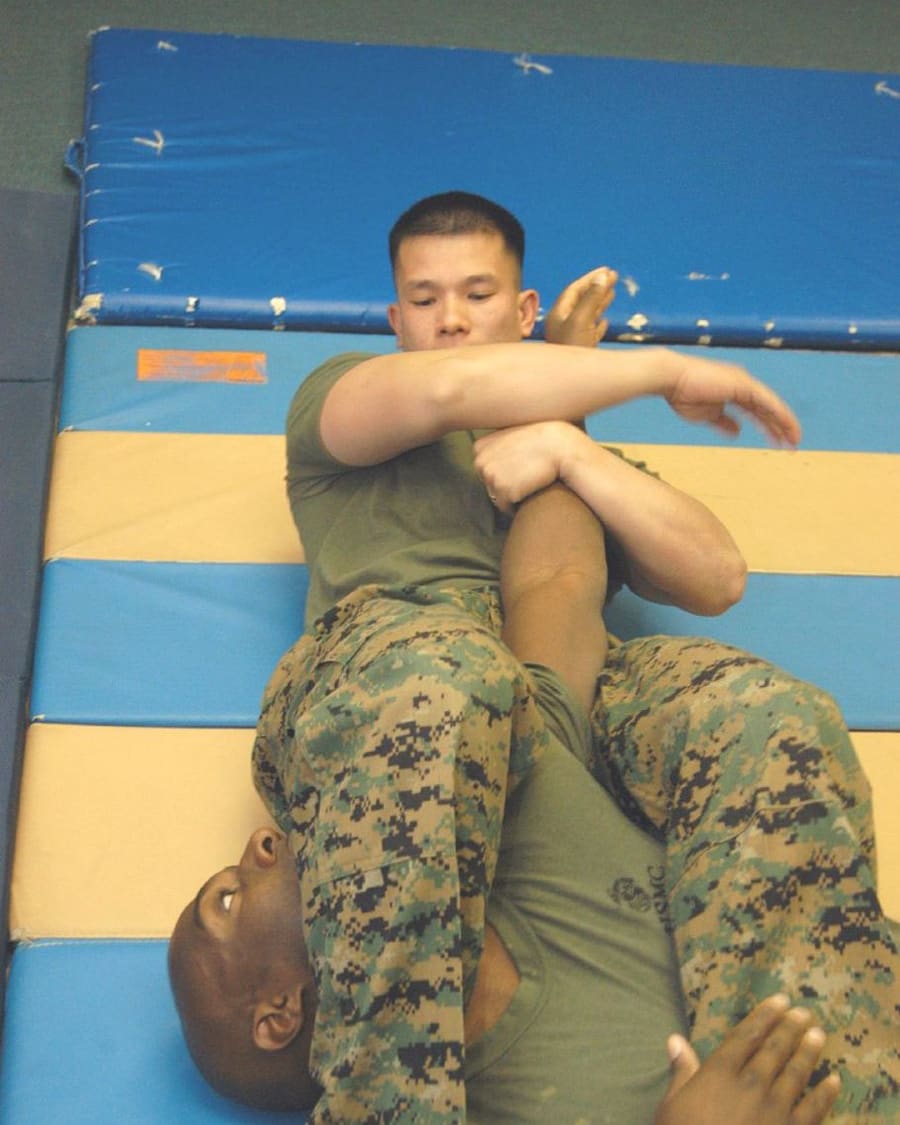
Satori's coaches are filming every technique, full speed and slow motion from two angles. Until it's up, the diagram shows the movement step by step.
How to do it
Start: You are on the ground with one of your partner's arms extended toward you, for example when they post a hand on your chest from your guard. The steps are the version from closed guard; the classic judo entries from the side and from mount are under variations.
- 1From closed guard, break your partner's posture and control the wrist of an arm that is posted on your chest, hip or the mat.
- 2Open your guard and put the foot on the same side as that arm on their hip.
- 3Pivot on your back toward that arm and scoot your hips out until you are at right angles to them with your hips close to their shoulder.
- 4Swing your other leg high over their head and set the back of your calf across their upper back or neck, not their face.
- 5Pinch your knees together so the arm is trapped between your thighs, with their elbow just past your hips.
- 6Hold their wrist against your chest with both hands and their thumb pointing up.
- 7Lift your hips slowly into the elbow while you keep the wrist pinned, until they tap, then let go at once.
- Pinch your knees.
- Hips tight in their armpit.
- Thumb to the ceiling.
- Slow lift, then stop at the tap.
- Coaches differ: most keep the thumb up; some turn the palm slightly up. Follow your coach and stay consistent.
- Leaving a gap between your hips and their shoulder, so the arm slips out. Fix: scoot until your hips are in their armpit.
- Letting your knees open, which lets them stand up and posture. Fix: pinch your knees and keep your heels on their back.
- Cranking with a jerk. Fix: lift slowly and stop the moment they tap.
- Holding the wrist with one hand, so they pull it free. Fix: pin the wrist to your chest with both hands.
- Laying your calf across their face. Fix: place it across the upper back or neck.
Safety: An armbar can damage the elbow the moment it straightens. Apply it slowly, never jerk or bounce, and let go at the first tap. Tap early yourself when you are caught; do not try to tough it out. Practise with a coach, and keep flying and other jumping entries for slow, supervised reps on crash mats.
When to use it
- When your partner posts a hand on your chest, hip or belt from your guard.
- When they push your chest with straight arms from the mount or side control.
- When they pull an arm away to defend a choke and leave it extended.
- After a throw, when your partner lies on their back with an arm stretched out to block you.
- Attack a cross collar choke, and when they pull one arm away to defend it, swing to the armbar.
- From side control, when they frame with an arm against your neck, sit toward the head and swing a leg over.
- From the mount, hold a wrist and slide your knee up beside their armpit before you pivot.
- After a failed kimura, when the arm straightens as they pull it out.
- A triangle choke if they pull their arm out and leave the head in reach.
- An omoplata if they bend the arm and turn into you.
- A sweep to the top if they stack their weight over you.
- Stack: lift your hips and drive your weight over the attacker's hips so the legs cannot hold.
- Clasp your hands or grip your jacket to stop the arm straightening, then pull the elbow toward your hip.
- Posture up and step back before the leg swings over your head.
- Grip your own hands, belt or jacket early so the arm cannot straighten, and keep your elbow tight to your ribs.
- Keep your chest up and your posture strong when you post a hand in their guard; a broken posture gives them the arm.
- Tap early: an armbar can hurt the elbow before you feel much pain.
The physics
An armbar is a lever against the elbow joint. Your hips press just above your partner's elbow as the fulcrum, your hands pull their wrist toward your chest and your legs clamp their upper arm, so the arm is bent backward across the fulcrum in a three-point bend.
The torque on the elbow equals the force at the wrist times its distance from the fulcrum, so holding the wrist and lifting your hips produces a lot of torque from a small pull. The usual cue is to keep their thumb pointing up, which holds the forearm in a neutral twist; an MRI study of injured jiu-jitsu fighters found that hyperextension in that position mainly damaged the inner elbow and bruised the bones at the back of the joint. Torque builds very quickly once the arm is straight, so apply it slowly and give your partner time to tap.
- Myth: you finish an armbar with arm strength. Your hips are the fulcrum and lifting them bends the elbow across it; your arms mainly keep the wrist pinned to your chest.
Masters and famous moments

Harrison won all four of her bouts in Rio by ippon with pins and locks. In the final she held the second seed Tcheuméo in juji-gatame just seconds before the four minutes ran out and forced the tap, for her second Olympic title.

In the first women's fight in UFC history, Rousey defended her bantamweight title with an armbar in the first round.
Johnson armbarred Horiguchi with one second left in the fifth and final round, the latest finish in UFC history.
Across the arts
Kneel beside your partner's shoulder, hold their near wrist with both hands, swing your leg nearest their head over their head, sit down with your hips tight against their armpit, trap the upper arm between your thighs and lift to extend the elbow. This is the form the Kodokan describes.
From high mount, hold the wrist, slide the knee on that side up beside their armpit, pivot and swing the other leg over their head, trapping the arm between your legs. Rudman's sambo textbook teaches the same exit from the mounted hold.
You jump onto a standing partner's arm. It is one of the most spectacular joint locks but an uncommon one, because a failed attempt can leave you in a bad position. IJF judo penalizes standing armlocks without a throw, and the IBJJF penalizes jumping attacks such as flying armbars in the under-15 divisions and for white belts.
An armbar done from the triangle leg position, used when the choke is not working. Anderson Silva finished Chael Sonnen with one in 2010.
Sambo players call the armbar the elbow lever (rychag loktya) and rank it among the most common painful holds. Sport sambo allows up to one minute for a painful hold, which must stop once both athletes are standing.
History
Juji-gatame means 'cross hold': the Japanese character for ten is a cross, and your body and your partner's arm make that shape. Jigoro Kano placed it in the Katame-no-kata, and the judo writer Neil Ohlenkamp calls it consistently the number-one winning armlock in international judo. From judo it went into Brazilian jiu-jitsu, sambo, shoot wrestling and MMA. Ronda Rousey, who won an Olympic bronze medal in judo in 2008, became famous for it in MMA.
In the rules
Drills
Lie on your back and run the whole sequence alone, slowly: foot to the hip, pivot, swing the leg, pinch the knees and lift the hips. Do ten reps on each side, focusing on keeping the knees tight.
Your partner kneels in your closed guard and posts a hand. Do the armbar in slow motion and stop with the arm almost straight, about 30 per cent pressure. Ten each side, then switch.
Your partner defends at 30 per cent by clasping their hands or pulling the elbow to their hip. Keep your hips tight and your knees pinched until you find the angle. Stop at the tap and swap.
Legends known for it


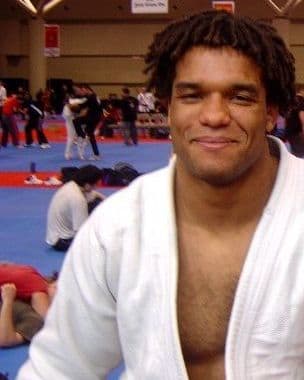

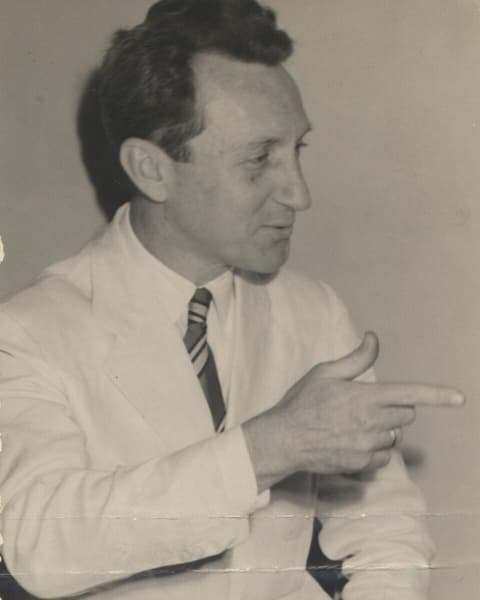

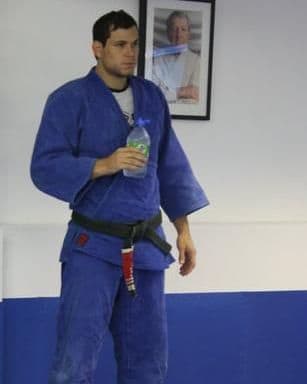
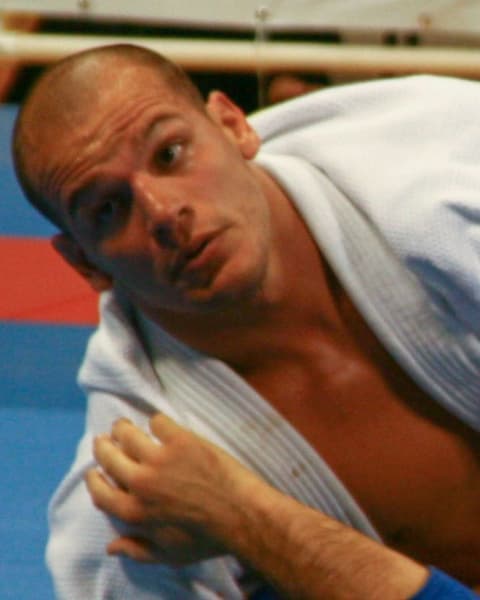


 1992–2013
We teach it in Wrestling & Grappling. A coach will fix the details you can't see yourself. Join now and book your first class for $20, paid online.
Related techniques
The kimura is a figure-four lock on the shoulder and elbow. You hold your partner's wrist, thread your other arm behind their upper arm, grip your…

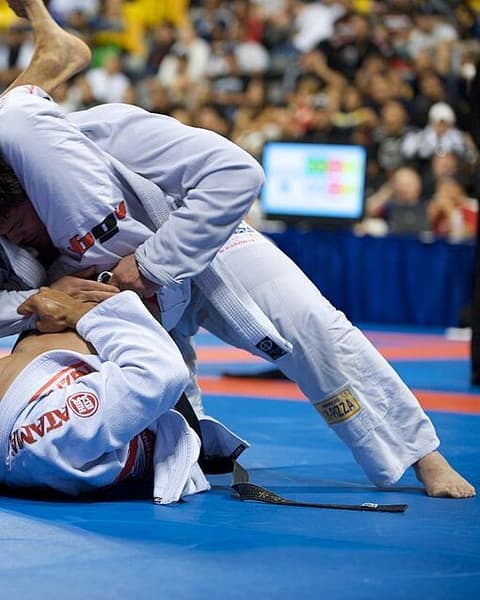
The triangle choke traps your partner's head and one of their arms inside a triangle made by your legs. One of your thighs and their own shoulder…
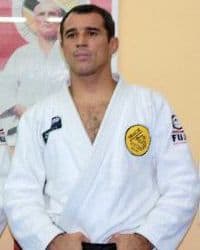
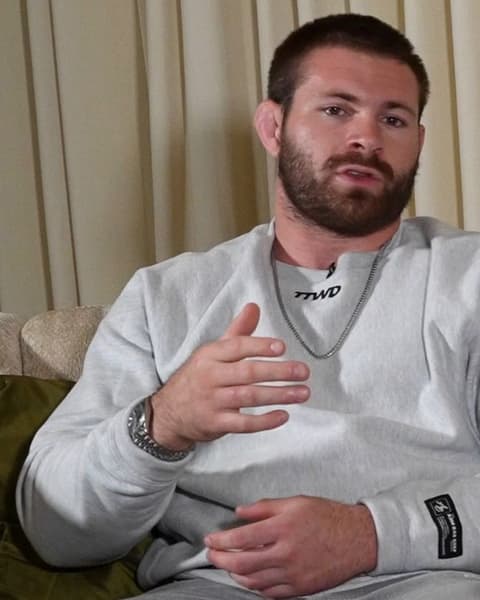
The cross collar choke uses your partner's own jacket. You feed both hands deep into their collar with your forearms crossed, then pull your elbows…
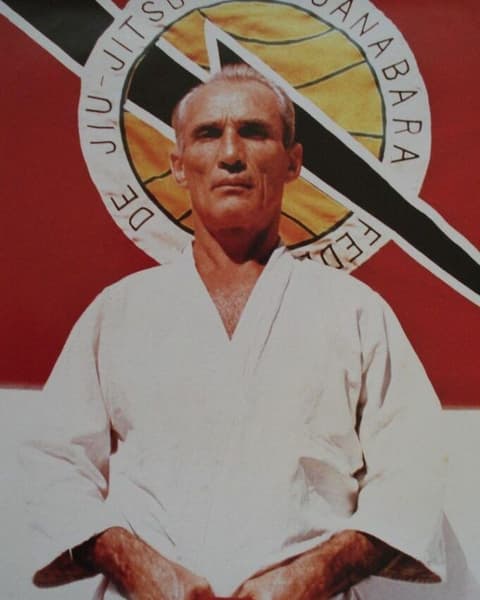
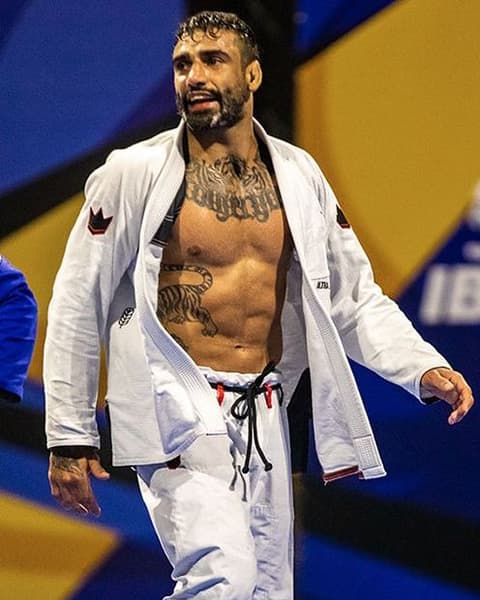
The mount is the top position where you sit astride your partner's torso with a knee on each side. In judo it becomes tate-shiho-gatame when you…
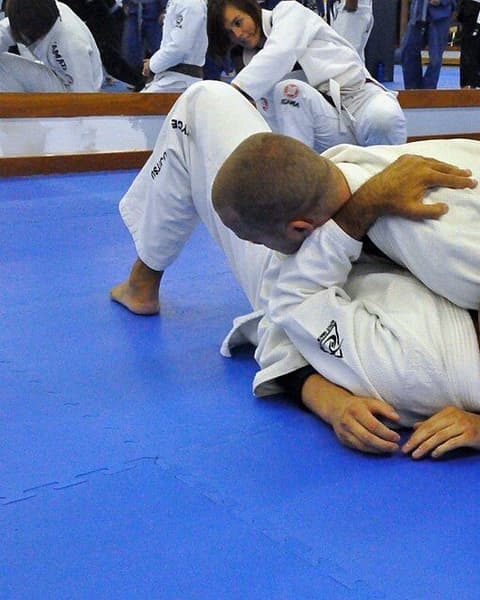
Side control pins your partner flat on their back from the side. You lie across them chest to chest, one arm under their neck and the other…
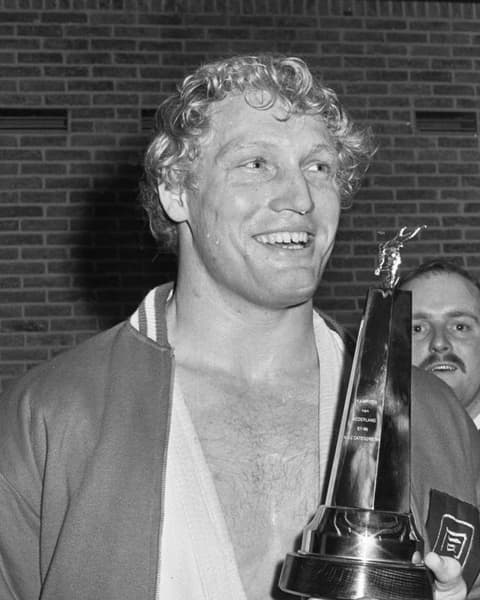

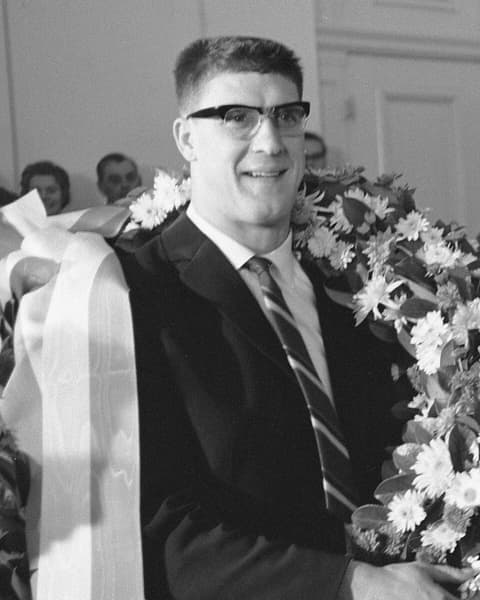

Kesa-gatame is judo's classic side pin. You sit beside your partner's chest, trap their near arm, wrap your other arm around their head and press…