袈裟固Kesa-gatame · say “KEH-sah gah-TAH-meh” · “scarf hold (a kesa is the sash a Buddhist monk wears from one shoulder to the opposite hip)”
Judo: 崩袈裟固 Kuzure-kesa-gatame (“modified scarf hold”) · Judo: 後袈裟固 Ushiro-kesa-gatame (“reverse scarf hold”)
Also called Scarf hold, Basic scarf hold (hon-kesa-gatame), Head-and-arm hold
Kesa-gatame is judo's classic side pin. You sit beside your partner's chest, trap their near arm, wrap your other arm around their head and press them flat with your body. It is usually the first pin a student learns, and a well-set one wins matches: hold it for 20 seconds and it is ippon.
Satori's coaches are filming every technique, full speed and slow motion from two angles. Until it's up, the diagram shows the movement step by step.
How to do it
Start: Your partner is flat on their back and you are beside their chest, facing their head. You usually arrive here after a throw, or after turning a partner over from their hands and knees. Everything below is written for one side; do the mirror image on the other.
- 1Come to one side of your partner's chest, facing their head, and sit your hip tight against their ribs.
- 2Take their near arm: grip the sleeve, or the jacket under their armpit, and clamp the arm against your body.
- 3Reach your other arm across their chest and around the back of their neck, and grip the collar or jacket behind their far shoulder.
- 4Put your head down on the mat beside their shoulder, on the side of the trapped arm.
- 5Stretch the leg nearer their head out long, beside their shoulder, with your foot ready to push into the mat; keep the other leg bent with the knee close to the mat.
- 6Lift their head a little with your encircling arm and lean your chest onto their upper body so both shoulders stay flat on the mat.
- 7Keep the pressure steady and walk your feet around as they move, so your hip stays on their ribs.
- 8Hold for 20 seconds for ippon in judo, or change to another pin if they free the arm.
- Trap the arm, hug the head.
- Hip on the ribs, head low.
- Long front leg, back knee near the mat.
- Sit down into them, not up away from them.
- Grips differ by coach: the Kodokan grips the jacket behind the shoulder; many grapplers hold their own thigh or clasp their hands.
- Sitting up tall, so your weight sinks into the mat and they can roll you. Fix: drop your head beside their shoulder and lean your chest onto theirs.
- Keeping the front knee bent and raised like a squat, which gives them a leg to hook. Fix: stretch that leg out long and keep the back knee near the mat.
- Holding only the sleeve, so the arm slides free. Fix: clamp the arm against your body and grip the jacket under the armpit.
- Sitting too far from their ribs, which leaves a gap to bridge into. Fix: hip tight against the ribs.
- Clasping both hands behind their neck and squeezing. Fix: hold the head with one arm and control the arm with the other; squeezing the neck is banned for young judoka and turns the hold into a strangle.
Safety: Pin with your body weight, not with neck pressure. Keep one arm around the head and never crank it or squeeze with both hands clasped. Let go the moment your partner taps or calls out, and ease your weight so they can breathe; heavy chest pressure is tiring for the person underneath. Learn the hold from a coach before you use it on someone who is resisting.
When to use it
- Right after a throw that lands your partner on their back and leaves you beside their chest.
- When you turn a partner over from their hands and knees and land at their side.
- When you need a pin that stays solid while your partner squirms: the wide legs give you a large, stable base.
- As the first link in a chain of pins, because it flows easily into the other holds.
- Throw with a hip or shoulder throw and keep your sleeve grip so the arm is already in your hand as you land beside them.
- From side control, turn your hips to face their head, trap the near arm and wrap the head.
- From kami-shiho-gatame or yoko-shiho-gatame, when they push at your hips, slide your hip to their side and switch to kesa.
- After rolling a partner from their hands and knees onto their back, step beside the chest and sit down into the hold.
- Kuzure-kesa-gatame: hug the arm instead of the head when the head slips out.
- Kami-shiho-gatame: walk your hips around to the top of their head.
- An armbar: step over their head while you still control the trapped arm.
- Elbow pull-out: slide the trapped elbow back in, turn toward you and take your back or drag you into yoko-shiho-gatame.
- Bridge and roll: clasp your trunk, bridge into you to shift your weight, then roll you over their shoulders.
- Leg hook: turn in and hook your thigh with their legs, then either hold you there and wait for a stand-up or use the hook to roll and take your back.
- Sit-up: if you circle to their head too fast, they sit up under you and take the top.
- Keep your elbows tight to your ribs and a forearm between your chest and theirs before they arrive at your side.
- Turn onto your side and bring your knees in so you can face them and recover your guard.
- Time your bridge for the moment their weight is on your chest, and roll toward the trapped arm.
The physics
Kesa-gatame holds by pairing a wide, low base for you with weight and control on your partner's upper body. You sit at their side with your hip against their ribs and your legs spread wide, one forward and one back, so your centre of mass sits low inside a large base and is hard to tip.
Your arm around their neck and their arm clamped under your armpit control the head and one shoulder, and your chest leans onto theirs so they, not the mat, carry part of your weight. To escape they must turn their shoulders or bridge their hips to lift and roll you, and your spread legs put base exactly where that roll wants to go. If you sit up straight, your weight goes into the floor instead of onto them, and they are free to turn in toward you.
Masters and famous moments
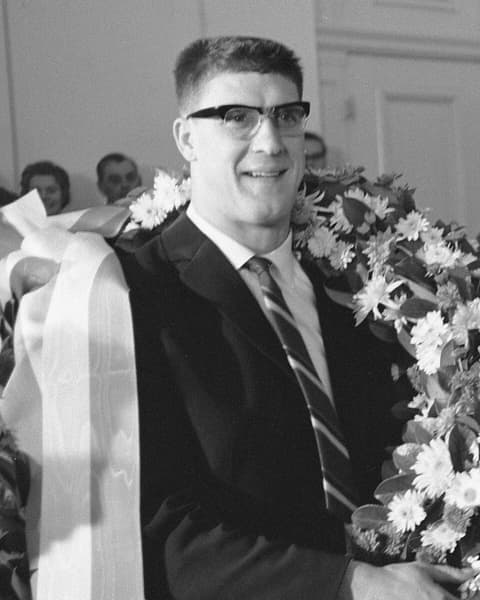
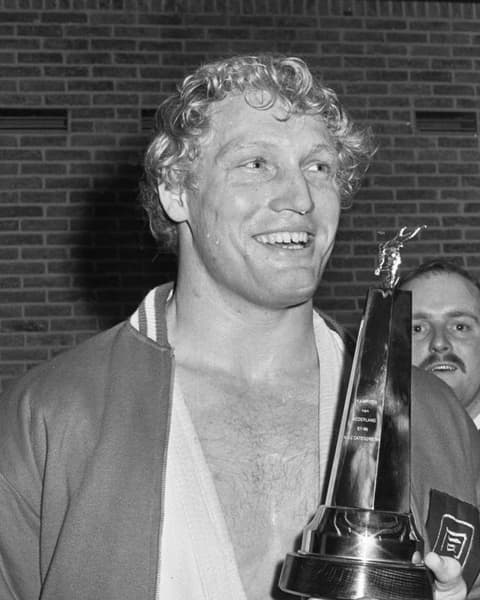
Kaminaga attacked with tai-otoshi about nine minutes into the final. Geesink countered with uranage, dropped into kesa-gatame and held it until the referee called ippon: the textbook throw-then-pin sequence.
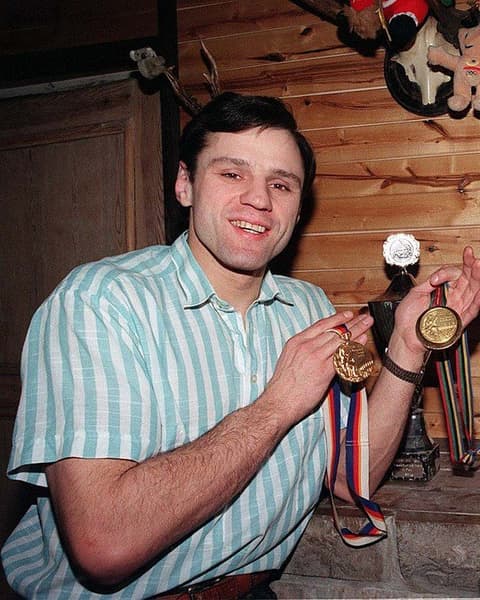
Nastula won the Olympic title by ippon in 1:33 with kuzure-kesa-gatame, the version of the hold that hugs the arm.
Bilodid won the bronze medal with kuzure-kesa-gatame for ippon in the last second of the contest. Under the IJF rules a pin that starts before the bell may run to its full count, so a late pin can still win.
Souza beat the 2022 world champion by ippon with kesa-gatame in extra time, then went on to win the gold medal.
Across the arts
The Kodokan groups several variations under this name. They are all done from the side, facing the head, and in particular slide your knee under your partner's armpit. The common form hugs your partner's arm instead of wrapping the head.
The same idea, but you face your partner's legs instead of their head while you keep control of the near arm and the upper body.
You slide your thigh under your partner's head and lift it, which traps the head and shoulder against your leg. The Kodokan files it with the modified scarf holds.
Grapplers treat it as a variation of side control, often gripping their own thigh or clasping the hands behind the partner's head. It pins well, but moving on to submissions is harder from here than from normal side control.
Rudman's sambo textbook teaches a hold from the side with one arm around the neck, the other hand gripping an arm near the elbow, the head down and the legs wide, to be kept for 20 seconds. In sport sambo a 20-second hold scores 4 points.
History
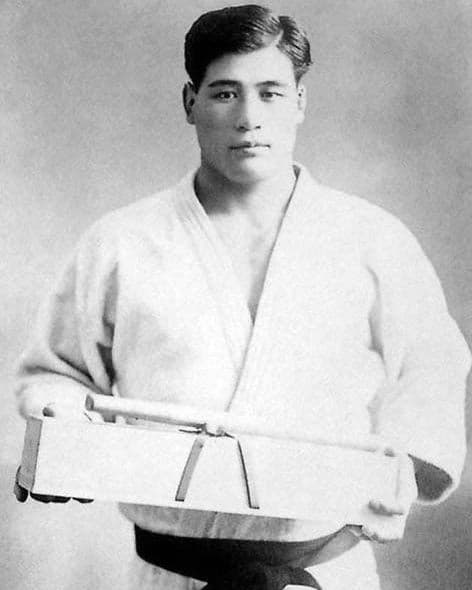
Kesa-gatame is a core pin of Kodokan judo. In its modified form it is one of the five pins in the Katame-no-kata, the grappling kata Jigoro Kano developed between 1884 and 1887. The name comes from the kesa, the sash a Buddhist monk wears from one shoulder to the opposite hip. Kyuzo Mifune's book The Canon of Judo stresses lifting the partner's head with the encircling arm and keeping the leg under their shoulder. The time needed for an ippon by pin has been cut over the years: a pin had to last 30 seconds at the 1972 Olympics, 25 seconds until 2013, and 20 seconds since.
In the rules
Drills
Lay a heavy bag on its side. Sit against it in the kesa position, hug the top of the bag with your head arm, press your hip to its side and walk your feet around it for 30 seconds each way, keeping the long front leg and low back knee.
Your partner lies on their back and tries one escape at half effort: elbow pull-out, bridge or sit-up. Hold them for 20 seconds, then switch. Add one more escape each round.
Your partner stays on their back. Move from kesa-gatame to kuzure-kesa-gatame, to kami-shiho-gatame, to yoko-shiho-gatame and back, changing every five seconds without letting go of the chest.
Legends known for it





We teach it in Throws. A coach will fix the details you can't see yourself. Join now and book your first class for $20, paid online.
Related techniques
Kami-shiho-gatame pins your partner from above their head. You lie chest to chest with your knees wide, slide your arms under their shoulders, grip…
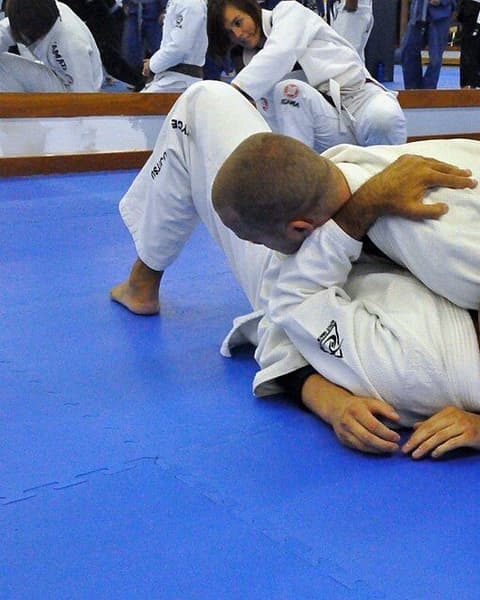
Side control pins your partner flat on their back from the side. You lie across them chest to chest, one arm under their neck and the other…

The mount is the top position where you sit astride your partner's torso with a knee on each side. In judo it becomes tate-shiho-gatame when you…
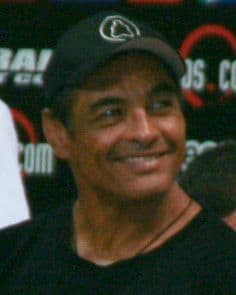
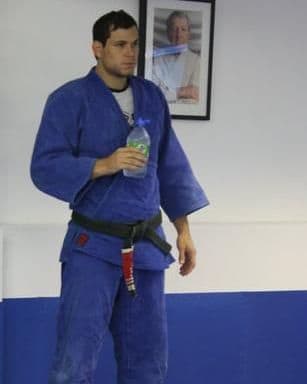
 1996–2014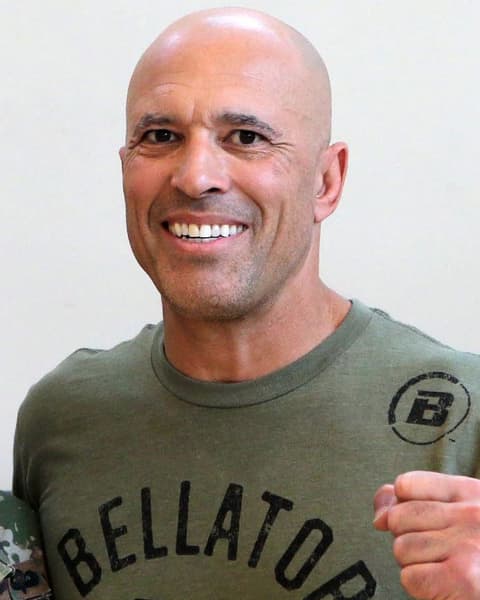
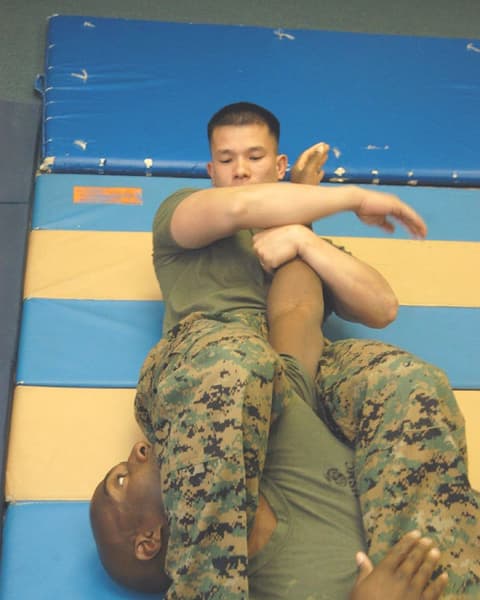
The armbar traps your partner's arm between your thighs, holds their wrist against your chest and lifts your hips so the elbow is forced straight,…


Kumikata is the way you take hold of your partner's jacket. In judo most attacks start here: the grip helps you control your partner and, under the…
Ukemi is the art of falling safely. Judo teaches four breakfalls (rear, side, forward and the forward roll) that spread the impact over your arm,…