三角絞Sankaku-jime · say “sahn-KAH-koo JEE-meh” · “triangular strangle”
Judo: 腕挫三角固 Ude-hishigi-sankaku-gatame (“triangular armlock”) · Grappling & BJJ: Triângulo (“triangle”)
Also called Sankaku-jime, Triangle, Triangular strangle, Triângulo
The triangle choke traps your partner's head and one of their arms inside a triangle made by your legs. One of your thighs and their own shoulder squeeze the two sides of the neck, and the squeeze comes from your legs, not your arms. In judo it is sankaku-jime. It is a classic from the guard, and it also works from the mount, the side and from behind.
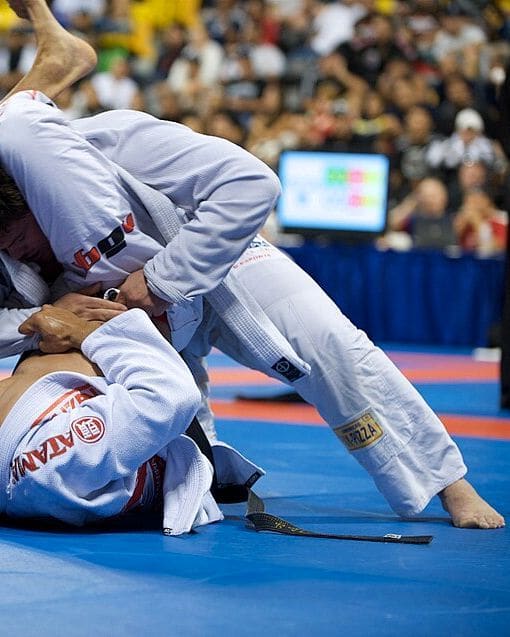
Satori's coaches are filming every technique, full speed and slow motion from two angles. Until it's up, the diagram shows the movement step by step.
How to do it
Start: You are on your back with your partner in your guard. One of their arms has come inside your legs, across your centreline, and the other is outside your hip. Their head is low enough for your legs to reach.
- 1From guard, control their posture and arrange it so one arm is inside your legs and the other is outside; push the wrist of the inside arm across your centreline.
- 2Open your guard, put a foot on their hip and shift your hips toward the trapped arm's side to make an angle.
- 3Shoot the leg on the side of the free arm up and over their shoulder so the back of your knee sits across the back of their neck.
- 4Lock that ankle behind the knee of your other leg to close the triangle, and pinch your knees together.
- 5Cut the angle: turn your body about 45 degrees to theirs and pull their head down with both hands.
- 6Squeeze your knees together and lift your hips a little until they tap.
- 7Release the instant they tap.
- One arm in, one arm out.
- Cut the angle before you squeeze.
- Head down with both hands.
- Knees together, hips up.
- Ankle behind the knee, not just crossed.
- Locking the triangle straight on with no angle, so the choke stays weak. Fix: turn your hips toward the trapped arm's side before you squeeze.
- Trapping both arms or neither, which leaves no choke. Fix: one arm in, one arm out.
- Letting them posture up tall before your legs are locked. Fix: keep their head down with both hands.
- Crossing the ankles instead of locking the foot behind the knee. Fix: hook the foot behind the knee so the loop cannot open.
Safety: The triangle chokes with your legs and your partner's own shoulder, and an unconscious partner cannot tap. In a study of 81 choke blackouts between trained, resisting fighters, the average time from a fully set choke to loss of consciousness was about nine seconds (Stellpflug et al., 2020). Squeeze smoothly and let go at the first tap, hand slap or limp body. Pull the head down with both hands only once an arm is trapped inside; the IBJJF lists a triangle where the attacker pulls the head as illegal for young grapplers aged 4 to 15. Learn the hold from a coach, and never practise flying triangles at full speed.
When to use it
- From closed or open guard when your partner posts one arm inside and leaves the other outside.
- When they pull an arm away to defend an armbar or a cross collar choke and leave their head in reach.
- When they stack or posture up with an arm still between your legs.
- When your partner is bigger: the legs do the work and do not depend on arm strength.
- Threaten an armbar; when they pull the arm out, swing the leg over the shoulder into the triangle.
- Attack a cross collar choke; when they defend, bring the legs up.
- From open guard with sleeve control, push one arm across and step a foot to the hip.
- After a failed sweep, when they post a hand and bend forward.
- A triangle armbar (sankaku-gatame) if they pull the arm free to defend the choke.
- An omoplata or a sweep if they stack or turn toward the free side.
- An armbar, straightening the trapped arm, if the choke is not working.
- Posture up and pull the trapped arm out before the ankle is locked.
- Stack: bring both hands to the chest opposite the trapped arm, stand and walk toward the free side so your shoulder presses into the leg behind your back.
- In MMA, lift the attacker and slam them; the Unified Rules let a fighter caught in a submission bring the opponent down any way they like.
- Raise your head and keep your posture before the triangle closes.
- Once it is on, lift your head to take the force off the neck and work your trapped arm back out.
- Tap early: the squeeze builds fast and a partner cannot tell you they are going out.
The physics
The triangle choke traps your partner's neck and one arm inside a loop made by your legs. One thigh presses one side of the neck and their own trapped shoulder is driven into the other side, so both carotid arteries are squeezed, and the force comes from the legs, which are far stronger than the arms.
Locking your ankle behind your other knee turns the legs into a closed figure-four frame, so squeezing your knees together shrinks the loop. Pulling their head down and turning your hips to an angle lines your thigh up across the side of the neck instead of the back of it, tightening the loop further. If the trapped arm is not across their own neck, one side stays open, blood keeps flowing and the choke fails.
Masters and famous moments
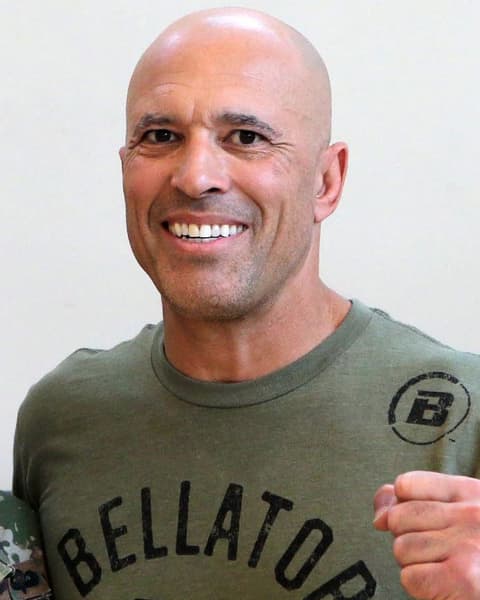
Gracie won the UFC 4 tournament by submitting the wrestler Dan Severn with a triangle choke after almost 16 minutes.

Nurmagomedov finished Gaethje with a triangle choke in the second round, ruled a technical submission, to unify the lightweight title. He announced his retirement after the fight.
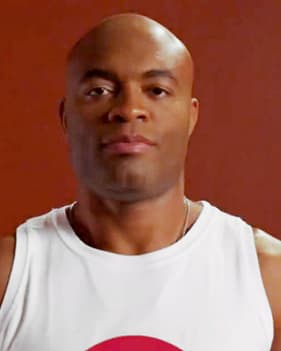
Silva won the middleweight title fight in the fifth round with a triangle armbar, the triangle position used to lock the trapped arm as well as choke.
Across the arts
Facing your partner, wrap one leg over their shoulder and the other under their opposite armpit, catch the first foot under the back of your own knee to form the triangle and squeeze their neck. Judo also uses it from the side (yoko-sankaku-jime) and from behind (ushiro-sankaku-jime).
From the same leg position you straighten or twist the trapped arm instead of choking. It is often used when the strangle is not working, since the arm is exposed while the partner defends the choke. Anderson Silva finished Chael Sonnen with one in 2010.
The front triangle from the guard is the favourite of jiu-jitsu players, and they also use it from the mount, the side and the back. There are two accounts of how it reached Brazil: through Rolls Gracie, who read about it in a judo book, or much earlier through the Ono brothers.
Jason DeLucia used it to beat Scott Baker at UFC 2 on 11 March 1994, often cited as the first triangle finish in MMA. The front triangle from the guard is still the most common version seen in cage fights.
History
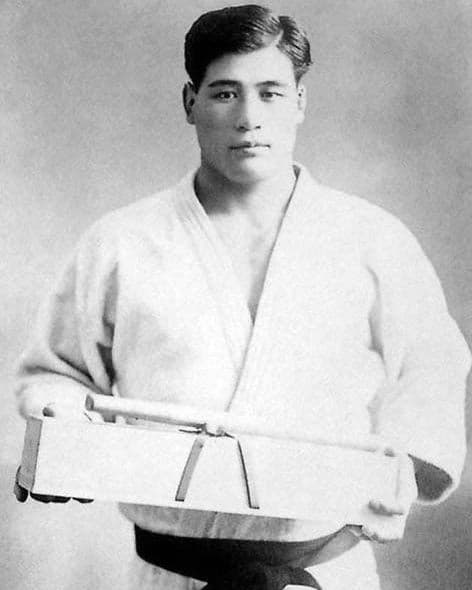
The triangle choke was already being used in early kosen judo competition. It is tied to Yaichibei Kanemitsu and his pupil Masaru Hayakawa, who is credited with the first registered use in a tournament in Kobe in November 1921, and Kanemitsu said a simpler form was shown around 1890 by Senjuro Kanaya of the Takenouchi school. The names matsuba-gatame and sankaku-garami were used before sankaku-jime became standard. It reached Brazilian jiu-jitsu by one of two routes and was first seen in MMA at UFC 2 in 1994. Royce Gracie won the UFC 4 tournament final with a triangle in December 1994.
In the rules
Drills
Lie on your back and run the leg path alone, slowly: shoot the leg, lock the ankle behind the knee, turn the hips to the angle, squeeze the knees. Ten reps each side.
Your partner kneels in your closed guard and posts their hands on your chest. Push one arm across, shoot the triangle, lock it and squeeze to a light pressure. Release at once and switch after ten reps.
From guard your partner pulls an arm out at half speed each time. Move from armbar to triangle to omoplata as they defend, finishing each one only to the point of control. Switch every three minutes.
Legends known for it


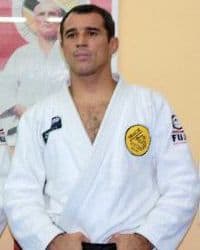


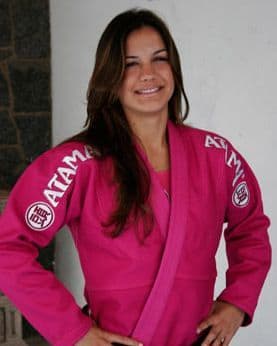
We teach it in Wrestling & Grappling. A coach will fix the details you can't see yourself. Join now and book your first class for $20, paid online.
Related techniques
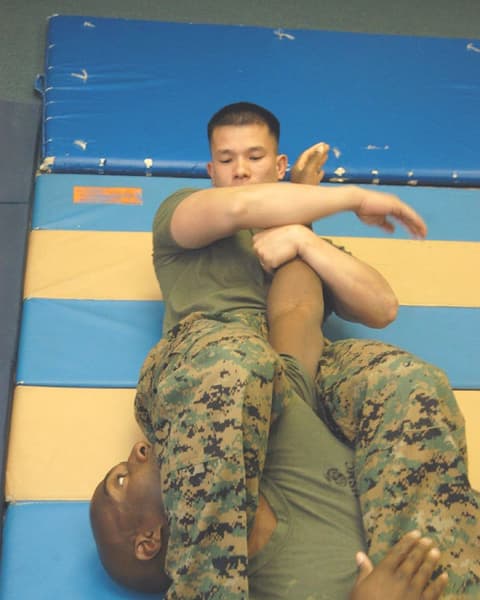
The armbar traps your partner's arm between your thighs, holds their wrist against your chest and lifts your hips so the elbow is forced straight,…


The cross collar choke uses your partner's own jacket. You feed both hands deep into their collar with your forearms crossed, then pull your elbows…
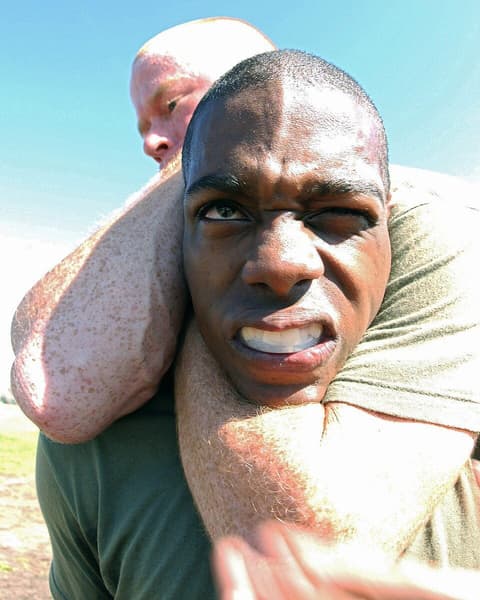
The rear naked choke is a strangle applied from behind. One arm wraps the neck with the crook of the elbow under the chin, that hand grips your…


The kimura is a figure-four lock on the shoulder and elbow. You hold your partner's wrist, thread your other arm behind their upper arm, grip your…

Okuri-eri-jime is judo's sliding collar strangle. It is applied from behind and uses your partner's own jacket: one hand reaches deep into the far…

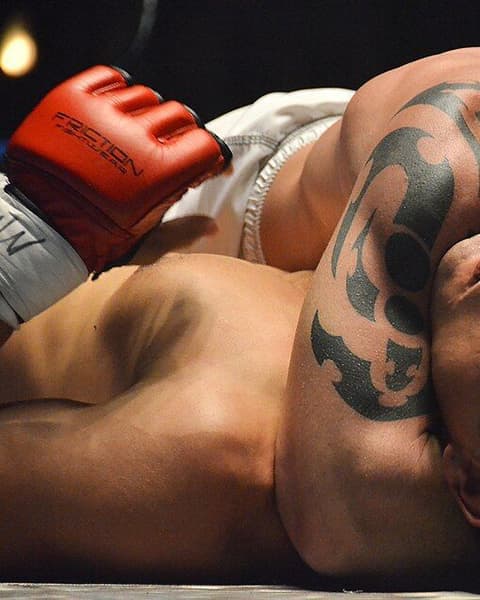
The arm-triangle traps the opponent's head and one arm together, so their own shoulder presses into one side of the neck while your arm presses the…