横四方固Yoko-shiho-gatame · say “YOH-koh SHEE-hoh gah-TAH-meh” · “side four-corner hold (the IJF calls it the side-locking four-corner hold)”
Grappling & BJJ: Cem quilos (“100 kilos, the Brazilian jiu-jitsu name for side control”)
Also called Yoko-shiho-gatame, Side four-corner hold, Side mount, Cross side, Cem quilos
Side control pins your partner flat on their back from the side. You lie across them chest to chest, one arm under their neck and the other controlling their hips, with your legs spread wide and out of reach of theirs. In judo this is yoko-shiho-gatame, a pin that wins at 20 seconds. In jiu-jitsu and MMA it is the base for passing the guard, punching, moving to mount and attacking arms and necks.
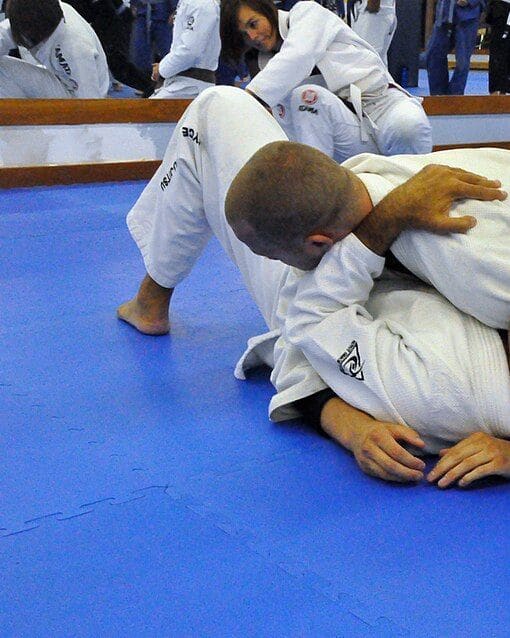
Satori's coaches are filming every technique, full speed and slow motion from two angles. Until it's up, the diagram shows the movement step by step.
How to do it
Start: Your partner is on their back and you are at their side, having landed there from a throw, passed their guard or turned them over. Their legs are no longer between you. The steps are the judo form of the hold with the belt grips; notes for other sports are under variations.
- 1Lie across your partner's body at right angles, with your chest over their chest.
- 2Slide your head-side arm under their neck and grip their far collar; without a jacket, hug the neck or the far shoulder.
- 3Reach your other arm between their legs and grip their belt or trousers on the far side; without a jacket, control the far hip with your arm or hook their near arm.
- 4Spread your legs wide with your toes on the mat and your hips low, so your weight rests on them.
- 5Press your chest onto their breastbone and keep your head low, close to the side of their head.
- 6Block their near hip with your knee or hip so they cannot turn in or bring a knee between you.
- 7As they shrimp or bridge, walk your feet and shift your hips to stay chest to chest instead of holding on with your arms.
- 8Hold for 20 seconds for ippon in judo, or move on to mount, kesa-gatame or an attack.
- Chest heavy, hips low.
- Neck arm high, belt arm low.
- Block the near hip.
- Move your feet, not just your arms.
- Legs wide and never crossed.
- Letting your hips rise so your weight is on your arms. Fix: sink your hips and let your chest carry the load.
- Holding on with your arms and ignoring the hips. Fix: move your feet to follow every shrimp and bridge.
- Leaving the near hip open. Fix: keep your knee or hip tight against it.
- Crossing your feet, which lets them sweep you. Fix: keep the legs wide and apart.
- Turning away from the head. Fix: stay chest to chest so they cannot turn in.
Safety: Press with your chest and hips. Do not drive a shoulder, elbow or forearm into your partner's throat, jaw or ribs, and keep any arm across the face light in training. Let go at the first tap or call, and ease off if they say they cannot breathe. When you move to mount, step over slowly rather than dropping your knee onto their stomach.
When to use it
- As soon as a throw or a guard pass leaves your partner flat and you are at their side.
- To win a judo match outright: 20 seconds in this hold is ippon.
- To control a partner while you decide between mount, kesa-gatame and an armlock.
- To tire a partner who has a strong guard: good side control makes them spend energy to get back to it.
- After a hip or leg throw that lands you at their side with a sleeve grip.
- After passing the guard in jiu-jitsu, settling your chest across theirs before they recover.
- From kesa-gatame when they free their head, slide the neck arm under it.
- From the top of their head in kami-shiho-gatame, circle your hips down to their side.
- Mount (tate-shiho-gatame): step a knee over their hips while keeping your weight on them.
- Kesa-gatame or kami-shiho-gatame by sliding round their head.
- An armbar or a kimura on the near arm when they frame against you.
- Roll away: turn away from you and come up onto the knees.
- Roll in: turn toward you onto the knees and stand or take a leg.
- Triangle or armbar escape: catch your arm or neck with their legs as you reach across.
- Get your near elbow to your hip and a forearm against their neck before they settle.
- Shrimp your hips away, bring a knee between you and recover half guard or guard.
- Fight the far arm so they cannot get the belt or hip grip.
The physics
Side control pins by controlling the two things a person has to turn to escape: the shoulders and the hips. You lie across your partner chest to chest, one arm blocking their head or far shoulder and your other arm or knee blocking their near hip, with your hips low.
Your chest weight on their breastbone means they must lift you before they can turn, and the blocks at head and hip stop the rotation they need to face you or recover their guard. Your base is spread along the mat, and keeping your hips lower than your shoulders keeps your centre of mass close to them and hard to lift. As they bridge or shrimp, move your hips and knees to keep your centre of mass over them instead of holding them down with your arms.
Masters and famous moments

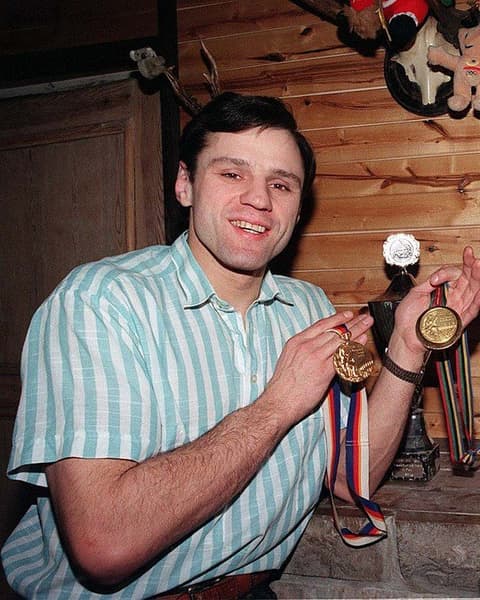
Yamashita, limping on a torn calf, won the Olympic open title by ippon in 1:05 with yoko-shiho-gatame.
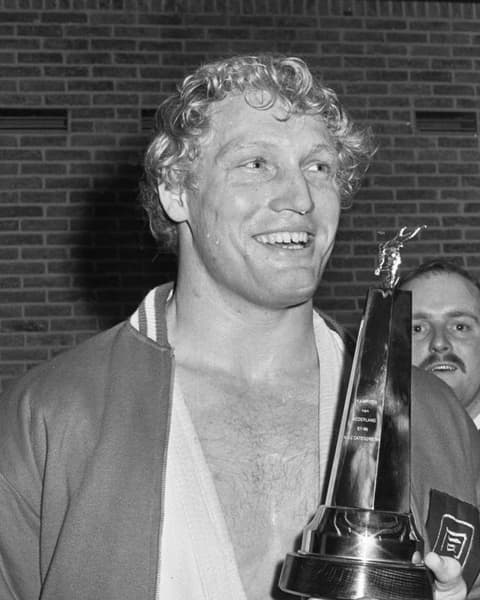
Kuznetsov had thrown Ruska with te-guruma in the pool, so Ruska took the final to the ground. He pinned Kuznetsov in yoko-shiho-gatame, finishing at 3:58 to win his second gold medal of those Games.
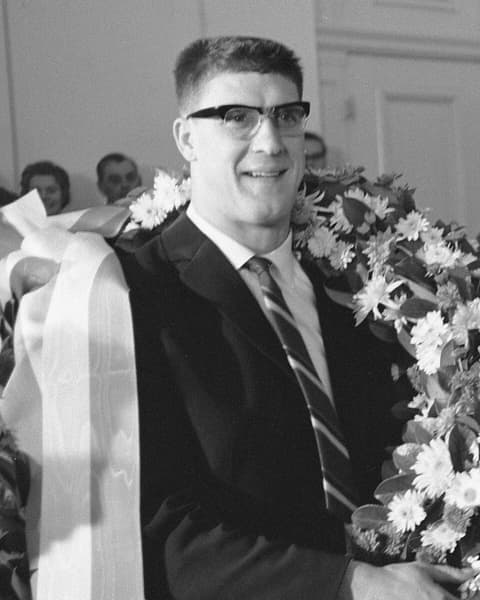
After four minutes without a score against the defending champion, who was about 10 cm taller and 20 kg heavier, Andéol won 3:11 into golden score by ippon with yoko-shiho-gatame on the ground.

Krpálek threw with sumi-gaeshi for a waza-ari, followed his opponent to the mat and held him in yoko-shiho-gatame until the count reached ippon, in a contest of nearly four minutes.
Across the arts
One arm passes under the neck to the far collar and the other passes between the legs to the far belt or trousers, so the grips anchor the far shoulder and far hip. Judo forbids putting a hand or arm on the face, so a crossface is not allowed in competition.
Without a belt to grip, the top player controls the head and the far hip with an underhook or a hip block and works for mount, knee-on-belly or a submission. Passing the guard and holding this position scores points in IBJJF rules.
With strikes allowed, the top fighter can punch and use elbows to the head and body from here. Strikes to the back of the head and spine are still fouls.
History
In judo the side pin is yoko-shiho-gatame, the 'side four-corner hold'. It is one of the ten pins on the Kodokan list and one of the five in the Katame-no-kata. It is credited as Yasuhiro Yamashita's highest-scoring single technique during his 203-match winning streak, with 45 victories. Wim Ruska used it to win the open-category final at the 1972 Munich Olympics. Jiu-jitsu players call the position side control, or cem quilos ('100 kilos') in Portuguese. From it the top player can work elbows and knees where the rules allow, go for submissions or move to mount.
In the rules
Drills
Lay a heavy bag on its side. Lie across it chest down with your legs wide, hug it with both arms and walk your feet around it for 30 seconds each way, keeping your hips low.
Your partner lies on their back and tries to shrimp back to guard at half effort. Keep side control for 20 seconds by following their hips with your feet, then switch.
Hold side control for five seconds, then step a knee over their hips and sit into mount, then return to side control. Repeat five times each way and keep your chest heavy on every move.
Legends known for it







We teach it in Wrestling & Grappling. A coach will fix the details you can't see yourself. Join now and book your first class for $20, paid online.
Related techniques
Kesa-gatame is judo's classic side pin. You sit beside your partner's chest, trap their near arm, wrap your other arm around their head and press…
Kami-shiho-gatame pins your partner from above their head. You lie chest to chest with your knees wide, slide your arms under their shoulders, grip…
The mount is the top position where you sit astride your partner's torso with a knee on each side. In judo it becomes tate-shiho-gatame when you…
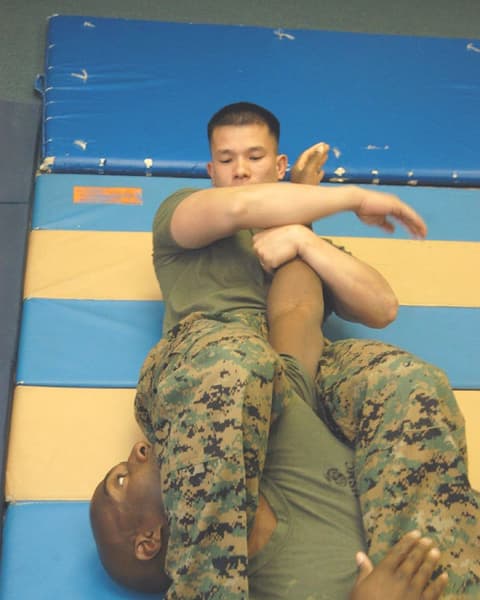
The armbar traps your partner's arm between your thighs, holds their wrist against your chest and lifts your hips so the elbow is forced straight,…

The kimura is a figure-four lock on the shoulder and elbow. You hold your partner's wrist, thread your other arm behind their upper arm, grip your…
Kumikata is the way you take hold of your partner's jacket. In judo most attacks start here: the grip helps you control your partner and, under the…