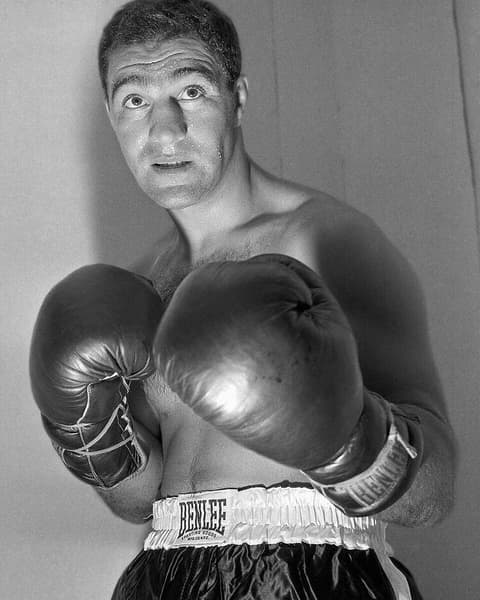
Also called Philly shell, Michigan defence, Crab style, Shoulder block
The shoulder roll turns your upper body away from a straight punch so it glances off your raised lead shoulder, then turns you back with a counter. It usually comes from the Philly shell guard: lead hand low across the belly, lead shoulder high by the chin, rear hand by the face. Done well, it defends and loads your counter in one motion.
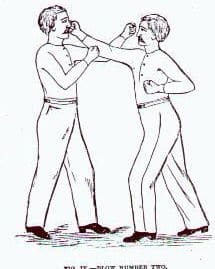
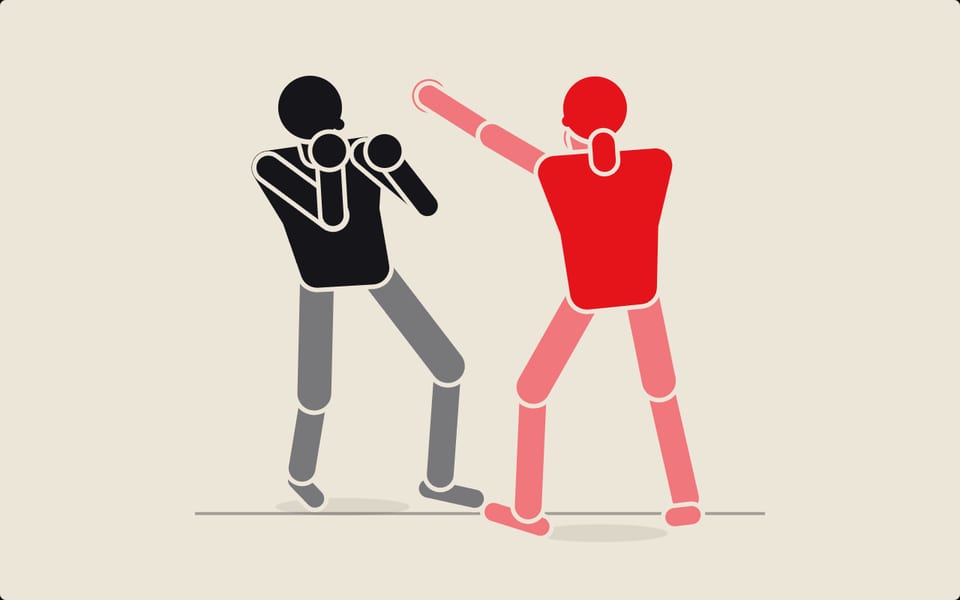
Satori's coaches are filming every technique, full speed and slow motion from two angles. Until it's up, the diagram shows the movement step by step.
How to do it
Start: A slightly more side-on stance at mid-range, in the Philly shell: lead arm across your stomach, lead shoulder up, chin tucked behind it, rear glove by your chin. Your opponent is throwing straight rear-hand punches.
- 1Tuck your chin behind your raised lead shoulder.
- 2As the straight right comes (against an orthodox opponent), turn your upper body away toward your rear side.
- 3Shift a little weight onto your rear leg as you turn.
- 4Let the punch land on the outside of your lead shoulder and slide off.
- 5Keep your lead elbow tight to your ribs and your rear hand high by your chin.
- 6Keep your eyes on your opponent; don't lean forward or turn your back.
- 7Rotate back toward your opponent and throw your rear hand while their punch is still returning.
- Chin behind the shoulder.
- Turn, don't lean.
- Roll and return.
- Rear hand stays home.
- Punch as their hand goes back.
- Standing square, so the shoulder isn't in the punch's path. Fix: stay more side-on.
- Letting the rear hand drift from your face. Fix: keep it by your chin; it's your backup against the hook.
- Leaning forward into the roll. Fix: turn on the spot and shift your weight back.
- Rolling without countering. Fix: every roll ends with a rear-hand punch.
- Standing still in the shell. Fix: keep rotating and moving; a stationary shell gets hit.
Safety: Learn it slowly with headgear on. The low lead hand leaves you open to hooks, so don't use it in hard sparring until your coach says your timing is ready.
When to use it
- Against an opponent's straight right hand, or a southpaw's jab.
- On the ropes, when there's no room to step back.
- When you want to counter with your rear hand the instant their punch misses.
- Invite the right hand by showing your lead shoulder and a lower lead hand.
- Pull back slightly on their jab, then roll the cross that follows.
- Flick a jab from the low lead position to draw their right hand, then roll it.
- A rear straight counter
- A lead hook as you turn back
- A pivot off the ropes
- Lead hooks to the head, over or around the low lead hand.
- Jabs to the lead shoulder to tire and hurt it.
- Body shots and constant pressure that leave you no time to turn.
- Feint the jab, then throw the lead hook.
- Punch the lead shoulder and the body instead of the chin.
- Keep combinations going so they can't turn back and counter after one roll.
The physics
The shoulder roll turns your body so a straight punch lands on your raised lead shoulder and glances off, instead of reaching your chin. As the punch arrives, rotate the trunk away and slightly back, lift the lead shoulder to cover the jaw and tuck the chin behind it.
The punch meets a rounded surface that is turning away from it, so much of the force slides off, and moving with the blow lowers the speed at which it hits you and stretches the contact over a longer time. The shoulder is attached to the heavy trunk, while the head is a small mass on a flexible neck, so the same punch moves the shoulder far less than it would move the head. The turn also winds you up: as you rotate back, the trunk's rotation carries straight into your rear-hand counter. Roll too far or lift the chin and you lose both the base and the cover.
- Myth: the shoulder roll is just leaning back. It is a turn of the trunk; leaning straight back without turning puts your weight on your heels and leaves the chin as the first thing the punch finds.
Masters and famous moments

Twice Canelo trapped Mayweather on the ropes, and both times Mayweather rolled the shoulder and countered. He handed Canelo his first professional loss on a majority decision.
De La Hoya had early success cutting off the ring, but many of his punches landed on Mayweather's arms and shoulders instead of his head, and Mayweather won a split decision.
Across the arts
One guard, two regional names: from Philadelphia fighters such as George Benton, Bernard Hopkins and Tim Witherspoon, and from Michigan fighters such as the Mayweathers and James Toney.
A simpler version from your normal stance: turn to your rear side and block the straight right with the lead shoulder. USA Boxing teaches it to beginners.
The older crab style, with the forearms stacked across the face, used by Archie Moore and Ken Norton.
Fighters who use it tend to stand squarer, to defend against leg kicks.
History
Crab-style defences are among the oldest in modern boxing: a 1789 manual already shows a forearm across the body with a cross guard. Max Baer showed the shell, shoulder block and shoulder roll in the 1938 short film Fisticuffs, and Archie Moore and Sugar Ray Robinson used versions of it. Philadelphia's George Benton, who fought from the shell, taught it to Pernell Whitaker, and Floyd Mayweather Jr., schooled by his father and his uncle Roger, made the shoulder roll famous from the late 1990s on.
In the rules
Drills
Your partner throws slow right hands. Roll each one off your lead shoulder and counter with your rear hand to a mitt. Three rounds.
In front of a mirror, roll imaginary crosses and check that your chin stays behind your shoulder and your rear glove stays home.
Stand at the heavy bag, roll as if a right hand is coming, then turn back and land a right hand on the bag. Keep the rhythm: roll, return, punch.
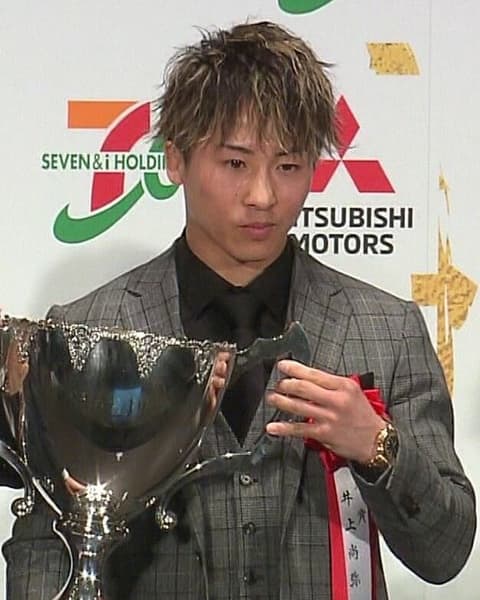
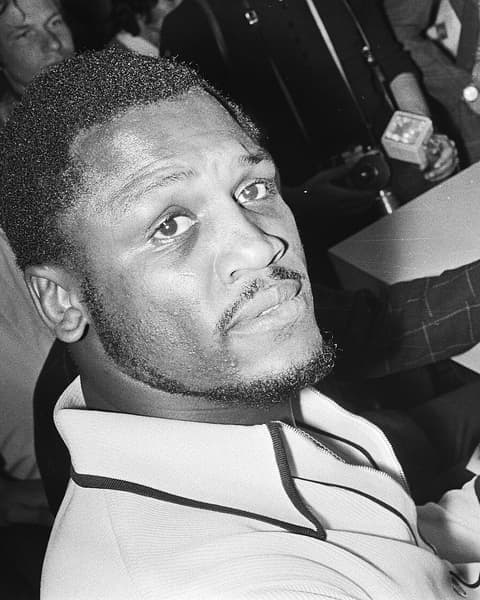
Legends known for it




We teach it in Boxing. A coach will fix the details you can't see yourself. Join now and book your first class for $20, paid online.
Related techniques
The high guard brings both gloves up to your forehead and your forearms together in front of your face, so punches land on gloves and arms instead…

A parry is a short, sharp tap with the open glove that knocks an incoming straight punch off line, most often the jab. Unlike a block, it doesn't…
A slip moves your head just off the line of a straight punch, so it misses by centimetres while you stay in range to hit back. The movement comes…

The pull counter shifts your weight back so the opponent's jab or lead punch falls just short, then fires your rear hand straight down the middle…

Counterpunching means letting the opponent attack first, making the attack miss or land on your guard, and hitting back into the opening it leaves…

Bobbing and weaving takes your head down and under a hook, then across and up on the other side of the punch. The drop comes from bending your…