Also called Parrying, Deflecting a punch
A parry is a short, sharp tap with the open glove that knocks an incoming straight punch off line, most often the jab. Unlike a block, it doesn't absorb the punch; it redirects it, and can leave your opponent off balance and open. It is quick, cheap on energy and a natural set-up for counters.
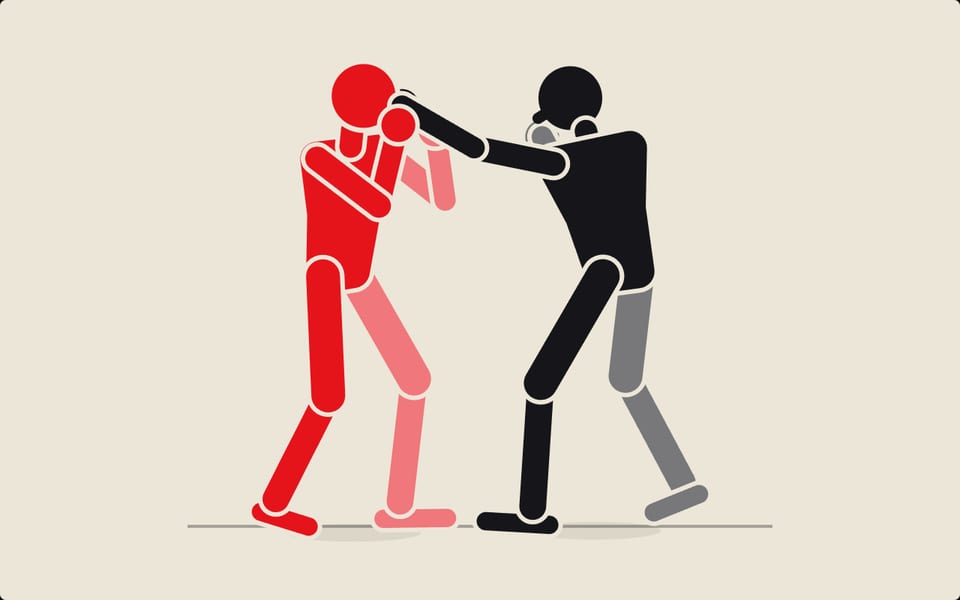
Satori's coaches are filming every technique, full speed and slow motion from two angles. Until it's up, the diagram shows the movement step by step.
How to do it
Start: Your stance at long or mid-range, facing straight punches. Hands up and gloves relaxed, eyes on your opponent's chest and shoulders.
- 1Watch for the jab to start, and stay relaxed so your hands can move fast.
- 2As the jab comes, open the palm of your rear hand slightly.
- 3Meet the punch just in front of your face with a short tap on the glove or wrist, pushing it a few centimetres to the side or down.
- 4Keep the parrying hand close to your face; don't reach out to meet the punch.
- 5Keep your lead hand up and ready while you parry.
- 6Return the parrying hand to your chin at once.
- 7Counter straight away into the opening, for example with a jab or a one-two over the top.
- Small and late: tap it, don't swat it.
- Parry close to your face.
- Tap and return.
- Rear hand takes the jab, lead hand takes the cross.
- Parry and punch in one rhythm.
- Reaching out to meet the punch. Fix: parry close to your face with a short movement.
- Parrying too wide. Fix: move the punch just enough to miss; a wide swipe opens your head to a hook.
- Parrying at every feint. Fix: react to the shoulder and hips, not a twitch of the glove.
- Leaving the hand out after the parry. Fix: tap and return, straight back to your chin.
- Parrying without countering. Fix: attach a counter to every parry in drills.
Safety: Parry drills are low risk at slow speed. Wear gloves and a mouthguard, keep partner punches light while learning, and never slap with the open glove: hitting with an open glove is a foul.
When to use it
- Against a busy jab, to take it away without leaving range.
- When you want your feet and your other hand free to counter at once.
- Against an opponent who reaches with straight punches and overcommits.
- Invite the jab by showing a slightly open guard, then parry and counter.
- Parry the jab to draw the cross that follows, then slip or shoulder-block it.
- Combine the parry with a small step back, so the punch falls short and off line.
- A counter jab
- A one-two over the parried hand
- A step to the outside angle
- Feints: a fake jab makes you parry at nothing and opens your face.
- A double jab: the second one lands while your hand is still out.
- Hooks: parrying too wide pulls your hand away from the side of your head.
- Feint the jab to make them parry early, then throw the real punch.
- Change the target or the angle: jab to the body, or throw a hook instead of a straight.
- Double up so the second punch arrives after their hand has moved.
The physics
A parry redirects a punch instead of stopping it. Use a short, late tap of the open glove on the side of the incoming fist or forearm to push it off line, so it passes beside your head.
The tap is sideways to the punch's travel, so it doesn't have to cancel the punch's forward momentum, only turn it, and pushing near his fist works like pushing a door at the handle: the force acts far from his shoulder, so a small tap swings the fist off line. The punch's own speed carries it past you, often pulling him slightly off balance and leaving his side open for a counter. Keep the parrying hand close to your face and move it only a short way, because reaching out to meet the punch opens your guard and gives him time to change it.
- Myth: a parry is a big swat. The best parries are small and late, just enough to steer the fist past your head, with the hand back on guard at once.
Masters and famous moments
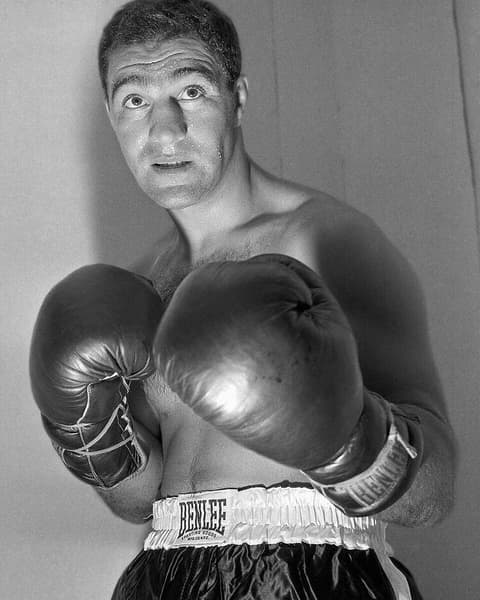
Charles, who parried with both hands and smothered opponents on the inside, gave away 34 pounds and still out-boxed the returning Louis convincingly, winning a unanimous decision and universal recognition as champion.
Against his former mentor, Mendoza's hand and foot work were clearly superior; his style was built on stopping blows and returning with the same hand. He won on a foul in the 65th round.
Across the arts
A small downward tap on the opponent's glove, which opens the line for a counter over the top.
A sideways push that sends the punch past your head. It handles harder straight punches better than the down parry but is harder to time.
A half-circle sweep of the arm that clears a straight punch to the body off to the side.
Taking a straight punch in the open palm held just in front of the chin, with a firm arm; USA Boxing teaches it as a separate hand defence.
History
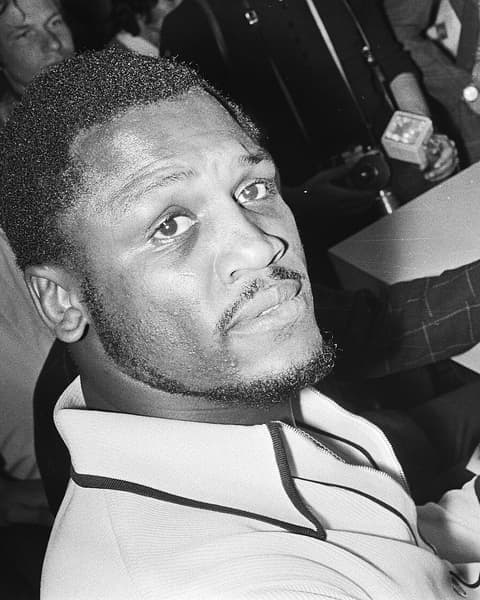
Parrying came to boxing from fencing: Daniel Mendoza's 'scientific' style of the 1780s and 1790s included careful parrying of blows, and pupils such as Isaac Bitton copied it. A book from 1812 said Mendoza could strike more often and 'stop' blows more deftly than any other man, and he was known for stopping and returning with the same hand. In the gloved era the classic upright guards relied on parries against straight punches, and technicians such as Ezzard Charles parried with both hands. USA Boxing still lists the parry among its core hand defences.
In the rules
Drills
Your partner throws slow jabs. Parry each one with your rear hand and return it to your chin. After 20 clean reps, add a counter jab.
Your partner throws a jab or a cross at random. Parry the jab with your rear hand and the cross with your lead hand, then counter. Keep contact light.
Jab a double-end bag and parry it as it rebounds toward you, then punch again. Keep the touches short and crisp.
Legends known for it


We teach it in Boxing. A coach will fix the details you can't see yourself. Join now and book your first class for $20, paid online.
Related techniques
A slip moves your head just off the line of a straight punch, so it misses by centimetres while you stay in range to hit back. The movement comes…

The high guard brings both gloves up to your forehead and your forearms together in front of your face, so punches land on gloves and arms instead…

The jab is a fast, straight punch with your lead hand. It starts closest to the target and needs the least commitment, so it is the most-used punch…


Counterpunching means letting the opponent attack first, making the attack miss or land on your guard, and hitting back into the opening it leaves…
The shoulder roll turns your upper body away from a straight punch so it glances off your raised lead shoulder, then turns you back with a counter.…
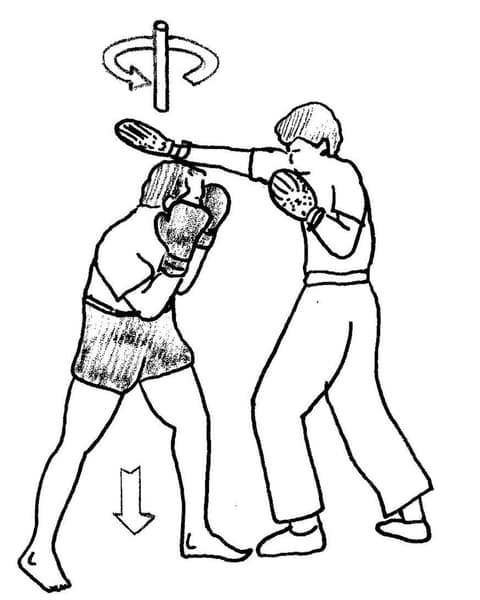
Bobbing and weaving takes your head down and under a hook, then across and up on the other side of the punch. The drop comes from bending your…