Also called Pull-back counter, Lean-back counter, Pull and return
The pull counter shifts your weight back so the opponent's jab or lead punch falls just short, then fires your rear hand straight down the middle as their arm comes back, the moment they are least ready to defend. It punishes fighters who reach. Floyd Mayweather Jr. made the right-hand pull counter a trademark, often baiting the punch with a lowered guard.
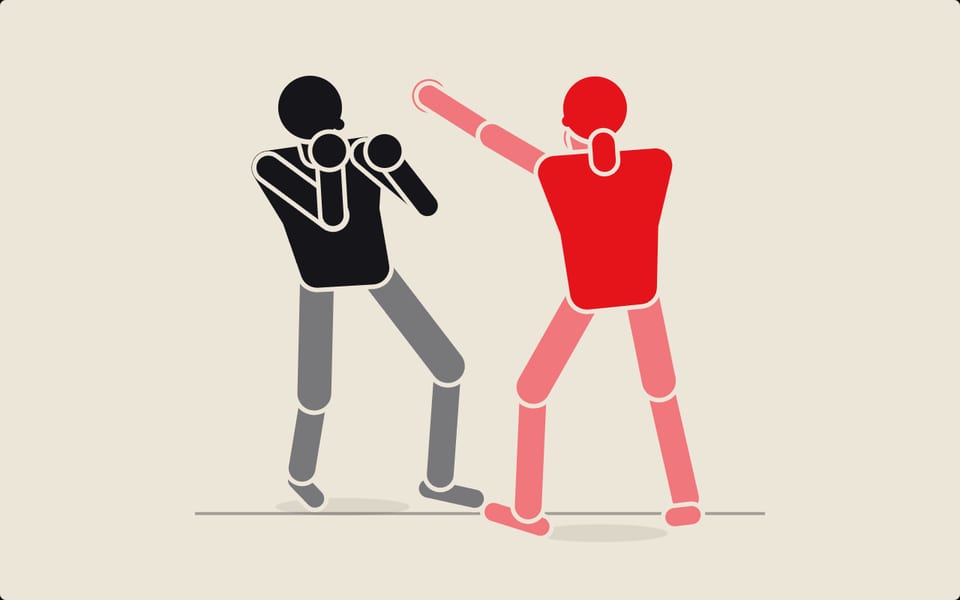
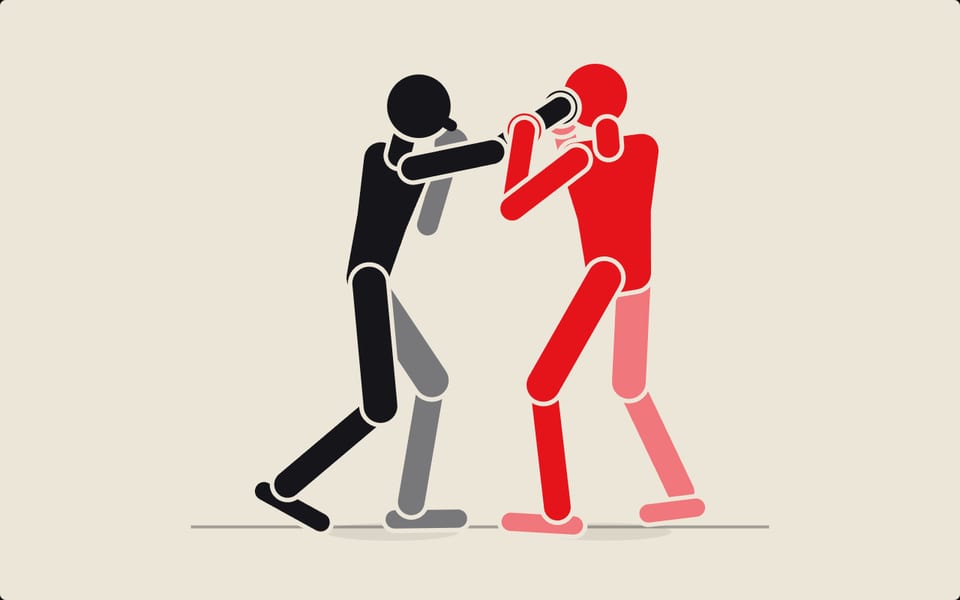
Satori's coaches are filming every technique, full speed and slow motion from two angles. Until it's up, the diagram shows the movement step by step.
How to do it
Start: Just at the edge of the opponent's jab range, weight centred, rear hand loaded by your chin and the lead hand ready to parry or cover. It is often thrown from a shoulder-roll guard with the lead shoulder high.
- 1Stay at the edge of their jab range so the jab has to reach.
- 2As the jab comes, shift your weight onto the rear leg and move your head straight back a few centimetres by bending the rear knee.
- 3Keep the chin tucked and the lead hand ready to parry or catch.
- 4The moment their jab stops short and starts back, push off the rear leg to bring your weight forward again.
- 5Fire the rear straight into the gap their returning arm leaves.
- 6Recover to guard or step off at an angle.
- Pull, then push: the rear leg is the spring.
- Just out of range, not out of the fight.
- Counter on the way back.
- Use it sparingly.
- Leaning back from the waist so far that you can't punch back. Fix: move your head only a few centimetres by shifting weight to the rear leg.
- Pulling straight back every time. Fix: mix in slips and blocks so the opponent can't learn to follow up with a second punch.
- Countering late, after they have reset. Fix: fire as their arm returns.
- Pulling with the hands down against a fighter who follows up. Fix: keep the lead hand ready to parry.
Safety: Keep your partner's jabs slow and light at first, and don't lean back against kicks, which reach much further than punches.
When to use it
- Against an opponent who reaches with the jab or lunges with lead punches.
- When the opponent jabs in a predictable rhythm.
- From a shoulder-roll guard at mid range.
- Lower your lead hand or lean slightly forward to bait the jab.
- Back up in straight lines so they reach to follow you.
- Let them land a few pawing jabs to set the rhythm, then pull and counter.
- Lead hook as they come forward
- A second straight
- Step off to the lead side
- Following the jab with a second punch: the pull leaves you on the rear leg, where a double jab or jab-cross can catch you.
- Stepping in with the jab instead of reaching, so there is no room to pull.
- Kicks: leaning back does not take you out of range of a kick.
- Don't overreach: step in with the jab rather than extending past your balance.
- Double the jab or follow with the cross so the pull doesn't meet a single punch.
- Bring the jab hand straight back and keep the rear glove high.
The physics
The pull-counter wins with distance. As the jab comes, rock your weight back onto the rear foot and lean the upper body back just far enough that the fist runs out of reach, then push off that loaded rear leg and fire back while his arm is still extended or on its way home.
A straight punch reaches top speed just before it lands and has nothing left once the arm is fully straight, so a jab that falls a little short does no damage and leaves his face open. Your rear leg works like a loaded spring: the weight you sink onto it on the way back becomes drive on the way forward. The margin is small, so measure the pull; lean too far and your head goes behind your heels, killing your balance and your return punch.
- Myth: pulling far back is safer. The farther you lean, the longer and weaker your return, and your centre of mass drifts behind your heels; the aim is to make the punch fall just short.
Masters and famous moments

As Aldo charged in with a right-left combination, McGregor moved backward and landed a left hook on the chin that knocked him out in 13 seconds, the fastest finish in UFC title-fight history.
Across the arts
Pull back from the jab and return a rear straight down the middle.
From a shoulder-roll guard (lead shoulder high, lead hand low), pull back from the jab and counter with the rear hand. Mayweather often lowered his guard to bait the punch first.
In MMA the return is often a hook: at UFC 194 Conor McGregor moved backward from José Aldo's lunging punches and landed a left hook.
History
Pulling and leaning back are standard ways to make a punch miss: you move the upper body back and shift your weight onto the rear leg so the punch falls short or loses force. The pull counter adds the return punch as the attacker's arm comes back. Floyd Mayweather Jr. is known for the right-hand pull counter, often baiting opponents by lowering his guard and using the forward spring of his return to add power; coaching guides advise using it sparingly to keep the surprise.
In the rules
Drills
Your partner jabs at your chin with a mitt at half speed. Pull back out of range, then counter into the mitt on their other hand with a straight rear hand as their arm returns.
In front of a mirror, pull your head back over the rear knee, then push forward into a rear straight. Check that your head never goes behind your rear foot and that your chin stays tucked. Three rounds.
Legends known for it



We teach it in Boxing. A coach will fix the details you can't see yourself. Join now and book your first class for $20, paid online.
Related techniques
Counterpunching means letting the opponent attack first, making the attack miss or land on your guard, and hitting back into the opening it leaves…

The cross-counter is a rear-hand punch thrown the instant the opponent jabs: you slip your head inside the jab and drive a straight right over…
The shoulder roll turns your upper body away from a straight punch so it glances off your raised lead shoulder, then turns you back with a counter.…


A slip moves your head just off the line of a straight punch, so it misses by centimetres while you stay in range to hit back. The movement comes…

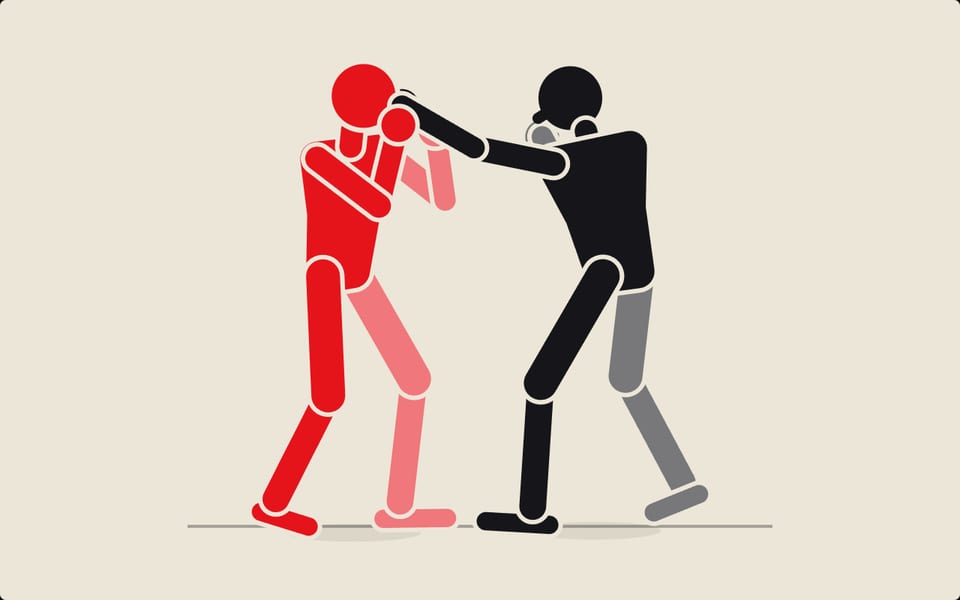
The jab is a fast, straight punch with your lead hand. It starts closest to the target and needs the least commitment, so it is the most-used punch…
The cross is the straight punch with your rear hand: the right for an orthodox fighter, the left for a southpaw. The rear foot, hips and shoulders…