Also called Bobbing and weaving, Roll, Rolling under, Rotation
Bobbing and weaving takes your head down and under a hook, then across and up on the other side of the punch. The drop comes from bending your knees, the weave is a U-shaped path, and you come up ready to punch. Pressure fighters like Joe Frazier and Mike Tyson used it to get inside taller opponents.
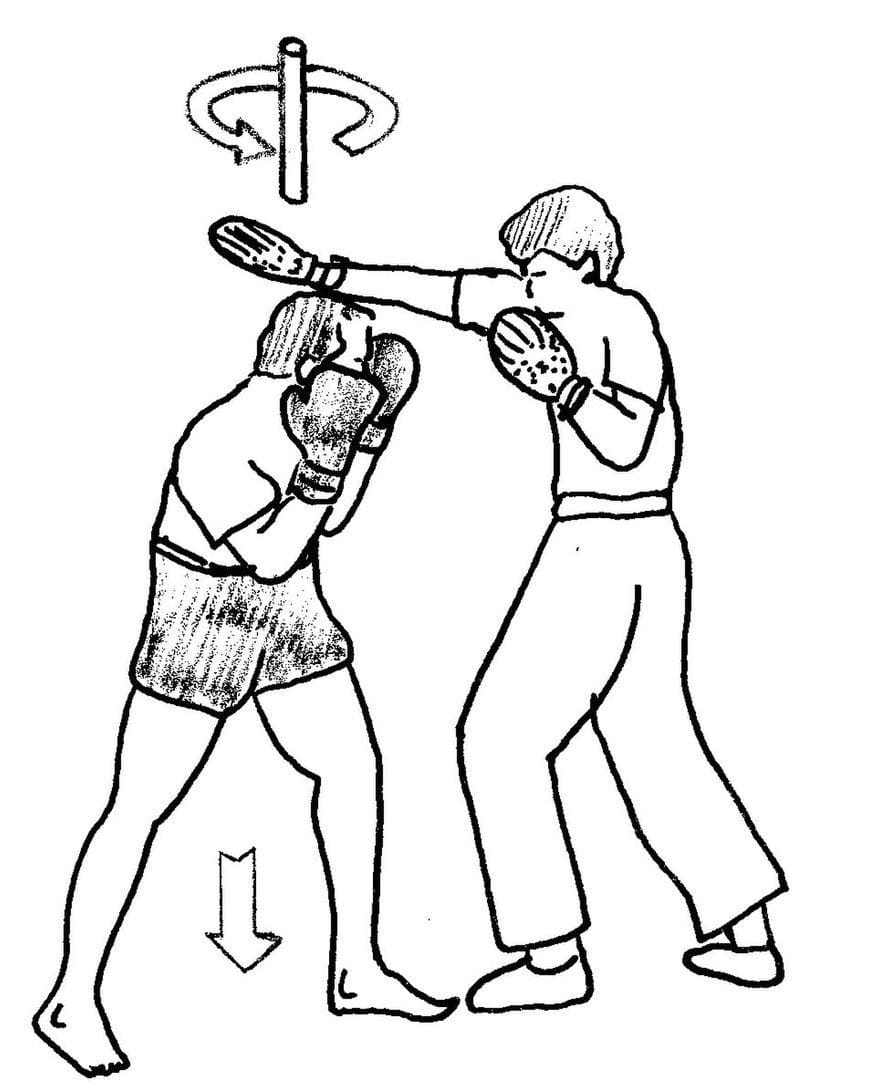
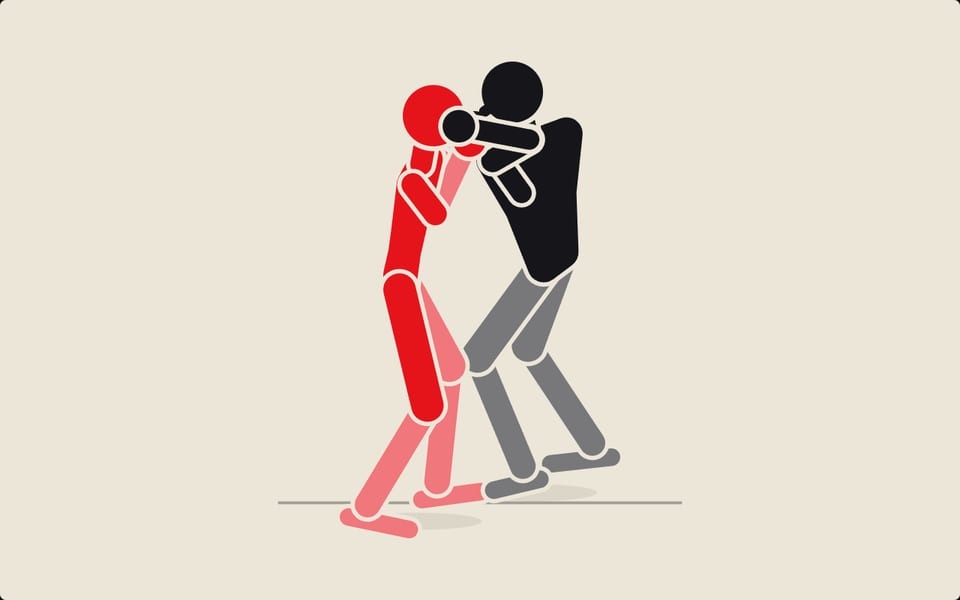
Satori's coaches are filming every technique, full speed and slow motion from two angles. Until it's up, the diagram shows the movement step by step.
How to do it
Start: Your stance at mid or close range, against hooks and other wide punches. Knees soft, hands high, eyes on your opponent.
- 1See the hook start from your opponent's shoulder.
- 2Bend your knees to drop your head just under the line of the punch, keeping your back fairly straight.
- 3Dip toward the side the hook is coming from, so you go under it rather than away from it.
- 4As the punch passes over your head, carry your head across in a U shape to the other side.
- 5Keep your eyes on your opponent and your hands up the whole time.
- 6Rise on the far side by straightening your legs, loaded to punch.
- 7Counter as you come up with a hook, an uppercut or a cross.
- Knees, not waist.
- Under and across: draw a U with your head.
- Eyes up the whole way.
- Head stays above their belt.
- Come up punching.
- Bending at the waist. Fix: bend your knees and keep your back fairly straight.
- Going too low. Fix: drop just enough for the punch to miss; your head stays above their belt line.
- Rolling the same way the hook is travelling, so it follows your head. Fix: dip toward the side it starts from, then weave across under it.
- Squaring up your feet. Fix: stay in your stance; the roll comes from the knees and hips.
- Dropping your hands or your eyes. Fix: gloves at your face, eyes on your opponent.
Safety: Start at walking pace and build speed slowly. Don't duck below your partner's belt: it's dangerous and a foul. In Muay Thai, MMA or any rules with knees, keep the roll shallow, because a low head can meet a knee.
When to use it
- Against hooks and overhands, which you can duck under.
- When you're shorter and need to get inside a longer reach.
- Against an opponent who keeps throwing the same wide punch.
- Pressure behind a high guard so your opponent throws hooks to keep you off.
- Feint a jab to draw their counter hook, then roll under it.
- Step in as you roll to close the distance.
- A lead hook as you rise
- An uppercut from the loaded legs
- A body shot while you're low
- Uppercuts timed to your duck.
- Straight punches down the middle as you come up in front of them.
- Knees, in rule sets that allow them, against a head that drops too low.
- Mix uppercuts into your combinations.
- Keep your punches short and straight against a crouching opponent.
- Move sideways so they can't set their feet to roll and counter.
The physics
Bobbing and weaving drops your whole body under a hook and brings it up on the other side, tracing a U-shaped path. Bend the knees, not the waist, so your head drops straight down while your centre of mass stays over your base, then shift your weight across and rise back into stance on the outside of the punch.
Hooks travel on a flat curve at head height, so dropping below that curve makes them miss, and because hooks take longer to arrive than straight punches, there is more time to read them. Coming up on the outside leaves your legs already loaded to punch back. Ducking by bending at the waist does the opposite: it moves your head forward past the lead knee, takes your eyes off the opponent and feeds your face to an uppercut.
- Myth: you duck by bending at the waist. Bend your knees so your head drops while your eyes, balance and punches stay ready.
Masters and famous moments
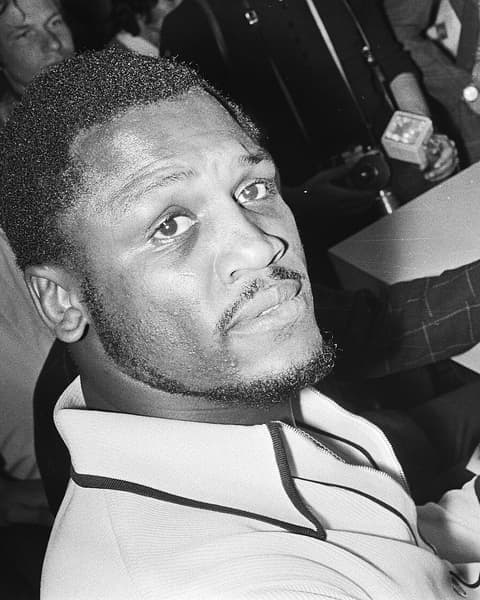
A crouching, bobbing and weaving Frazier pressured Ali all night, taking jabs to get inside and punishing the body. His left hook dropped Ali in the final round and he won a unanimous decision.
Against a respected counterpuncher, Frazier used his newly sharpened defence to slip, bob and weave through Quarry's punches. The fight was stopped after the seventh round and was named The Ring's Fight of the Year.
Early on Frazier couldn't bob and weave inside Ali's jab, but in round 5 his timing and rhythm returned: he made Ali miss and landed his first solid left hooks of the fight. Ali still won when Frazier's trainer stopped it after the 14th.
Across the arts
The basic roll USA Boxing teaches beginners: bend the knees and move the upper body toward the hook, then back the other way as it passes overhead.
A constant rhythm of bobbing and weaving while walking forward, taught to Joe Frazier by Eddie Futch to make him harder for taller men to hit.
In Cus D'Amato's system the bob and weave is combined with a tight high guard and rising hooks and uppercuts.
Used more shallowly, because a low head is exposed to knees and high kicks.
History
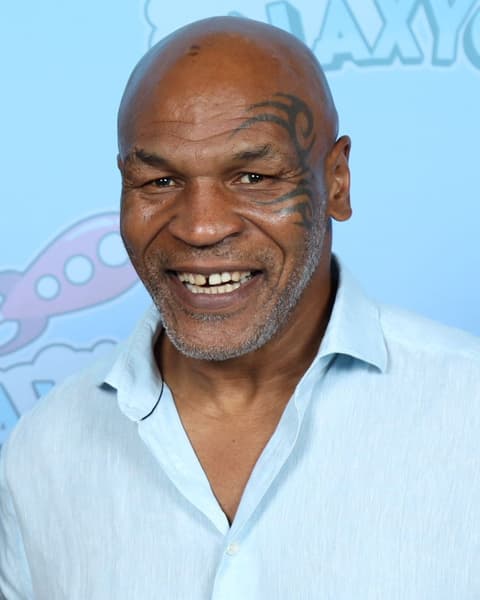
Bobbing and weaving grew in importance after gloves arrived with the Queensberry Rules, when slipping, bobbing and countering became central to defence. Jack Dempsey and Rocky Marciano were among its famous users. Trainer Eddie Futch, who joined Joe Frazier's team in 1966, taught him the bob-and-weave style that made him harder for taller men to hit. Cus D'Amato built it into the peek-a-boo style that Mike Tyson made famous.
Drills
Tie a rope at shoulder height across the gym. Walk along it in your stance, rolling under it from side to side with each step, eyes forward and hands up. Add a hook each time you come up.
Your partner throws slow hooks with a mitt. Roll under each one and come up with a hook to their other mitt. Build speed over several sessions.
Shadowbox a 3-minute round in which every second combination starts with a roll under an imaginary hook.
Legends known for it

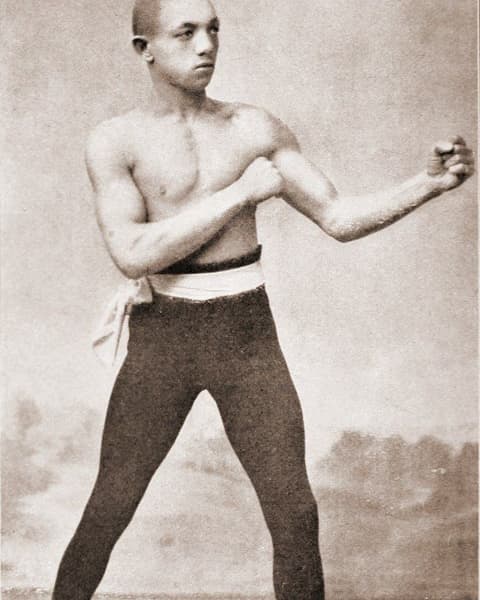

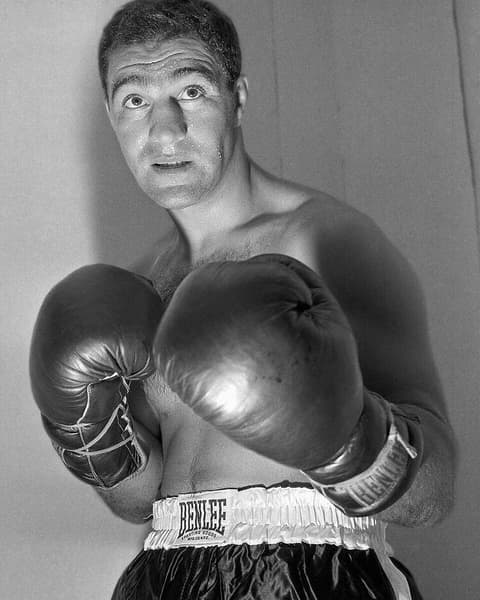

We teach it in Boxing. A coach will fix the details you can't see yourself. Join now and book your first class for $20, paid online.
Related techniques
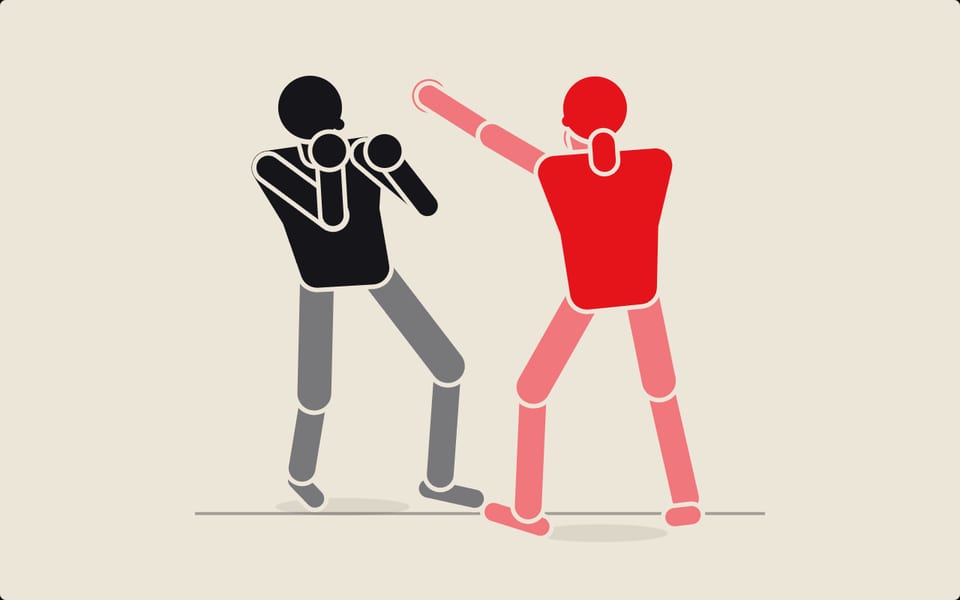
A slip moves your head just off the line of a straight punch, so it misses by centimetres while you stay in range to hit back. The movement comes…


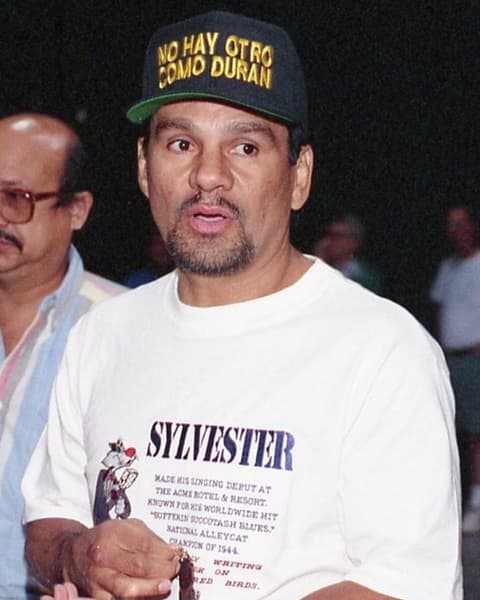
Peek-a-boo is the tight, attacking defence taught by trainer Cus D'Amato: gloves held by the cheeks, elbows tucked to the body, and constant…
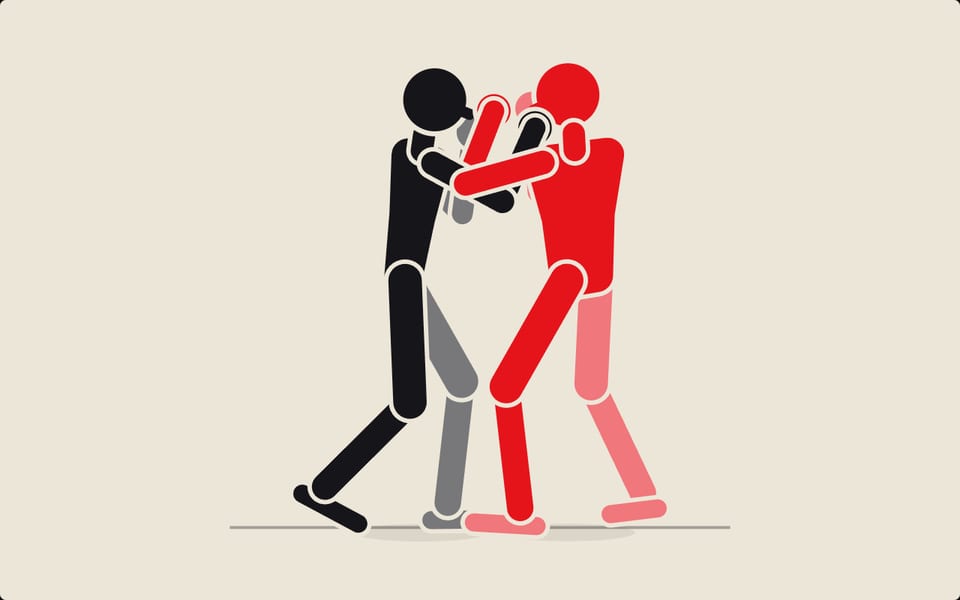
The hook is a bent-arm punch that travels on a short horizontal arc into the side of the jaw or the body. Its power comes from turning the foot,…

The uppercut is a close-range punch that rises vertically from below the opponent's line of sight into the chin or the solar plexus. It is the…
Counterpunching means letting the opponent attack first, making the attack miss or land on your guard, and hitting back into the opening it leaves…
The shoulder roll turns your upper body away from a straight punch so it glances off your raised lead shoulder, then turns you back with a counter.…