Also called Fighting stance, Orthodox stance, Southpaw stance, On guard
The boxing stance is the ready position every punch, defence and step starts from and returns to. Orthodox boxers lead with the left foot and hand, southpaws with the right. A good stance keeps you balanced and covered, and lets you punch, defend or move in any direction without first fixing your feet.
Satori's coaches are filming every technique, full speed and slow motion from two angles. Until it's up, the diagram shows the movement step by step.
How to do it
Start: Stand in front of a mirror or a partner, feet under your hips and hands relaxed. Choose your lead side: orthodox (left foot forward) is the normal stance for right-handers and southpaw (right foot forward) for left-handers, though some right-handers, like Oleksandr Usyk, box southpaw.
- 1Step your lead foot forward so your body turns about 45 degrees to the side, feet roughly shoulder-width apart.
- 2Point your lead toes roughly at your opponent and turn your rear foot out a little, keeping some width between your feet as if standing on two rails.
- 3Bend your knees slightly and share your weight evenly between both feet.
- 4Lift your rear heel a little so you're ready to push off.
- 5Raise your lead hand to about eye level, a little in front of your face.
- 6Hold your rear fist by your chin, with that elbow close to your ribs.
- 7Tuck your chin down behind your lead shoulder and keep your eyes on your opponent.
- 8Relax your shoulders and breathe: ready, not rigid.
- Chin down, hands up.
- Two rails, not a tightrope.
- Weight in the middle, never on your heels.
- Elbows in to guard the ribs.
- Watch the chest (some coaches say the eyes) and see the whole body.
- Feet in one line, like a tightrope, so you tip over sideways. Fix: move the rear foot a few centimetres out to the side.
- Feet too wide or too narrow. Fix: roughly shoulder-width; too wide slows you down, too narrow costs balance.
- Flat on both heels. Fix: lift the rear heel slightly and keep your weight on the balls of your feet.
- Standing straight up with the chin raised. Fix: soft knees, chin tucked behind the lead shoulder.
- Dropping the lead hand after the jab. Fix: bring the jab straight back to your face along the same line.
Safety: Stance work is low risk. Warm up your ankles, knees and hips, train on a dry, non-slip floor, and have a coach check your stance early so bad habits don't set in.
When to use it
- Every exchange: each punch and each defence starts and finishes here.
- Whenever you reset, after a combination, a clinch break or a count.
- Against an opposite-stance opponent, where the position of your lead foot decides who gets the better angle.
- Lengthen the stance slightly to jab and move at range; shorten and lower it a little to fight inside.
- Stand a little more side-on to present a smaller target, or a little squarer to use both hands and cover the body.
- Against an opposite-stance opponent, set your lead foot outside theirs, as USA Boxing teaches.
- A jab from the stance, then straight back to it
- Step and slide in any direction
- A stance switch, once both sides are trained
- Feints that make you raise or drop your hands, opening the body or the head.
- Timing your habits: Max Schmeling beat Joe Louis in 1936 by landing right hands over the left Louis dropped after jabbing.
- Winning the lead-foot battle in open stance, which gives your opponent a clear line for the rear hand.
- Make a well-set opponent move: feints and angles force them to step, and a stance is weakest mid-step.
- In open stance, keep your lead foot outside theirs and circle away from their rear hand.
- Study their habits between punches, such as a hand that drops or a chin that lifts.
The physics
Your stance is a balance problem: keep your centre of mass over a base of support wide enough to be stable but narrow enough to move. Stand with your feet about shoulder-width apart and staggered, so the base is long from front to back and wide from side to side, a shape that resists pushes and punches from any direction.
Bend the knees a little and stay on the balls of the feet, which lowers your centre of mass and keeps the legs loaded so you can push off the floor instantly. Turn slightly side-on to shrink the target, and keep the hands high and the chin tucked behind the lead shoulder, so a blow meets gloves, shoulder or forehead instead of the point of the jaw, where it would spin the head on the neck. The stance is also the start of every kinetic chain, because each power punch begins with a foot pushing into the floor.
- Myth: your weight should stay exactly 50/50. That is the neutral point you move from and return to; elite boxers loaded the front foot to about 61% as the cross landed, using the front leg as a brace (Dinu & Louis 2020).
Masters and famous moments
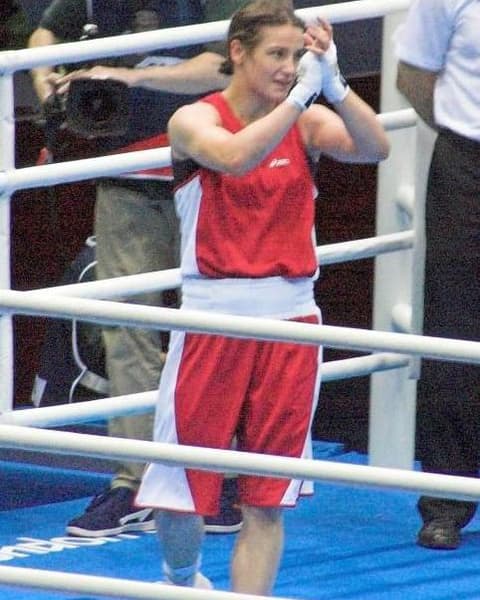
Orthodox against southpaw in the first women's fight to headline Madison Square Garden: ten rounds of open-stance boxing that Taylor won on a split decision. It is the stance matchup every orthodox and every southpaw boxer has to prepare for.
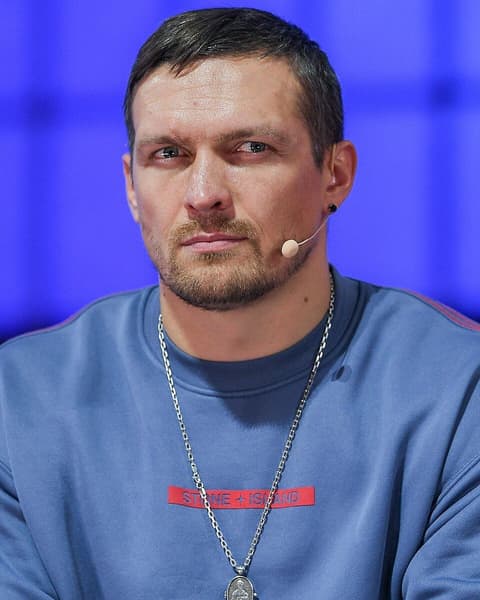
Usyk is right-handed but boxes southpaw, and he beat the orthodox champion on a unanimous decision to take four heavyweight titles. Proof that your stance doesn't have to follow your writing hand.

The cautionary tale: Schmeling studied Louis's style, saw that he dropped his left hand after jabbing, and exploited it to hand Louis his first professional loss by knockout. Louis won their 1938 rematch in the first round.
Across the arts
Orthodox leads with the left foot and hand, southpaw with the right; everything else is a mirror image. A southpaw's jab and hook come from the side most orthodox boxers are less used to facing.
An upright stance suits boxers who move and jab. A crouch puts more weight over the bent lead leg, which gives explosive lead hooks; Mike Tyson fought from one.
A squarer stance brings both hands into play and covers the body; a more side-on (bladed) stance turns the torso away from the opponent. Coaches and boxing traditions differ on which to favour.
Squarer and more upright, with more weight on the rear leg so the lead leg is free to check kicks or throw a teep.
Usually wider and a little lower than a boxing stance, with the hands ready to frame or catch, because the opponent can shoot for takedowns.
History
Bare-knuckle boxers stood more upright, leaning back with their forearms held out in front of them. After the 1867 Queensberry Rules made gloves compulsory, the stance changed: the torso tilted forward and the hands came in close to the face, because the gloves could now block punches. Early 20th-century hook throwers such as Jack Johnson still held a more horizontal guard than today's vertical-armed stance. 'Southpaw' is American slang for a left-hander; the popular story ties it to baseball, but the word is older.
In the rules
Drills
Take your stance in front of a mirror and check feet, knees, hands and chin. Relax, step out, and take it again. Do 20 reps on your normal side.
Hold your stance while a partner gives light pushes to your shoulders and chest from the front and the sides. Absorb each one with your knees without stepping.
Shadowbox a 3-minute round of jabs and steps. After every punch, freeze for a second and check that your stance and guard are exactly where they started.
Legends known for it
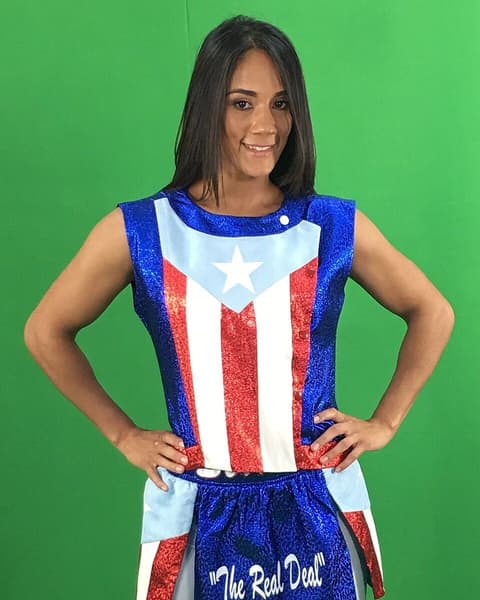


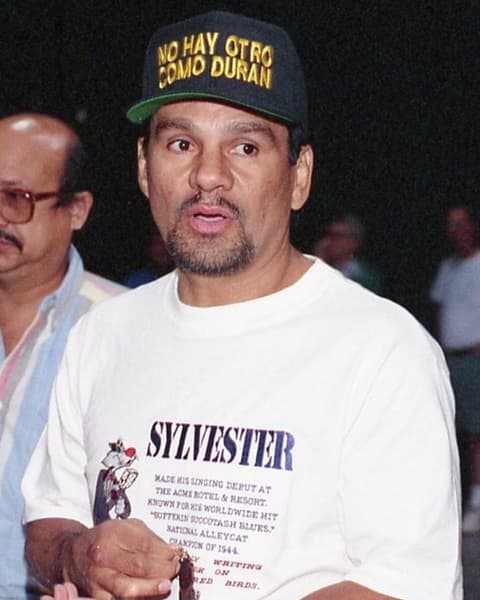
 c. 1993–2024
 2002–now
 2001–2023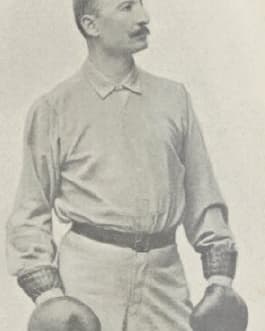
We teach it in Beginner Classes (Minimal Contact). A coach will fix the details you can't see yourself. Join now and book your first class for $20, paid online.
Related techniques
Switching stances means changing from orthodox to southpaw, or back, on purpose during a fight. It changes your angles, puts a different hand in…
Step and slide is boxing's basic way of moving: the foot nearest the direction you want to go steps first, pushed by the other foot, and the other…
The high guard brings both gloves up to your forehead and your forearms together in front of your face, so punches land on gloves and arms instead…
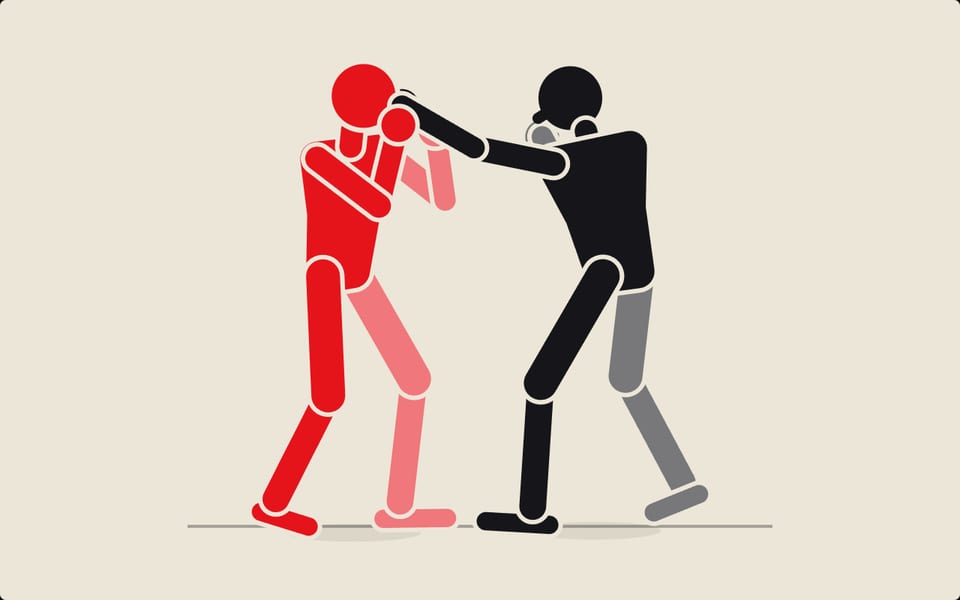
The jab is a fast, straight punch with your lead hand. It starts closest to the target and needs the least commitment, so it is the most-used punch…

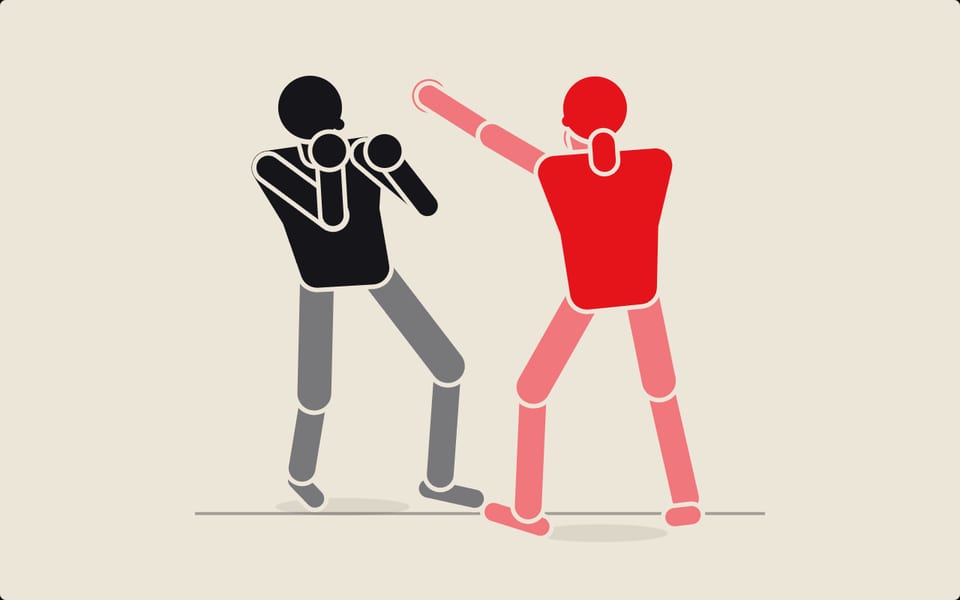
A slip moves your head just off the line of a straight punch, so it misses by centimetres while you stay in range to hit back. The movement comes…


 1984–2001