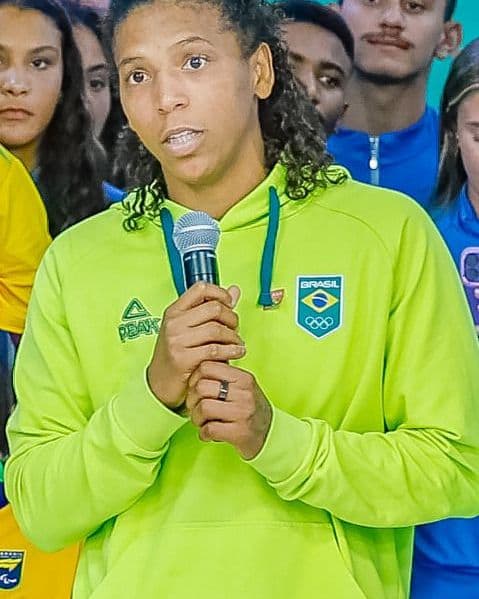
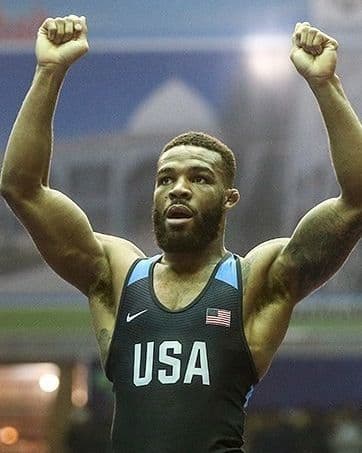
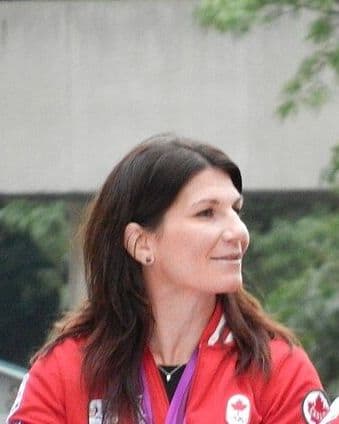
組み方Kumikata · say “koo-mee-KAH-tah” · “way of gripping: how you engage and take hold of your partner's judogi”
Judo: 組み手 Kumite (“taking grips (the judo sense of the word)”) · Judo: 引き手 Hikite (“pulling hand: the hand that grips the sleeve”) · Judo: 釣り手 Tsurite (“lifting hand: the hand that grips the collar or lapel”)
Also called Gripping, Grip fighting, Kumi-kata, The grip dispute
Kumikata is the way you take hold of your partner's jacket. In judo most attacks start here: the grip helps you control your partner and, under the current rules, is a prerequisite to throwing. The standard grip is one hand on the lapel or collar (tsurite) and the other on the sleeve (hikite), and grip fighting is the contest over who gets the better hold first.
Satori's coaches are filming every technique, full speed and slow motion from two angles. Until it's up, the diagram shows the movement step by step.
How to do it
Start: You and your partner stand facing each other in judogis, in a natural stance with your knees soft. At first your partner lets you take the grips; later they fight for them. The steps below are the standard sleeve-and-lapel grip, right-handed. Left-handed judoka mirror everything.
- 1Face your partner in a natural stance, with your weight centred and your knees soft.
- 2Reach with your sleeve hand (hikite) and take the outside of their sleeve around the elbow.
- 3Reach with your lapel hand (tsurite) and take their lapel high, around collarbone level, with your elbow close to your body.
- 4Keep both hands relaxed and hold lightly, so you can feel your partner move and change your hold if you need to.
- 5Pull with your trunk, not just your arms, and keep the sleeve pull level with the mat at first.
- 6Close your hands fully only at the moment you commit to the throw.
- 7If your partner strips a grip, take it back straight away or switch to another legal grip that suits your throw.
- 8Attack while you hold the grip: in IJF competition you have 45 seconds after a normal grip, as long as there is positive progression.
- Sleeve at the elbow, lapel at the collarbone.
- Hold lightly, close hard at the last moment.
- Elbow in, hand above it.
- Pull with your trunk, not your arms.
- Break a grip with one hand and keep the other on.
- Gripping hard too early. Fix: hold lightly until you attack; stiff arms telegraph your plan and cannot add power later.
- Keeping your arms stiff and at full length. Fix: stay close with relaxed, bent arms and pull with your whole body.
- Holding a grip without attacking. Fix: attack within the time limit, because the IJF penalizes negative holds, and non-classical grips are only allowed while you are attacking.
- Gripping the sleeve too high or too low. Fix: hold around the elbow. Too high lets your partner turn out, and too low makes the pull reach the shoulder late.
- Letting go with both hands after a break. Fix: keep one hand on, because breaking a grip with two hands and holding nothing is a shido.
Safety: Never bend your partner's fingers back or wrap the belt or jacket around their body to control them; the IJF penalizes both. Do not use a collar or lapel grip to force your partner into a bent-over position as a way to defend or block, which is penalized too, and remember that any action that endangers the neck or spine can draw a direct hansoku-make. Keep your fingernails cut short, as the IJF requires. Build grip strength gradually and train opening as well as closing; a Toronto judo teacher warns that working only on closing can unbalance the muscles and lead to tendinitis and carpal tunnel problems.
When to use it
- Before every standing technique: in judo a grip is the usual way into a throw, and the current rules treat it as a prerequisite.
- After "Hajime!" and every restart: the grip fight begins, and once you have a normal grip the clock on your attack starts.
- When you want to shut down your partner's best throw: take or strip the grip they need.
- On the ground in a jacket, where the collar grips are the start of chokes such as the cross collar choke.
- Choose your approach: the Kodokan includes right or left approach, and natural or defensive posture, in kumikata.
- Match the grip to the throw you want. Every grip has its own advantages and disadvantages, and the throw you attempt usually dictates where you hold.
- Change your grip to suit your partner's size and attitude, in each class and each round.
- Pull with both hands to break your partner's balance and fit in for the throw (kuzushi, tsukuri, kake).
- Re-grip and go again if your first attack is blocked.
- If the throw is not finished, follow it to the ground for a pin or a choke.
- Your partner strips it with one hand, or with both hands as long as they keep at least one hold on you.
- Your partner breaks it with a push and a pull: their lapel hand pushes your chest away while their sleeve hand pulls back, a "bow and arrow" motion taught by Olympic silver medallist Travis Stevens.
- Break the grip early, before both hands are in, and use your hands only: breaking it with the knee or leg, hitting the arm, covering the lapel or blocking the hand all draw a shido.
- Keep your posture while you break it. Stevens says a grip break should not break your own posture, so keep your chest and shoulders square.
- Do not hide from the grip. The IJF tells referees to penalize strictly an athlete who tries not to be gripped.
The physics
Gripping is friction plus leverage. A hand on the jacket holds only while friction beats the pull, and friction is proportional to how hard the cloth is squeezed; a deep grip with the cloth wrapped around the fingers adds a mechanical hold on top of friction, which is why it is harder to strip than fingertips on the edge of the lapel.
Once set, each grip is a handle for moving your partner's body: a lapel grip high near the collar acts farther from their hips than a grip at the chest, so the same pull tilts their upper body more, and a sleeve grip near the elbow controls the arm they would use to push you away. A straight arm carries force through the bones like a strut, which is why a locked-out arm keeps you at bay and why grip breaking starts by bending it. The forces are large and repeated: elite men pulled with about 450 newtons through the sleeve hand on a judo ergometer, and world-class women kept most of their grip strength through four hard matches.
- Myth: grip fighting is all forearm strength. In sub-elite judoka, trunk strength, especially of the back extensors and trunk rotators, was the best single predictor of the work done in judo-specific pulls (Helm et al. 2020).
Masters and famous moments
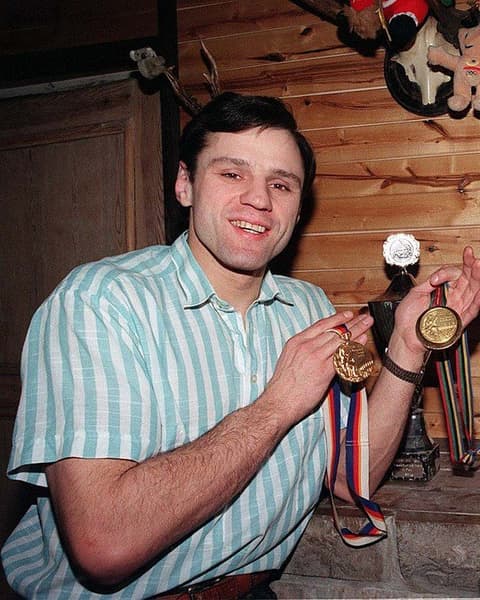
Tayot had no big standing throws but gripped superbly, and JudoCrazy's account calls the final largely a battle of grips. Legień won by a yuko from an opportunistic kosoto-gake, enough for his second Olympic gold.
A third shido for grip avoidance against Sulamanidze, the world number one, ended the final at 3:52 and gave Kotsoiev the gold. It is a clear case of the grip rules deciding an Olympic title.
Tayot beat the reigning world champion Okada by ippon. JudoCrazy's account says his unorthodox gripping flummoxed the Japanese favourite.
Across the arts
Your right hand takes their left lapel at collarbone height and your left hand takes their right sleeve at the elbow. Left-handed judoka mirror it. A 2022 scoping review found collar-and-sleeve is the most used grip in competition.
When you and your partner grip with the same side forward, right against right or left against left, it is ai-yotsu. When your stances are a mirror image, it is kenka-yotsu, the position the same review found used most in competition.
The IJF names collar and lapel, one-side, cross, belt, pocket and pistol grips as allowed while you are attacking. You get time to prepare your attack, but the same grips used to force your partner to bend, or to defend or block, are penalized.
Gi jiu-jitsu players grip the collar, sleeves and pants; the IBJJF takedown-scoring rule even mentions a grip on the pants. Fingers inside the opening of a sleeve or pant leg are a foul, although judo allows gripping inside the sleeve.
Sambo is also fought in a jacket and belt, and the FIAS rules penalize rolling up the sleeves or untying the belt. In sport sambo, avoiding a grip in a standing position counts as passive conduct.
MMA fighters have no cloth to hold. Under the Unified Rules, controlling an opponent by holding their shorts or gloves is a foul, and so is using the fence to control position.
History
Kumikata means 'way of gripping'. The IJF and Kodokan classification, which follows the Kodokan dictionary, calls it engagement positioning, and includes the right or left approach and natural or defensive posture. The IJF's rule book says judo is the only martial art derived from jujutsu where gripping the opponent is obligatory, and that this gave judo its technical wealth. Grip rules keep changing: the IJF's December 2024 summary of the new Olympic-cycle rules gave 30 seconds between a grip and an attack and forbade leg grabs and trouser grips, while its July 2026 rule book gives 45 seconds. A 2022 scoping review of 41 studies found that the collar-and-sleeve grip is the most used and that more experienced judoka hold the jacket for less time before attacking.
In the rules
Drills
Hang a judogi from a pull-up bar or a post at chest height. Take the standard grip, then change to another legal grip, and back. Keep your elbows in and your hands light until you pull. Do three sets of twenty changes.
Start a pace apart, each trying to take the standard grip first. When one of you has both hands in, the other breaks it with one hand, keeps a hold with the other and takes the grip back. Do three rounds of thirty seconds.
Take the standard grip on a relaxed partner. As they step, pull with your trunk, feel their weight move, then stop and reset. Do ten reps, then swap.
Legends known for it

We teach it in Throws. A coach will fix the details you can't see yourself. Join now and book your first class for $20, paid online.
Related techniques
Kuzushi is breaking your partner's balance so they cannot resist your throw. In judo it is the first of three parts of every throw: kuzushi (break…
Ukemi is the art of falling safely. Judo teaches four breakfalls (rear, side, forward and the forward roll) that spread the impact over your arm,…
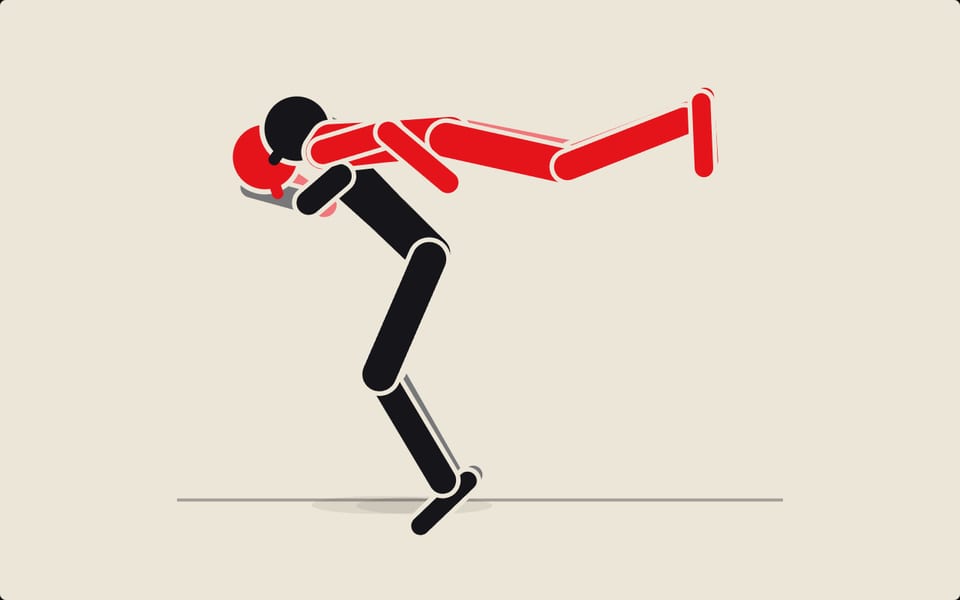
Seoi-nage is judo's shoulder throw. You turn your back into your partner, tuck an arm under theirs, load them onto your back and tip them forward…
 1985–2000
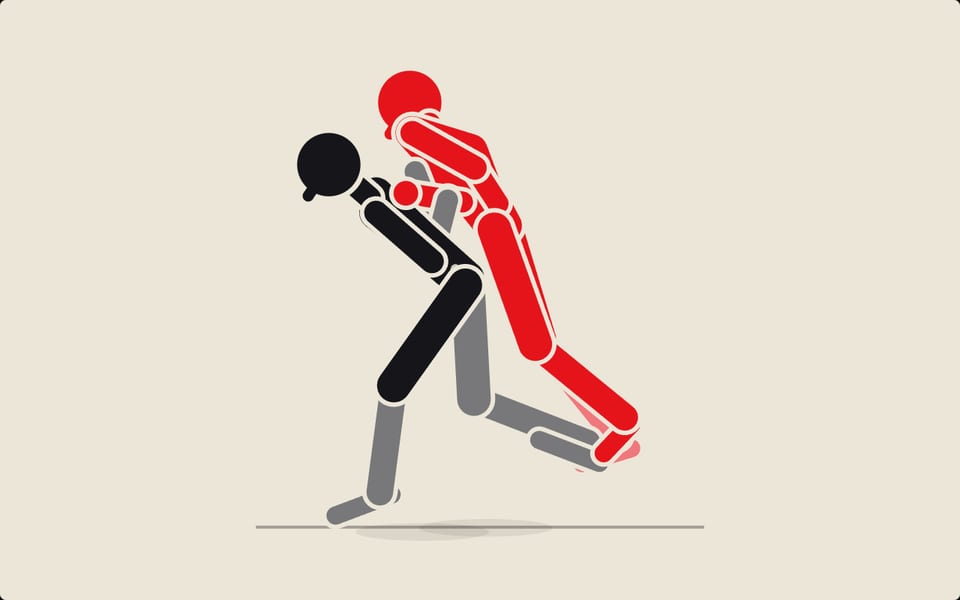
Uchi-mata is judo's inner thigh throw. You open your partner's feet, break their balance forward, turn in and swing your leg up between theirs,…



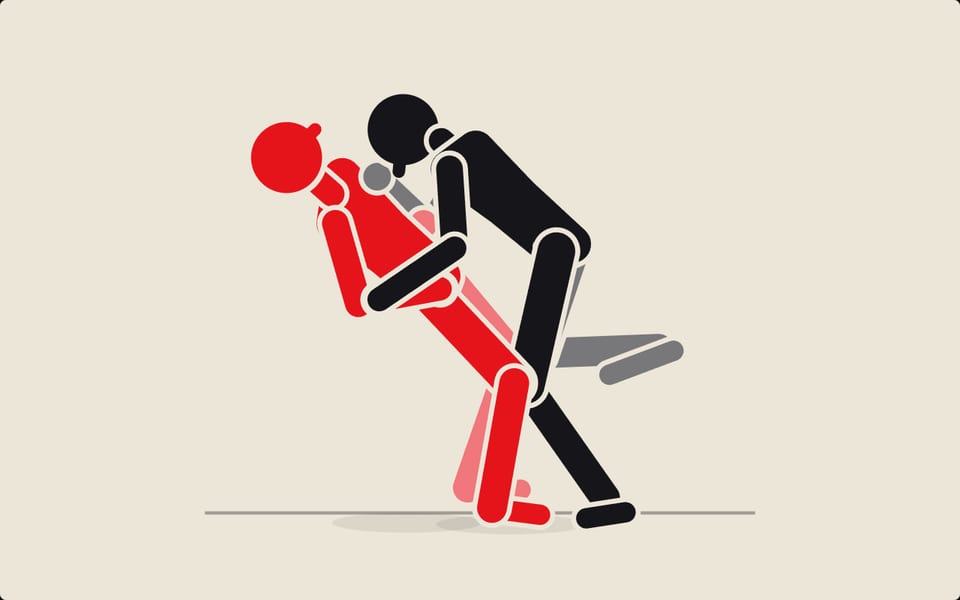
Osoto-gari is the 'major outer reap'. You break your partner's balance back onto one heel, step deep beside that leg and reap it away from behind…

Morote-gari is judo's double-leg takedown. You drop your level, step between your partner's feet, wrap both arms around their legs above the knees…