上四方固Kami-shiho-gatame · say “KAH-mee SHEE-hoh gah-TAH-meh” · “upper four-corner hold”
Judo: 崩上四方固 Kuzure-kami-shiho-gatame (“modified upper four-corner hold”)
Also called Upper four-corner hold, Top four-corner hold, North-south pin
Kami-shiho-gatame pins your partner from above their head. You lie chest to chest with your knees wide, slide your arms under their shoulders, grip their belt on both sides and press their shoulders into the mat. Grapplers call the position north-south. It is a steady pin that flows easily into other holds and into armlocks.
Satori's coaches are filming every technique, full speed and slow motion from two angles. Until it's up, the diagram shows the movement step by step.
How to do it
Start: Your partner is flat on their back and you are at the top of their head, facing down their body. You usually get here after a throw that lands them in front of you, or by circling round from a side pin. Everything below is the plain form; the modified form is under variations.
- 1Come to the top of your partner's head, facing down their body, from a side hold or after a throw.
- 2Drop your chest onto theirs with your hips low and your knees spread wide on either side of their head.
- 3Slide both arms under their armpits, one on each side, and take hold of the belt on each side.
- 4Squeeze your elbows toward your ribs so your arms pull their shoulders into the mat.
- 5Put your head down on the mat beside theirs and press your chest onto their chest, with your weight on them rather than on your knees.
- 6Stay on your toes and walk your feet round to follow as they bridge or turn, keeping chest to chest.
- 7Hold for 20 seconds for ippon. If they trap one of your arms, switch to the modified form or to another pin.
- Chest to chest, hips low.
- Elbows in, shoulders pinned.
- Wide legs, up on your toes.
- Cheek to the mat beside their ear.
- Weight on their chest, not on your knees.
- Letting your hips rise so your weight sits on your knees. Fix: drop your hips and let your chest carry the weight.
- Gripping with straight arms, so they can slide their shoulders out. Fix: bend your elbows and keep them tight to your ribs.
- Keeping your legs close together, which lets a bridge roll you. Fix: spread your legs wide and stay on your toes.
- Lifting your head, which gives them room to turn. Fix: cheek down beside their ear.
Safety: Keep your weight on their chest, not on their throat or face, and never shove your head into theirs to crank the neck. Let go at the first tap or call. Heavy chest pressure can make it hard to breathe, so ease off the moment your partner says so. When you change position, do not drop a knee onto their head or ribs. Practise transitions slowly.
When to use it
- When a throw lands your partner on their back in front of you and you can step to the top of their head.
- When your partner keeps turning into you from the side: at the top of the head that angle is gone.
- When you want to change pins without losing the count: a pin-to-pin change keeps the osaekomi time running.
- As the start of a north-south choke or an armlock chain in jiu-jitsu.
- After a straight over-the-head throw, step round to the top of the head as they land.
- From kesa-gatame, walk your hips up their body toward the head as they try to push you away.
- From yoko-shiho-gatame, circle your hips and hands to the top of the head when they block the near hip.
- From side control in jiu-jitsu, step over their head into north-south.
- Kuzure-kami-shiho-gatame, the modified hold, when an arm gets trapped or the belt grips are lost.
- Kesa-gatame or yoko-shiho-gatame by circling back to the side without losing the pin.
- An armbar or a north-south choke, if you are training those with a coach.
- Shrimp: turn onto the side, bring the hips away and get the knees between you.
- Circling bridge: bridge and turn toward one side to roll you over and take the top.
- Trap-and-turn: pin one of your arms against their body and turn toward it to slip out.
- Keep your elbows tight and your forearms as frames against their chest so they cannot drop their full weight on you.
- Turn onto your side early and pull a knee in; do not wait to be pinned flat.
- Bridge as they reach for your belt, before both arms are under your shoulders.
The physics
Kami-shiho-gatame pins from above your partner's head. Your chest lies on their chest, your arms go under their shoulders to grip their belt, and your knees or feet spread wide on either side.
Your chest weight presses their shoulders and upper back to the mat, and the belt grips lock the shoulders so they cannot turn, which means the hips can move but cannot turn the upper body. Keeping your hips low and your base wide keeps your centre of mass inside your own support as they bridge, so the push lifts you a little instead of rolling you. Every bit of weight you rest on your own knees is weight they do not have to carry, so keep the load on their chest.
Masters and famous moments

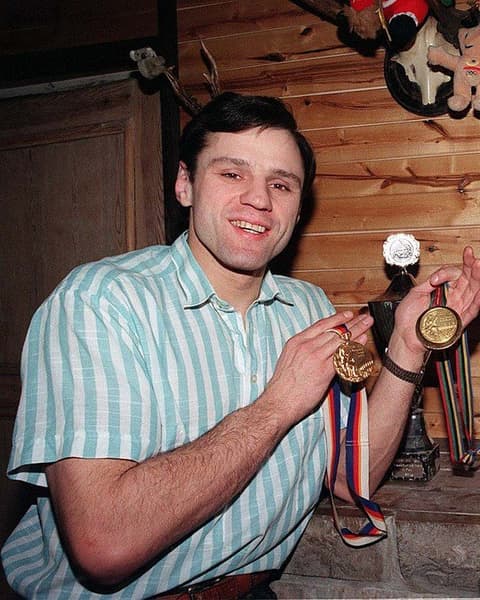
Limping on a torn calf, Yamashita conceded a small score to Del Colombo, then countered with ouchi-gari for a yuko and went straight to kuzure-kami-shiho-gatame for ippon to reach the final.
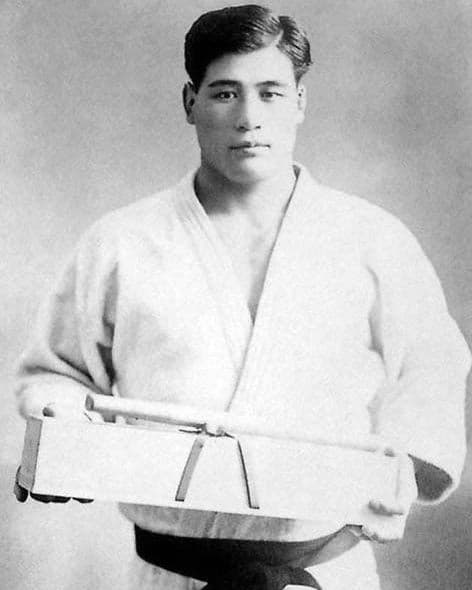
In round two Kimura threw Gracie with osoto-gari and pinned him in kuzure-kami-shiho-gatame for almost three minutes, then moved over Gracie's head and switched to an armlock when Gracie pushed with his arm. A long pin is a good way to tire a partner before an attack.
Trstenjak won the Olympic gold by ippon after 1:45 with kuzure-kami-shiho-gatame against a rival she had already met in the European and world finals.
Özdemir upset the Tokyo 2020 champion in the quarter-finals with a waza-ari from the plain kami-shiho-gatame in extra time, at 5:48.
Across the arts
One of your hands goes over your partner's arm instead of under it to grip the back of their collar, while your other arm wraps round the back of their neck and shoulder to grip their belt. It lets you pin from a slight angle when they have trapped an arm.
In jiu-jitsu the same place is a dominant position: you can score guard-pass points, attack a north-south choke or move to mount. Without a jacket, hug the trunk or the near hip instead of gripping the belt.
With strikes allowed you can punch from here. Under the Unified Rules, knees and kicks to the head of a fighter who is on the ground are fouls, so the knee strikes some people picture from this position are not legal.
Rudman's sambo textbook teaches the same hold: arms round the trunk, legs as wide as possible on the head side, chest to chest, head down, kept for 20 seconds. If the opponent turns onto the stomach, the book swings a leg over into an armbar.
History
Kami-shiho-gatame, the 'upper four-corner hold', is one of the ten pins in the Kodokan's list. It and its modified form, kuzure-kami-shiho-gatame, are two of the five pins in the Katame-no-kata, the grappling kata Jigoro Kano developed between 1884 and 1887. The pair are among the most common pins from north-south in sports that use a jacket. When Masahiko Kimura beat Hélio Gracie in 1951 he spent nearly three minutes in the modified hold before finishing with an armlock. The hold has decided Olympic matches from 1972, when Takao Kawaguchi won a final with it after a 30-second count, to 2024.
In the rules
Drills
Lay a heavy bag on the mat. Start at the top end and drop your chest onto it with your knees wide, hug it along both sides and squeeze your elbows in. Walk around it on your toes for 30 seconds each way.
Your partner lies on their back and bridges at half effort every few seconds. Keep the pin by staying low and wide, and count to 20 without letting your knees take the weight. Switch after three rounds.
Your partner tries a slow shrimp escape. Follow them by circling into kesa-gatame or yoko-shiho-gatame without losing contact, then repeat from the other side.
Legends known for it



We teach it in Throws. A coach will fix the details you can't see yourself. Join now and book your first class for $20, paid online.
Related techniques
Kesa-gatame is judo's classic side pin. You sit beside your partner's chest, trap their near arm, wrap your other arm around their head and press…
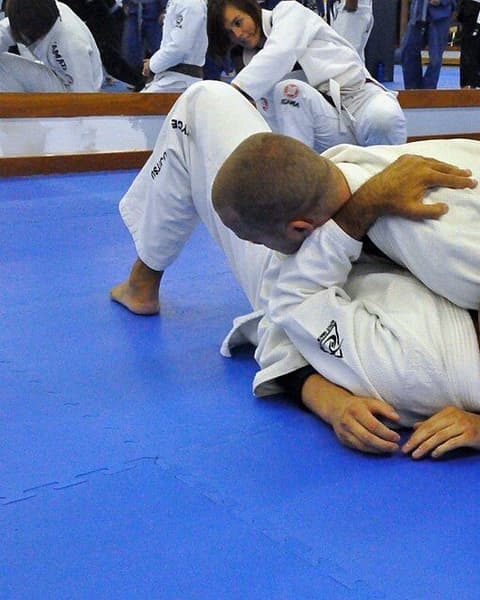
Side control pins your partner flat on their back from the side. You lie across them chest to chest, one arm under their neck and the other…

The mount is the top position where you sit astride your partner's torso with a knee on each side. In judo it becomes tate-shiho-gatame when you…

 1996–2014
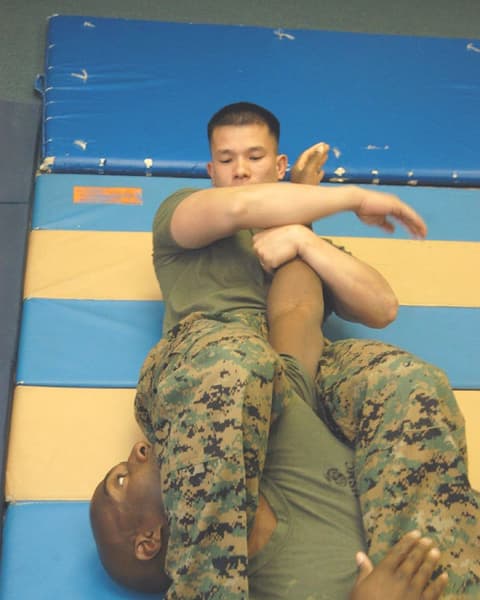
The armbar traps your partner's arm between your thighs, holds their wrist against your chest and lifts your hips so the elbow is forced straight,…


The kimura is a figure-four lock on the shoulder and elbow. You hold your partner's wrist, thread your other arm behind their upper arm, grip your…
Kumikata is the way you take hold of your partner's jacket. In judo most attacks start here: the grip helps you control your partner and, under the…