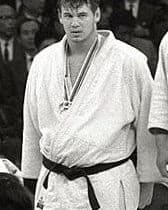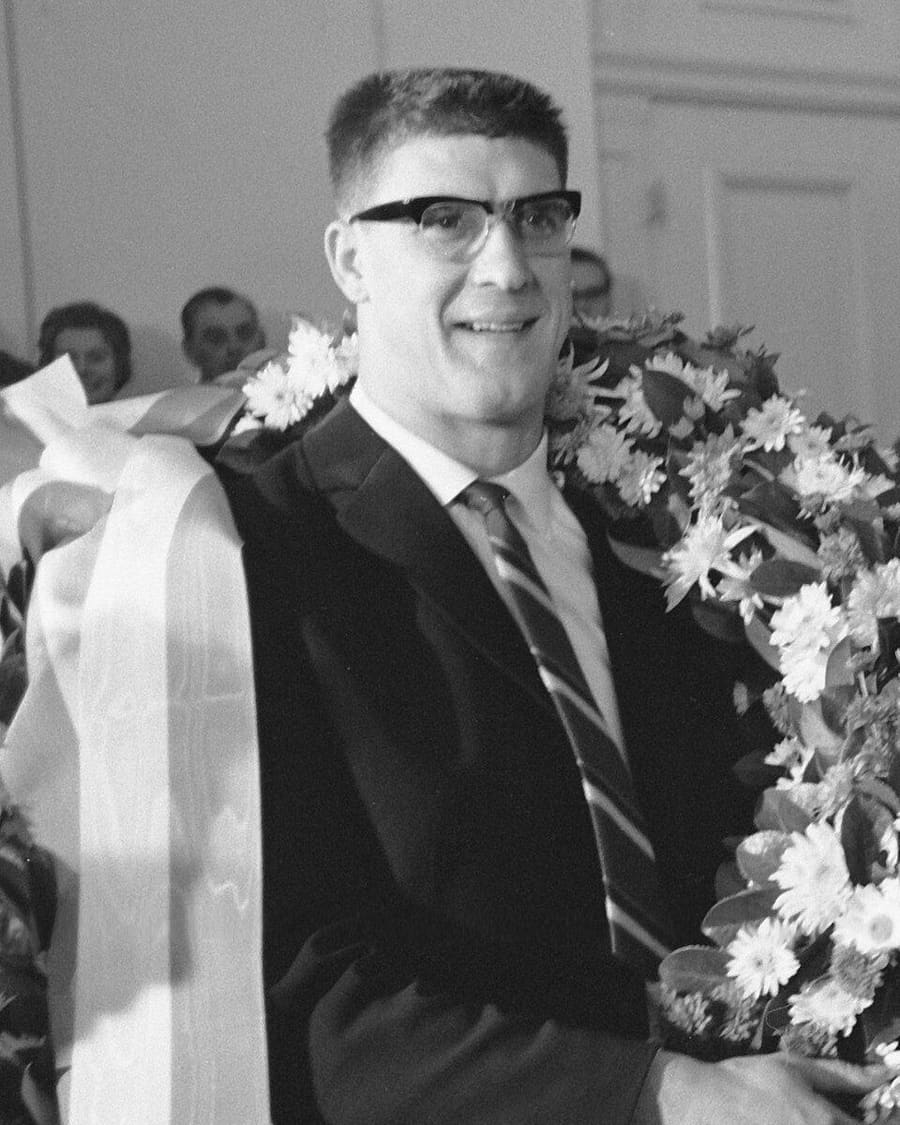
Anton Geesink
The Dutchman who proved Japan could be beaten
- Born
- April 6, 1934, Utrecht, Netherlands
- Died
- August 27, 2010 (aged 76)
- Nationality
 Netherlands
- Height
- 198 cm (6′6″)
- Style
- Technical giant
- Weight
- +80 kg, Open
- Active
- 1951–1967
The medals
1964 Olympic open gold, 2 world titles, 21 European titles
The story
nton Geesink grew up poor in Utrecht, worked as a builder from the age of 12 and took up judo at 14. At 1.98 m he was huge, yet judo writers describe him as a subtle technician rather than a bully. In 1961 he beat Koji Sone in Paris to become the first non-Japanese world champion, breaking Japan's hold on the sport. Three years later, when judo made its Olympic debut in Tokyo, he won the open category at the Nippon Budokan, pinning Akio Kaminaga with kesa-gatame in the final after beating him earlier in the event. He added a second world title in 1965 and a record 21 European titles before retiring in 1967. He later served on the IOC and proposed the blue judogi now used in competition.
Tap a technique with an arrow to learn how it works.
- Olympic champion, open category (1964)
- World champion, open (1961) and +80 kg (1965)
- European champion (21 titles, 1952–1967)
- IJF Hall of Fame (2003)
- IJF 10th dan (1997)
- Order of the Sacred Treasure, Japan (1997)
- Dutch Sportsman of the Year (1957, 1961, 1964, 1965)
Defining matches
- 1956LOSSvs Yoshihiko Yoshimatsu (World Championships semi-final, Tokyo)
- 1961WINvs Koji Sone (World Championships open final; first non-Japanese world champion)
- 1964WINvs Akio Kaminaga (Tokyo Olympic open, first round, sasae tsurikomi ashi)
- 1964WINvs Akio Kaminaga (Tokyo Olympic open final, kesa-gatame pin)
Geesink showed that a big player wins with technique, not just weight: catch the opponent's step with sasae tsurikomi ashi, then follow them down into a tight kesa-gatame. Heavier students should drill foot-sweep timing as hard as their power throws.

 2005–2019