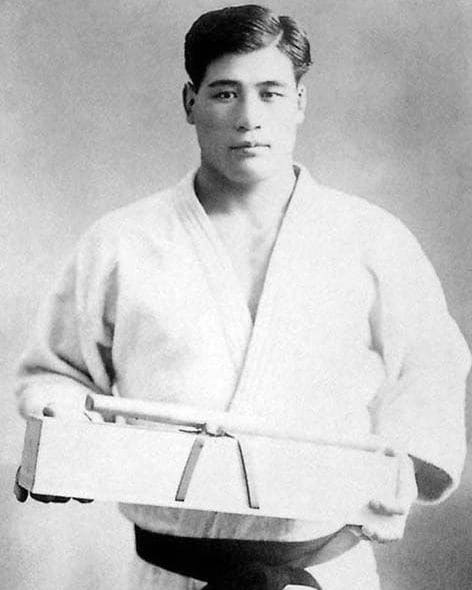
Masahiko Kimura
The judoka whose armlock carries his name
- Born
- September 10, 1917, Kumamoto, Japan
- Died
- April 18, 1993 (aged 75)
- Nationality
 Japan
Japan- Height
- 170 cm (5′7″)
- Style
- Throw-and-submit grappler
- Weight
- Open
- Active
- 1935–1959
The record
13 years unbeatenUndefeated in competition for 13 years after his first All-Japan title in 1937 (judoinfo biography); Wikipedia records no losses from 1936 to 1950.
Pre-Olympic era: All-Japan champion 1937, 1938, 1939 and co-champion 1949
The story
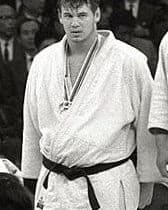
asahiko Kimura took up judo at nine in Kumamoto and at 18 became the youngest fifth dan in Kodokan history. After four defeats in 1935 he nearly quit, then drilled osoto gari against a tree until training partners asked him not to use it. He won the open-weight All-Japan Championships in 1937, 1938 and 1939, the first to win three in a row, shared the 1949 title with Takahiko Ishikawa, and by most accounts did not lose a competitive match for 13 years. In 1951 he fought Hélio Gracie under submission rules in Rio and broke his arm with gyaku ude-garami until Gracie's corner stopped it; grapplers now call the lock the kimura. He later wrestled professionally and taught at Takushoku University, where his pupils included Canada's 1964 Olympic silver medallist Doug Rogers.
Tap a technique with an arrow to learn how it works.
- All-Japan champion (1937, 1938, 1939; shared 1949)
- Tenran-shiai champion (1940)
- All-Japan Collegiate champion (1935)
- The kimura armlock (gyaku ude-garami) is named after him
Defining matches
- 1937WINvs Masayuki Nakajima (All-Japan final, kuzure-kami-shiho-gatame)
- 1949DRAWvs Takahiko Ishikawa (All-Japan final; declared joint champions)
- 1951WINvs Hélio Gracie (Rio; gyaku ude-garami broke Gracie's arm and his corner threw in the towel)
- 1954LOSSvs Rikidōzan (pro-wrestling title match that turned into a real fight; knocked out)
- 1959WINvs Waldemar Santana (grappling match in Rio, gyaku ude-garami)
The kimura is judo's ude-garami: when an opponent pushes or posts an arm to escape a pin, catch the wrist, figure-four the arm and turn it behind their back. Kimura's throw, pin, then submit-on-the-escape pattern is the core of judo for MMA and submission grappling.