背負投Seoi-nage · say “SAY-oh-ee NAH-geh” · “carry-on-the-back throw”
Also called Shoulder throw, Over-the-back throw, Morote seoi-nage (two-hand shoulder throw)
Seoi-nage is judo's shoulder throw. You turn your back into your partner, tuck an arm under theirs, load them onto your back and tip them forward over your shoulder. The standard form keeps a lapel grip in your other hand, and top competitors also use a one-arm version and a drop-to-the-knees version. Getting lower than your opponent is what lets a smaller player throw a bigger one.
Satori's coaches are filming every technique, full speed and slow motion from two angles. Until it's up, the diagram shows the movement step by step.
Watch it
How to do it
Start: Take the classic right-handed grip: left hand on your partner's right sleeve near the elbow, right hand on their left lapel at chest height. Stand about an arm's length apart in a natural stance, knees soft, with your partner standing tall. Everything below is written for a right-handed throw; swap left and right for a left-handed one.
- 1Grip. Keep your left hand on the sleeve and your right hand on the lapel, elbows loose, so you can pull and turn.
- 2Kuzushi. Push them back a few steps. The moment they push back against you, step your left foot back on a diagonal, ease off the push and pull. Their weight moves onto their advancing right foot. Lift with both hands, sleeve hand pulling up and forward, so they are off balance straight ahead or toward their right front corner.
- 3Tsukuri, feet. As their weight comes forward, step your right foot in between their feet and pivot on its ball. Swing your left foot back and round so both feet sit between theirs, toes pointing the same way as theirs.
- 4Tsukuri, arm. Keep your right hand on their left collar while your right elbow slides in under their right armpit, forearm tight against it. Your left hand pulls their right arm across your chest.
- 5Tsukuri, load. Bend your knees so your hips are lower than theirs. Press the back of your waist and your back against the front of their thighs and belly, so their weight sits on your back.
- 6Kake. As their body begins to rise onto your back, straighten both legs, raise your hips and bow forward, pulling down with both hands. They rotate over your right shoulder.
- 7Finish. Hold the sleeve through the landing so they fall flat on their back. Stay on your feet and follow with a hold if the throw didn't score.
- Break their balance first, then turn.
- Elbow under the armpit, forearm tight against it.
- Hips below theirs, back against their belly.
- Legs and hips throw. The hands guide and pull; you never lift them with your arms.
- Turning before the pull, so they are still balanced. Fix: pull and lift first, and turn only when their weight is on their toes.
- Hips higher than theirs. Fix: bend your knees as you turn so your hips end up under theirs.
- A gap between your back and their belly. Fix: step deep between their feet with your toes pointing the same way as theirs.
- Lifting with your arms instead of your legs. Fix: keep the elbow in place and straighten your legs.
- Diving head-first to finish. Fix: keep your head up and stay on your feet. Diving is a direct hansoku-make in IJF competition.
Safety: Learn your breakfalls (ukemi) first and throw only onto mats with a trained partner. Keep hold of the sleeve so they land on their back, never dive head-first, and leave the drop version until your coach says your knees and your partner's breakfalls are ready.
When to use it
- Against a taller or heavier opponent who stands upright, because you can get your hips under theirs.
- When they push or step forward, so their weight is already coming your way.
- As the second half of a combination, when a reap or a step has changed the direction of their weight.
- Push them back, then step back and pull on the rebound. This is the sequence the Kodokan teaches.
- O-uchi-gari into seoi-nage: Judo Canada's youth manual uses it as its example of a combination that changes direction.
- Link a reap into it, as Hifumi Abe does with o-soto-gari and o-uchi-gari.
- A hold-down such as kesa-gatame. After a real attack that doesn't score, the IJF rules let you go straight to the ground.
- Seoi-otoshi: if they sag, pull straight down instead of lifting. The Kodokan counts it as a separate throw.
- Sumi-gaeshi as the thrower commits. Baasankhuu Bavuudorj beat Assunta Scutto's seoi-otoshi this way to win the 2024 World Championships final.
- Uki-otoshi: Tato Grigalashvili dropped Joonhwan Lee's weight forward over a low seoi-nage attempt in the 2024 World Championships semi-final.
- Block the hips: keep your chest tall and push your hips forward so they can't get underneath you.
- Pull your right arm out before their elbow gets under your armpit. Once it is clamped, the throw is almost on.
- Stay tall with your hips back and your head up, rather than folding over their back.
- Step around their turning foot and press down on their hip so they can't get low enough to load you.
The physics
Seoi-nage is a physical lever. You turn in until your back and hips sit under your partner's centre of mass, and that contact becomes the fulcrum they rotate over while your arms and turning trunk pull their upper body around it.
Sacripanti classes it as a lever with a variable arm: the fulcrum can sit anywhere from their belt line down toward their knees, and the lower it goes, the longer the lever arm and the less force you need, which is why he ranks standing seoi-nage, seoi-otoshi and kneeling seoi from most to least costly. The power comes from your legs and trunk rather than your arms, and elite throwers stand out by how fast they drive forward relative to the partner while turning, momentum they then pass into the partner's rotation. Like every lever throw, it needs kuzushi and a brief moment when the pair is not drifting apart, so the pivot can be loaded.
- Myth: seoi-nage is an arm throw. In a lab analysis of morote-seoi-nage, the knees, hips and trunk produced most of the driving joint moments, not the arms (Blais, Trilles & Lacouture 2007).
- Myth: you have to crash into your partner to throw them. Of three throws measured in one lab, seoi-nage put the lowest average force on the partner; it works by keeping their forward momentum going and turning it into rotation (Imamura et al. 2006).
Masters and famous moments
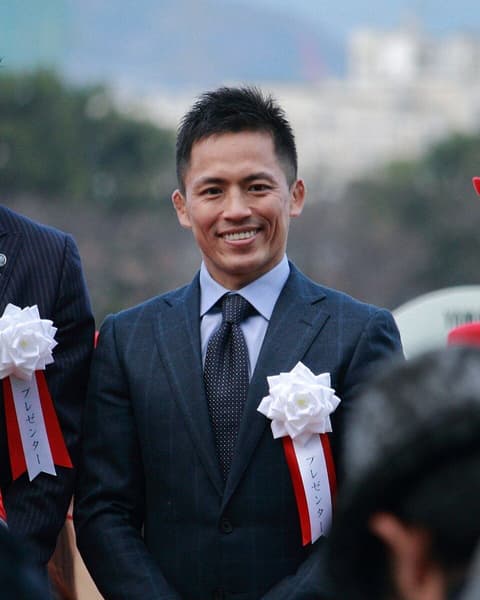
The Italian held the lead for most of the final. Then, with under 30 seconds left, Nomura threw him with seoi-nage for ippon and won the first of his three straight Olympic gold medals.
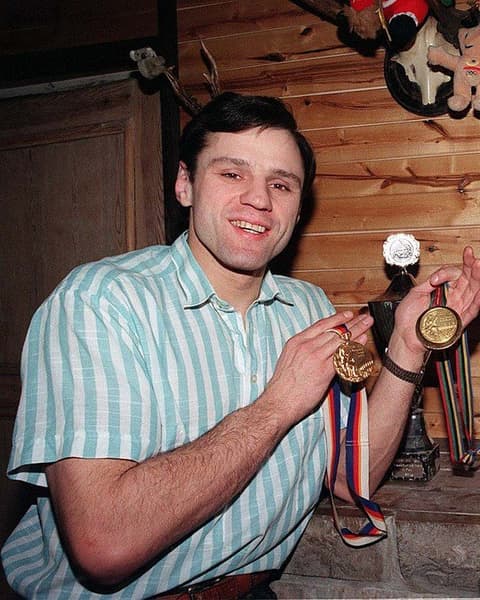
Shortly after the four-minute mark, Legień went down on his back to start groundwork. As Wieneke came forward, Legień grabbed him and finished with seoi-nage for ippon at 4:44, and the gold medal was his.
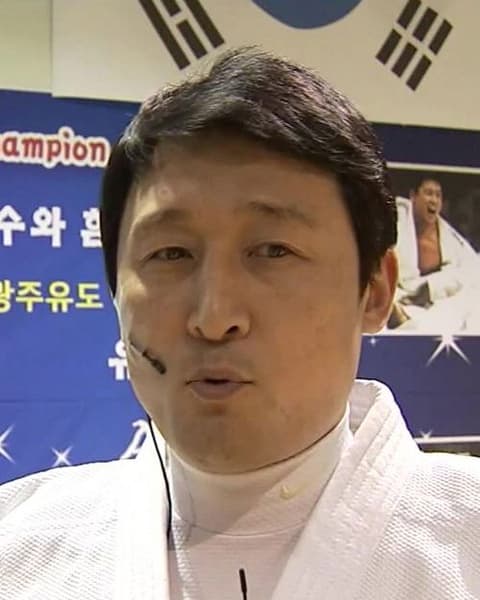
Jeon, the 1993 and 1995 world champion, was the heavy favourite. He got past Uzbekistan's Bagdasarov in the final with a late seoi-nage for ippon, and he won every bout but one by ippon.
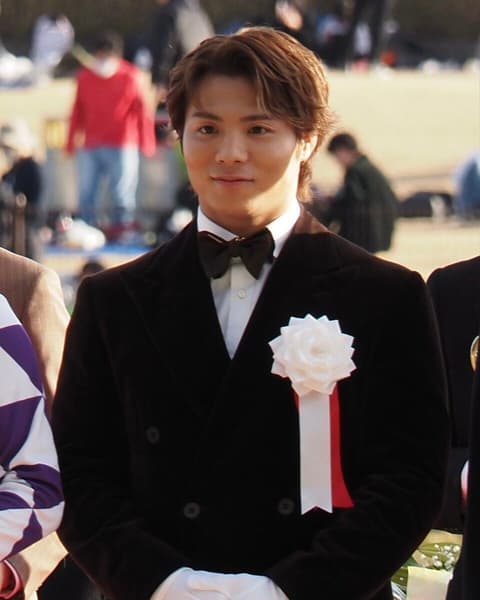
Abe scored ippon with seoi-nage after 2:25 and went on to win the gold medal, half an hour after his sister Uta won hers.
Across the arts
Your left hand keeps the sleeve while your right arm slides up under their armpit to take the top of their sleeve or shoulder, and you throw over the shoulder as before. The IJF describes exactly this arm path. Isao Okano and Toshihiko Koga are named as its best-known users.
The Kodokan describes holding their right sleeve with your left hand and taking their right collar with your right fingers inside it. The elbow then goes under the armpit and you throw.
After loading them you drop one or both knees to the mat and pull straight down. The IJF lists seoi-otoshi as a throw of its own. Waldemar Legień and Tadahiro Nomura made the drop version famous in judo, and Svetlana Galyant made it the signature of her sambo career.
Both hands grip the same lapel and you turn away from your partner. It is often called the Korean seoi-nage, and Choi Min-ho popularized it. The IJF banned it in 2022 and allowed it again from 2025. In cadet events it still earns a shido.
Top players fight hard for sleeve control, then attack fast and low. Hifumi Abe, a seoi-nage and sode-tsurikomi-goshi specialist, prefers a double-sleeve grip. Under the IJF rules the throw scores only if it flows without a stop, and you can't dive head-first.
History
Seoi-nage is one of the original forty throws of Jigoro Kano's Gokyo. It sits in the first group and is the second throw of the Nage-no-kata. It probably grew out of empi-nage, a jujutsu throw that used an armbar as the lever. The Kodokan now lists three shoulder throws side by side: seoi-nage, ippon-seoi-nage and seoi-otoshi. Tadahiro Nomura, known for seoi-nage and its drop form, won the Olympic extra-lightweight title three times in a row, in 1996, 2000 and 2004.
In the rules
Drills
With no partner, practise the foot pattern: step back, step in, pivot, bend the knees, stand. Tie a belt or band to a post at chest height and hold the ends to feel pull first, turn second. Ten slow reps each side, then ten quick ones.
Your partner stands tall. Step back and pull, then fit in to the loaded position without lifting them. Ten fast reps each side. Add a moving entry once the standing one is clean.
With a trained partner who can breakfall, throw at half speed, five reps each side, holding the sleeve through the landing.
Legends known for it



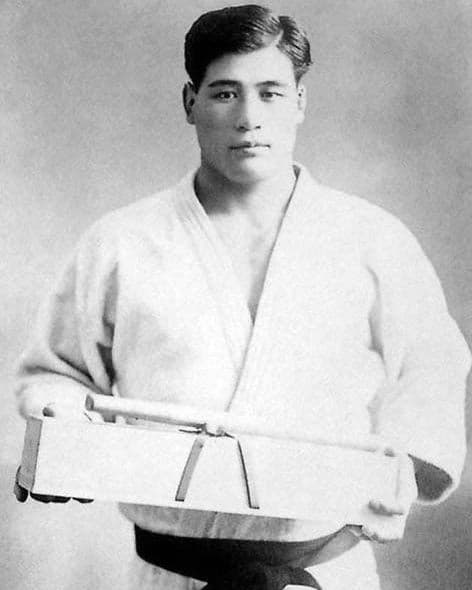
 1991–2014
We teach it in Throws. A coach will fix the details you can't see yourself. Join now and book your first class for $20, paid online.
Related techniques
Tai-otoshi is judo's body drop. You turn away from your partner, stretch one leg across the front of their foot as a barrier, and pull them forward…
Tsurikomi-goshi is the lift-pull hip throw. You drop your hips to the level of your partner's thighs, then rise again while your lapel-side arm…
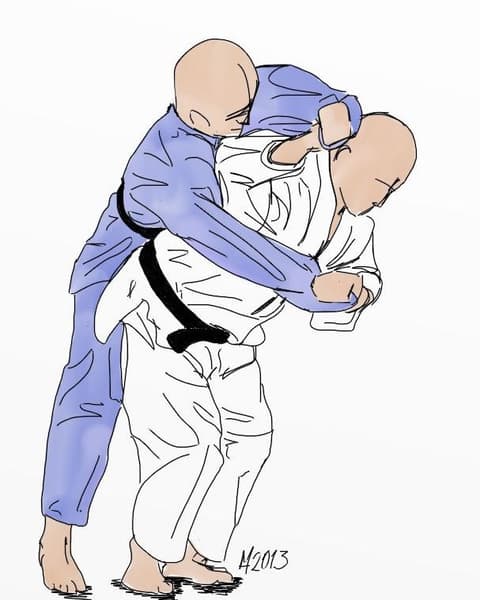
Sode-tsurikomi-goshi is a hip throw from sleeve grips. You stretch one of your partner's arms up and forward by the sleeve, turn in under it and…
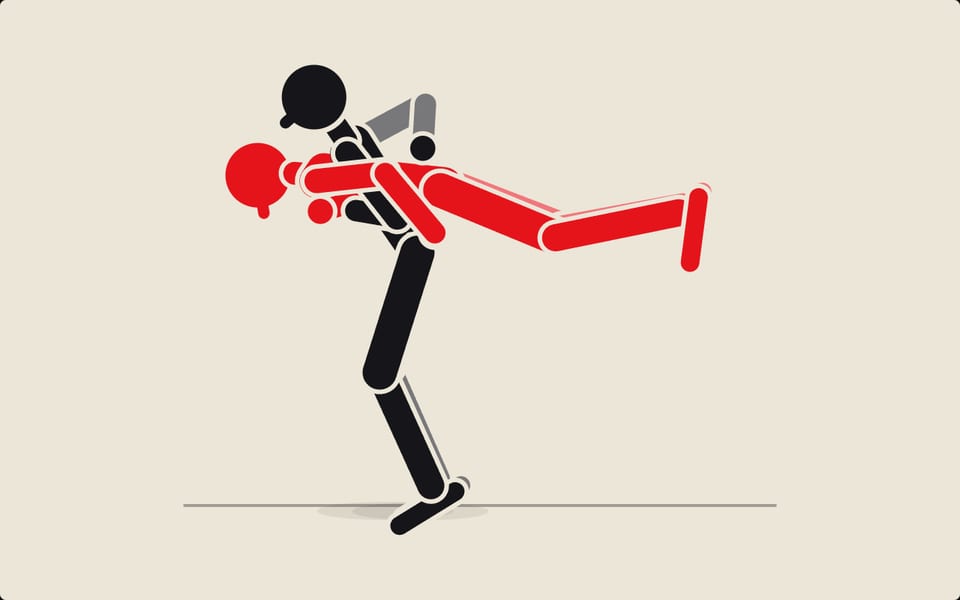
O-goshi is judo's major hip throw. You turn in with your hips lower than your partner's, wrap an arm around their back, load them onto your hips…


Ura-nage is judo's back throw. You wrap both arms round your partner from the side, lift them off the mat and fall backward, throwing them in a…
Sumi-gaeshi is the corner throw. You drop onto your back between your partner's feet, hook the inside of their thigh with the top of your foot and…
