裏投Ura-nage · say “OO-rah NAH-geh” · “back throw”
Also called Back throw, Rear throw
Ura-nage is judo's back throw. You wrap both arms round your partner from the side, lift them off the mat and fall backward, throwing them in a high arc over your shoulder. It is a rear sacrifice technique (ma-sutemi-waza): you go to the mat, but only after the lift. It is often compared to a suplex. The Kodokan teaches it as an answer to an opponent's hip throw, but it is also thrown as a surprise attack.
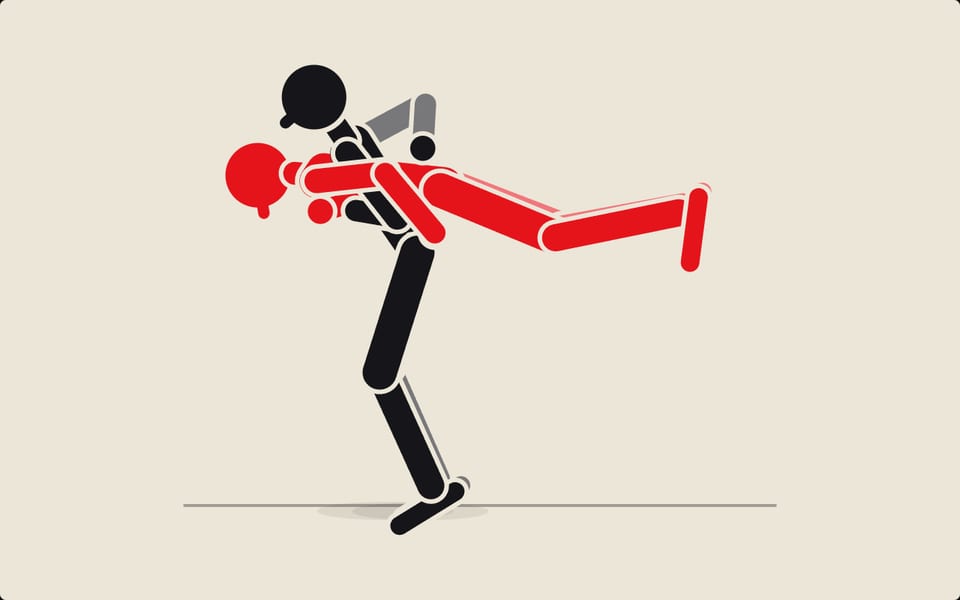
Satori's coaches are filming every technique, full speed and slow motion from two angles. Until it's up, the diagram shows the movement step by step.
How to do it
Start: Start from the classic sleeve-and-lapel grip or a close clinch, with your partner bent forward or turning in, for example on a failed hip throw. Keep your hips low and your feet wide. The steps below show the Kodokan's form, in which your left arm goes round their waist and your right hand pulls their upper body to you.
- 1Grip. Begin with sleeve and lapel, or a close clinch. You will let go of one hand to wrap the waist.
- 2Tsukuri, get low. Lower your hips below theirs. Step your left foot toward their rear and reach your left arm deep round the back of their waist, along the belt, to hold them completely.
- 3Tsukuri, pull them in. Put the front of your hips against their right buttock and pull their upper body tight against the right side of your chest with your right hand.
- 4Kuzushi. While they defend, lift them toward the rear. Their weight moves back and up onto your hips.
- 5Lift. Straighten both legs, thrust your hips forward and bend back, pulling them up high in one movement. Lift first. If you start to fall and then try to lift, you are already unstable.
- 6Kake. Drop onto your back and throw them in a big arc over your left shoulder. Keep your chin tucked as you fall.
- 7Finish. They land in front of you on their back. Roll up, or move straight into a hold.
- Lift first, then fall.
- Hips low, chest tight to their side, arm deep round the waist.
- Thrust your hips forward and arch as you lift.
- Chin tucked as you fall.
- Falling before lifting. Fix: lift first, then fall, as the Kodokan text stresses.
- Loose arms round the waist, leaving a gap. Fix: reach deep along the belt and pull them tight.
- Hips high, so you can't get under them. Fix: bend your knees and get lower than they are.
- Throwing your head back. Fix: tuck your chin and look at your belt as you fall.
- Turning the lift into a slam. Fix: lift, then guide them in an arc over your shoulder. Slamming without a judo technique is a hansoku-make.
Safety: This throw lifts your partner high and then drops you both, and it can land either of you on the neck. Learn it only under a coach, on deep crash mats, with a partner who can breakfall, and start with a lighter partner at half speed. Tuck your chin as you fall, and don't lift a resisting or much heavier partner. Judo Canada's manual forbids sacrifice throws for its U12 group.
When to use it
- As a counter when they attack with a hip throw such as hane-goshi. This is the Kodokan's own example.
- As a counter to a forward throw that leaves them bent over you, as Anton Geesink did to Akio Kaminaga's tai-otoshi in 1964.
- From a low position, as Daniel Cargnin did in a 2024 World Championships repechage.
- Wait for their hip throw: drop your hips, step behind and wrap the waist as they turn in.
- Take a close clinch with your hands not clasped, and use it to get an arm round the waist.
- Use a failed attack of your own to get them bending, then drop under and wrap.
- A hold-down. Geesink landed in kesa-gatame after his ura-nage in the 1964 Olympic open final.
- Getting back to your feet quickly if they land short of ippon. The IJF rules let either athlete continue on the ground.
- Stay wide and low so they can't get their arms round you and lift.
- Keep your distance. The Kodokan text notes that if you are too far away, the thrower can't grip and lift you.
- Push their hips away and keep your weight forward as they reach round.
- Widen your stance, drop your hips and keep your chest up when they get under you.
- Keep your arms tight and your chin tucked as you rise, to protect your neck.
- Break the wrap early: clear their arm from your waist with both hands before they lift.
The physics
Ura-nage is a lever with the shortest arm: your hips and belly go right under your partner's belt line and act as the fulcrum, so there is almost no distance between the pivot and their centre of mass.
That puts it in Sacripanti's minimum-arm group, the most force-hungry of the lever throws, because you must lift their weight rather than tip it. The lift comes from driving your hips forward and up as your legs straighten, and then you arch and fall backward so your own falling weight carries them over your shoulder in an arc. Clamping them tight to your chest keeps their centre of mass on the pivot so none of the lift is wasted. The landing is steep because they travel over your head toward the mat, exactly the kind of fall ukemi exists to manage.
Masters and famous moments
A clash of heads had stopped the final twice for treatment. With 10 seconds left, Grigalashvili found the decisive waza-ari by throwing Arbuzov with ura-nage. It was his third straight world title, a first for a Georgian.
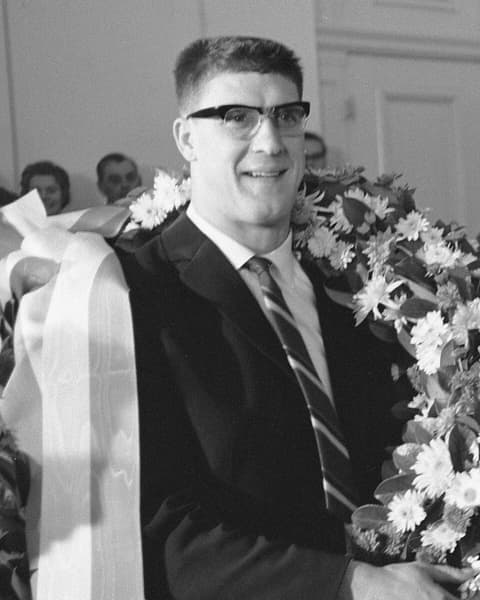
Nothing separated the two for nine minutes. Then Kaminaga attacked with tai-otoshi and Geesink lifted him out of it with ura-nage, dropped him on the mat and settled into kesa-gatame. Ippon was called moments later.
Ranked only 16th, Mudranov beat the top seed, Kim Won-jin, in the quarter-final, scoring ippon with ura-nage after 4:33. He went on to win Russia's first gold medal of the Games.
Japan's Koshino, the 1991 world champion, was the favourite in the -60 kg class. Hüseynov beat him in the pool final by waza-ari with ura-nage, and went on to take the gold medal by a single koka.
Across the arts
The Kodokan's form: when they attack with hane-goshi, you lower your hips, step behind, wrap their waist with your left arm and draw their upper body in with your right hand, then lift and fall.
You start with both arms round the waist. Under the IJF rules a bear hug is fine if your hands are not clasped in a circle.
You drop well below their hips before you lift. The IJF called Daniel Cargnin's ura-nage from a low position in a 2024 World Championships repechage stunning.
Ura-nage is similar to a suplex in wrestling. The judo version is thrown in a jacket, over the shoulder, with the thrower falling to the mat.
Top players use it as a counter or a surprise. Tato Grigalashvili won the 2024 World Championships final with an ura-nage waza-ari with ten seconds left, and Beslan Mudranov beat the top seed with one on his way to gold at Rio 2016. You may clinch without clasping your hands, and a correct ura-nage is a Kodokan throw that scores.
History
Ura-nage is one of the original forty throws of Jigoro Kano's Gokyo, in the fifth group, and one of the three rear sacrifice throws in the Nage-no-kata. The Kodokan describes it as an answer to a hip throw. Anton Geesink used it to beat Akio Kaminaga in the 1964 Olympic open final, Beslan Mudranov to beat the top seed at Rio 2016 and Tato Grigalashvili to win the 2024 world final.
In the rules
Drills
Alone on a mat, practise the hip thrust: stand, push your hips forward, arch, then lie back with your chin tucked. Ten slow reps. Add a bridge on your shoulders afterwards.
Under your coach's eye, wrap a light partner, lift their feet a few centimetres off the mat, then set them down. Ten reps each side. Stop there: don't fall back.
Throw a lighter partner at half speed with a coach watching, three reps each side, chin tucked, before moving to a bigger partner.
Legends known for it
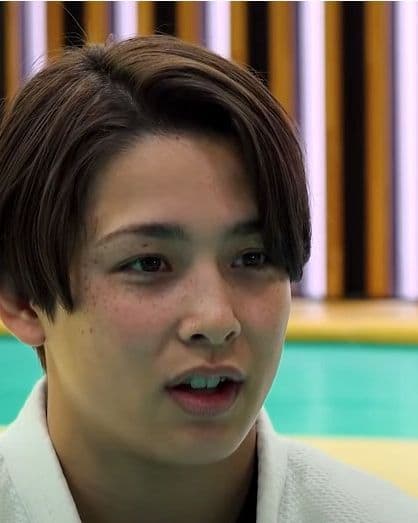

We teach it in Throws. A coach will fix the details you can't see yourself. Join now and book your first class for $20, paid online.
Related techniques
Sumi-gaeshi is the corner throw. You drop onto your back between your partner's feet, hook the inside of their thigh with the top of your foot and…

Tomoe-nage is the circle throw. You drop onto your back right in front of your partner, put a foot on their lower belly, and push them up and over…
Hane-goshi is the spring hip throw. You pull your partner tight against your side, then spring your leg and hip up from underneath their body so…
O-goshi is judo's major hip throw. You turn in with your hips lower than your partner's, wrap an arm around their back, load them onto your hips…


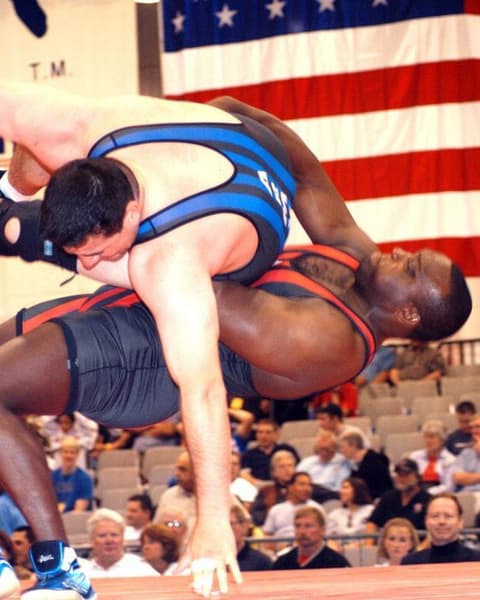
A suplex lifts the opponent from a tight body lock and throws them over by arching back and turning, so they land on their back and you land on…



 1948–1982
Kuzushi is breaking your partner's balance so they cannot resist your throw. In judo it is the first of three parts of every throw: kuzushi (break…