袖釣込腰Sode-tsurikomi-goshi · say “SOH-deh tsoo-ree-KOH-mee GOH-shee” · “sleeve lift-pull hip”
Also called Sleeve lift-pull hip throw, Sleeve lifting-pulling hip throw, Sode
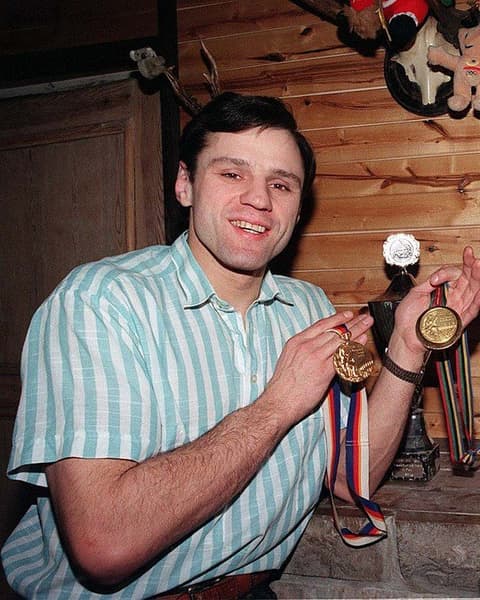
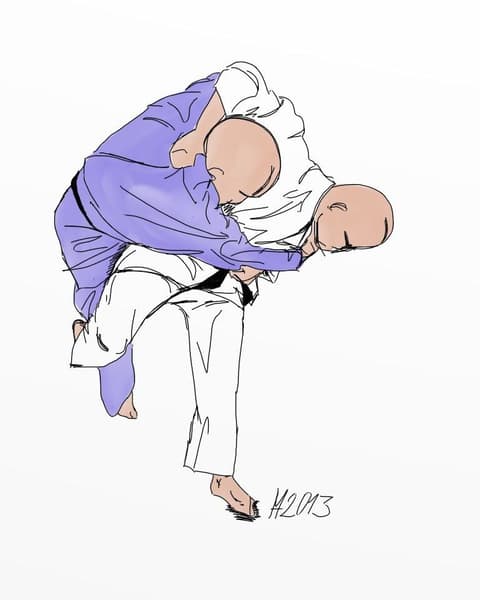
Sode-tsurikomi-goshi is a hip throw from sleeve grips. You stretch one of your partner's arms up and forward by the sleeve, turn in under it and throw them over your hip. Because it works without a lapel grip, it is a favourite against opponents who block the lapel, and it has a dropping version done from the knees. Hifumi Abe and Uta Abe have won world titles with it.
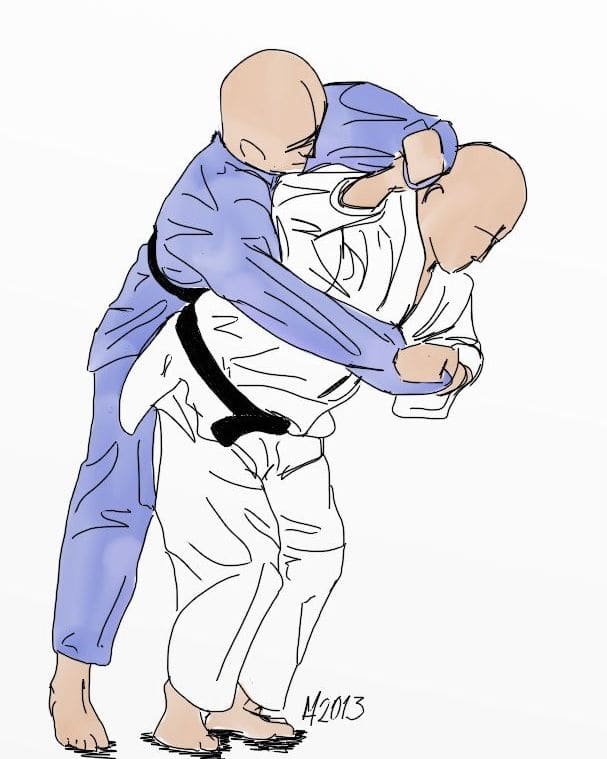
Satori's coaches are filming every technique, full speed and slow motion from two angles. Until it's up, the diagram shows the movement step by step.
How to do it
Start: Start from the usual sleeve-and-lapel grip. Stand a step apart in a natural stance, with your partner upright and pushing back against you as you drive them backward.
- 1Grip. Begin with your left hand on their right sleeve and your right hand on their left collar.
- 2Kuzushi. Drive them back a couple of steps until they push forward to recover. At that moment change your right hand from their collar to the end of their left sleeve, taking it from below with a normal grip. Pull them forward so their left foot steps forward, and lift their left arm up and forward.
- 3Tsukuri, feet. Lower your body and step your right foot in front of the tip of their right foot. As their left foot comes down, pivot on the ball of your right foot and step your left foot back and round inside their left foot, back toward them.
- 4Tsukuri, arm. Lift with your right hand, arm straight and in line with their left arm, and pull their right arm toward your right armpit with your left hand. Bring their body tight against the back of your waist, so their weight rises onto their toes.
- 5Kake. Straighten both knees and raise your hips as you lift and pull together, and twist to the left. They are thrown forward in a large motion over your hip.
- 6Finish. Keep hold of the sleeves so they land on their back. Stay on your feet and follow with a hold if the throw didn't score.
- Break their left grip first. Lift the arm as they reach to re-grip.
- Lift along their arm, with your arm straight.
- Don't step in too close to their feet, or they can push into your hips.
- Coaches differ on the hand: the Kodokan prefers a normal grip from below, since forcing the arm up with a reverse grip shows your intent.
- Stepping in too close to their feet, so they can press into your waist. Fix: keep your distance and pivot on the ball of the right foot.
- Lifting the arm without stepping in, so they simply lower it. Fix: lift and turn as one movement.
- Forcing the arm up with a reverse grip too early. Fix: use a normal grip from below until you are turning in.
- Turning in with your hips too high. Fix: bend your knees first.
- Letting the lifting arm bend or drop. Fix: keep the wrist and elbow straight and the arm in line with theirs until they are over.
Safety: Raise the arm by the sleeve without twisting the elbow, and throw only onto mats with a partner who can breakfall. Leave the drop version until your coach says your knees are ready, and never dive head-first.
When to use it
- When they block your lapel grip.
- When they reach out with their left hand to grip you: lift the arm as it extends.
- At the start of a grip fight, when you can take both sleeve ends and throw before they get a grip.
- Break their left grip, then lift the arm the moment they stretch it out to grapple again. This is the Kodokan's own advice.
- Take both sleeve ends while keeping your distance, and throw as they lean forward with the right arm outstretched.
- Link it with o-soto-gari or o-uchi-gari, as Hifumi Abe does with his other throws.
- A hold-down such as kesa-gatame. After a real attack that doesn't score, the IJF rules let you go straight to the ground.
- Seoi-nage or tsurikomi-goshi, which share the same forward break of balance, if they resist the lift.
- Pull the lifted arm down and out of the grip before you are turned.
- Hip block: drop your hips and push your belly forward so you can't be loaded.
- Step back out of the turn and throw them with an inside reap as they over-rotate.
- Keep a firm left-hand grip so they can't lift your arm easily. The Kodokan notes a firm grip is hard to lift.
- Keep your weight over both feet and your hips back.
- Turn to face them and push on their hip as they enter.
The physics
Sode-tsurikomi-goshi is a variable-arm lever in which both hands hold sleeves and one sleeve is driven high. Lifting your partner's arm raises their centre of mass and puts their weight on their toes, which shrinks their base and, as Sacripanti notes for lifting actions, reduces the friction holding their feet to the mat.
The raised arm also opens their side so your hips can enter low under theirs, and that low hip line is the fulcrum. Your legs then straighten and your trunk turns, rotating them over the pivot on a long lever arm. If the arm is not lifted high enough, their elbow blocks your hips and the pivot never gets under their centre of mass.
Masters and famous moments
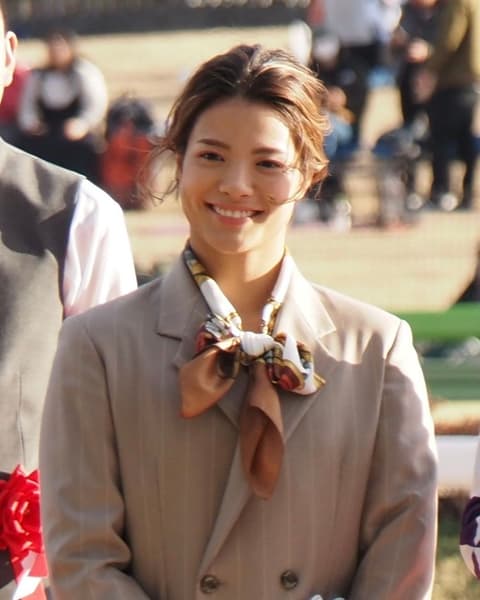
About half a minute into the final, Abe threw Russia's Kuziutina with sode-tsurikomi-goshi for ippon and her second world title. The IJF said the throw earned the biggest ovation of the championships so far.
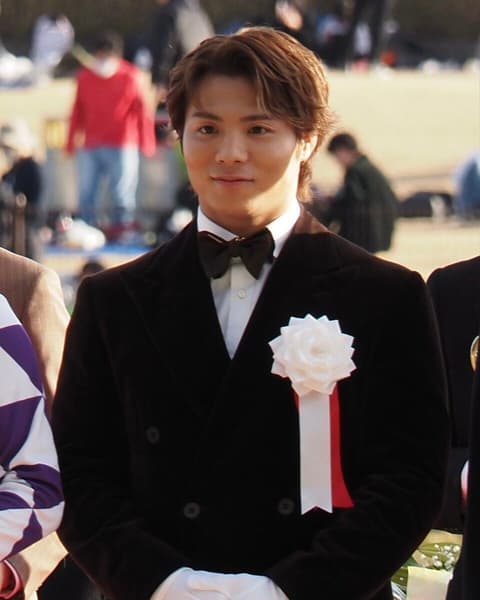
The 20-year-old won five of his six contests by ippon, finishing with sode-tsurikomi-goshi on Puliaev of Russia in the final.
Abe scored a first waza-ari within a few sequences, then a second with sode-tsurikomi-goshi at ground level. Two waza-ari together make ippon, and he became a double Olympic champion.
Hashimoto had soaked up a flood of attacks from the home favourite. In golden score he won the match with his signature sode-tsurikomi-goshi for ippon.
Across the arts
The form in the steps: your right hand holds the end of their left sleeve from below, and you lift along their arm as you turn in.
You take the ends of both sleeves before they can grapple and throw as they lean forward. Hifumi Abe prefers a double-sleeve grip for his throws.
You drop to one or both knees as you load them. An Ba-ul's drop sode-tsurikomi-goshi is one of his signature skills, and Jeon Ki-young used a drop version too.
Top players have made it a main weapon. Hifumi Abe, Uta Abe, Soichi Hashimoto and Kaori Matsumoto are all named for it. Sleeve-end grips are fine when you attack with them, but holding them to block earns a shido.
History
Sode-tsurikomi-goshi is on the Kodokan's Shinmeisho-no-waza list of newly accepted techniques. The IJF describes it as a variant of tsurikomi-goshi in which the right hand holds the opponent's left outer sleeve or cuff instead of the lapel. Japanese champions including Hifumi Abe, Uta Abe and Soichi Hashimoto are known for it, and Hifumi Abe's 2017 world final and Uta Abe's 2019 world final were both won with it.
In the rules
Drills
Hold a belt or rope tied at head height. Practise breaking a grip, lifting with a straight arm, pivoting and dropping your hips. Ten slow reps each side.
From a double-sleeve grip, ten lift-and-turn entries without throwing, then swap sides.
Throw at half speed with a partner who can breakfall, five reps each side, keeping the sleeves.
Legends known for it


We teach it in Throws. A coach will fix the details you can't see yourself. Join now and book your first class for $20, paid online.
Related techniques
Tsurikomi-goshi is the lift-pull hip throw. You drop your hips to the level of your partner's thighs, then rise again while your lapel-side arm…
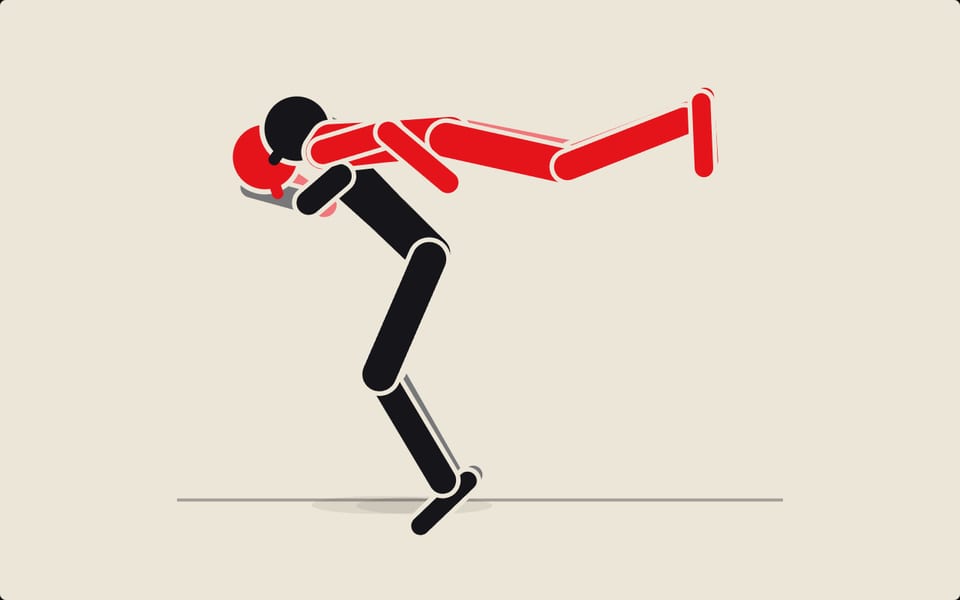
Seoi-nage is judo's shoulder throw. You turn your back into your partner, tuck an arm under theirs, load them onto your back and tip them forward…
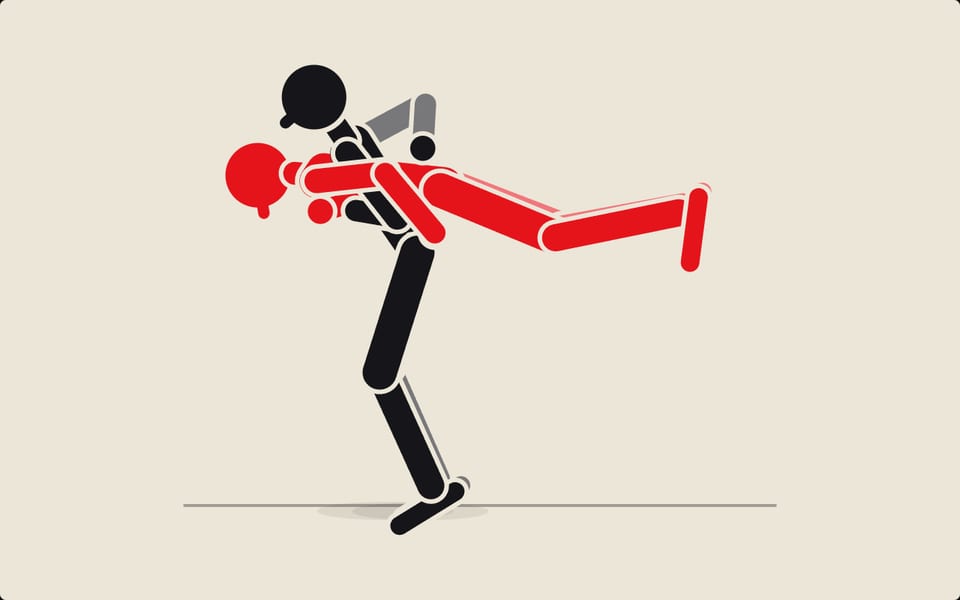
O-goshi is judo's major hip throw. You turn in with your hips lower than your partner's, wrap an arm around their back, load them onto your hips…


Harai-goshi is judo's sweeping hip throw. You pull your partner onto their toes, turn in with your hip against theirs and sweep your straight leg…


Kuzushi is breaking your partner's balance so they cannot resist your throw. In judo it is the first of three parts of every throw: kuzushi (break…
Kumikata is the way you take hold of your partner's jacket. In judo most attacks start here: the grip helps you control your partner and, under the…