支釣込足Sasae-tsurikomi-ashi · say “sah-SAH-eh tsoo-ree-KOH-mee AH-shee” · “supporting-foot lift-pull throw”
Sambo: передняя подсечка Perednyaya podsechka (“front sweep under the supporting leg”)
Also called Supporting-foot lift-pull throw, Propping lift-pull ankle throw, Sasae
Sasae-tsurikomi-ashi is the 'supporting-foot lift-pull throw'. You pull your partner forward in a circle, block the leg they are stepping onto with the sole of your foot, and let their own momentum tip them over it. It is a block rather than a sweep, so the timing matters more than power.
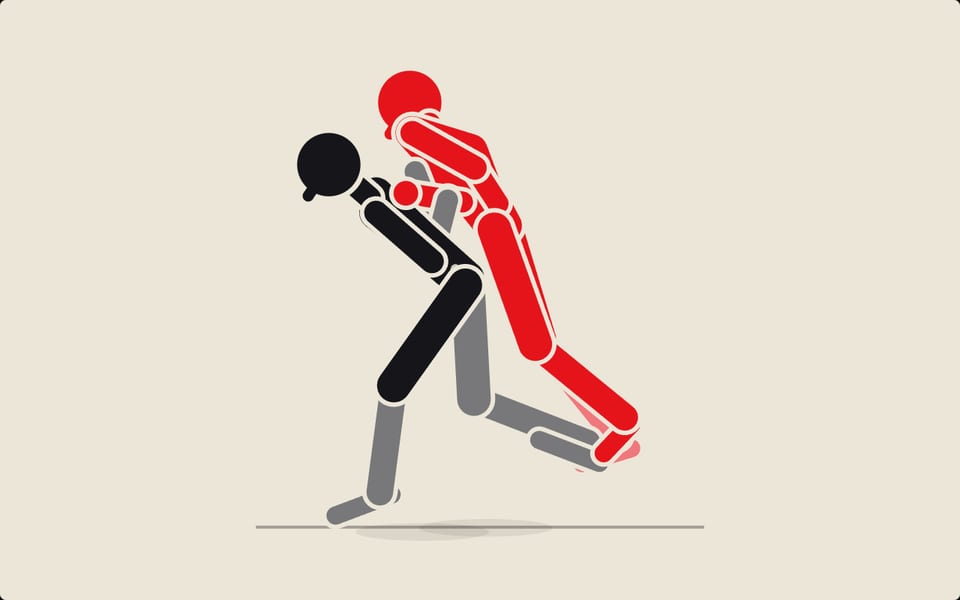
Satori's coaches are filming every technique, full speed and slow motion from two angles. Until it's up, the diagram shows the movement step by step.
How to do it
Start: Stand in a sleeve-and-lapel grip, left hand on your partner's right sleeve and right hand on their left lapel (left-handers mirror everything). Your partner is walking forward or pressing into you, with their weight moving onto the right foot.
- 1Grip: sleeve hand near the elbow, lapel hand at the collar. Stay tall with soft elbows.
- 2Kuzushi (off-balance): step back so your partner steps forward, then lift with the lapel hand and pull with the sleeve hand in a circle. Take their weight up onto the toes and toward their right front corner.
- 3Tsukuri (fit-in): turn your hips and shoulders with the pull. Keep your supporting leg bent a little and your chest upright, close to theirs.
- 4Kake (finish), part one: place the sole of your left foot against the front of their right ankle, just above the ankle bone. Do not kick. The foot is a prop, and their leg cannot step on.
- 5Kake, part two: keep lifting and pulling in the circle, lean back a little and twist your upper body to the left, so their body rolls forward over the blocked leg.
- 6Keep the sleeve in your hand as they turn and fall on their back or side.
- 7Step down and follow them to the ground, in control.
- Block, don't kick.
- Sole just above the ankle bone.
- Lift and pull in a circle.
- Turn your whole body, not only your arms.
- Let them walk into the prop.
- Kicking or sweeping the ankle. Sasae is a block; a sweep is harai-tsurikomi-ashi. Keep the foot as a prop.
- Blocking too low or too high. On the foot it is weak; on the knee it becomes hiza-guruma. Aim just above the ankle bone.
- Pulling straight back instead of in a circle. Lift and pull around the prop.
- Leaning back before the prop is in place. Lean and twist only after the foot is set.
- Stepping in too far away. Stay close enough that your hips turn with your arms.
Safety: Sasae rolls your partner forward over a blocked ankle, so they can land hard on their back or shoulder and need a solid break-fall. Touch the ankle with the sole just above the bone and never stamp. Hold the sleeve through the fall, practise on mats, and go slowly with heavier partners.
When to use it
- When your partner steps forward and presses into your chest or grip.
- When they stand tall and press forward, so a block at the ankle uses their own forward momentum.
- As a golden-score finisher when a bigger hip throw is being blocked, as Shohei Ono showed at Tokyo 2020.
- Step back so your partner chases, then prop the front foot as it lands.
- Use a big circular pull that makes them lean forward onto the toes.
- Fake a forward throw such as seoi-nage so they stiffen and press forward, then prop the ankle.
- Attack from an unusual angle. At Barcelona 1992 Nicolas Gill surprised Japan's Okada with an unconventional sasae in the closing moments of their semi-final, JudoInside reports.
- Kesa-gatame or another hold-down as they land.
- Hiza-guruma, the knee-block throw, if they lift the foot out of reach.
- Uchi-mata or ouchi-gari if they step back from the prop.
- Lift the foot out of the block and step past your attacker's leg, then throw forward.
- Sit your hips back and bend your knees so the pull has nothing to tip.
- Turn in and lock your chest to theirs so there is no room to turn the pull.
- Keep your weight on your hips, not on the front toes, and do not step forward under a circular pull.
- Keep your knees bent and your chest tall.
- If you start to go over, tuck your chin, turn your body and slap the mat.
The physics
Sasae-tsurikomi-ashi is a lever with the maximum arm. Your sole props the front of your partner's ankle and becomes a fulcrum at floor level, while your hands lift and draw their upper body forward and around it.
Because the stop is at the ankle and your hands act near the shoulders, the lever arm is almost their full height, so a modest pull tips their centre of mass past the prop. The foot must stay planted as a block; used as a sweep instead, it becomes harai-tsurikomi-ashi, which is a couple rather than a lever. Sacripanti describes sasae-tsurikomi-ashi, hiza-guruma and tomoe-nage as one family in which your foot meets the partner at the ankle, the knee or the belly, with the ankle version the least costly in energy. Time it as they step toward you, so their forward momentum carries them over the prop.
Masters and famous moments
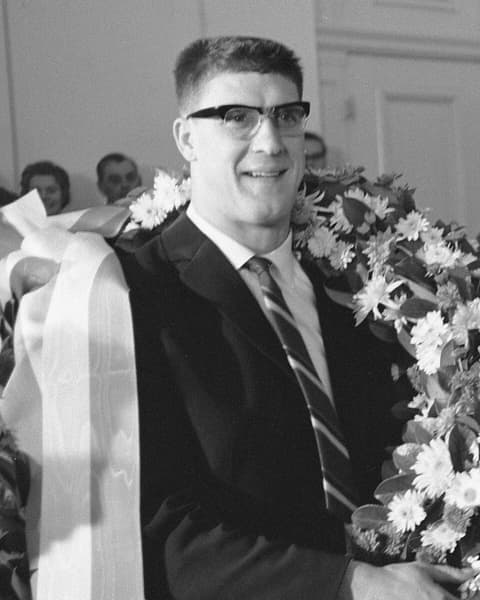
Geesink, the Dutch world champion, won his semi-final in 12 seconds with a sasae-tsurikomi-ashi on Australia's Boronovskis. He went on to beat Japan's Akio Kaminaga in the final.
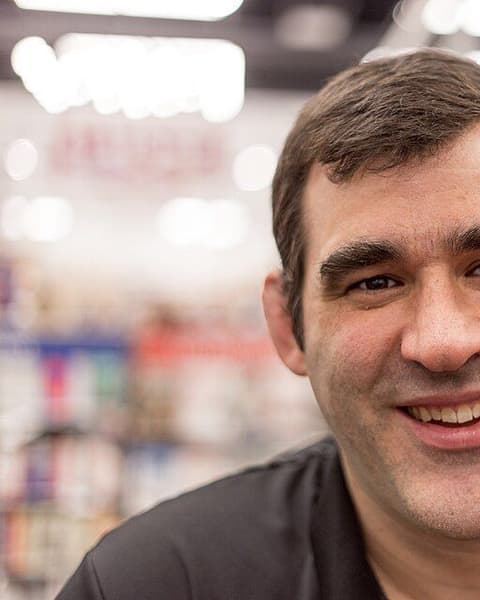
With a yuko each and only moments left, Canada's Gill threw the reigning world champion Okada with an unconventional sasae-tsurikomi-ashi for waza-ari. It came in the preliminary pool and knocked out the favourite; Gill went on to win the Olympic bronze.
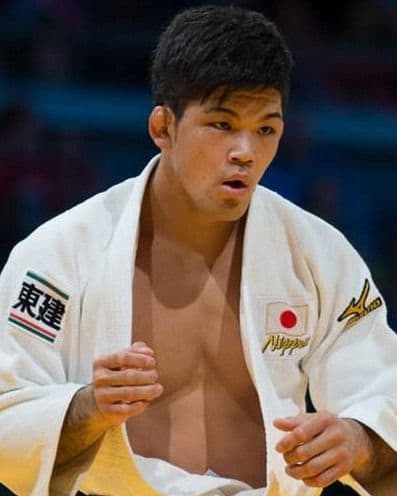
Ono already had two shidos and was in danger of disqualification. Then, after more than nine minutes of fighting and deep in golden score, he scored a waza-ari with sasae-tsurikomi-ashi to win his second Olympic gold.
After five scoreless minutes, Mudranov scored a waza-ari with sasae-tsurikomi-ashi in golden score to win the gold medal, Russia's first of the Rio Games.
Across the arts
The Kodokan's formal demonstration. Sasae-tsurikomi-ashi is the second of the three foot throws in the Nage-no-kata, between okuri-ashi-harai and uchi-mata.
In competition it is often a surprise attack from an unusual angle or a golden-score finisher, as in Nicolas Gill's upset of Okada in 1992, Beslan Mudranov's Rio final in 2016 and Shohei Ono's Tokyo final in 2021.
A very similar throw where the block is at the knee instead of the ankle.
The same lift and pull, but the foot is swept backward instead of blocked.
Russian-language sources describe a front sweep under the extended supporting leg and use the same name for this throw and for harai-tsurikomi-ashi.
In Brazilian jiu-jitsu it scores 2 points when you land on top and hold for three seconds (IBJJF). In MMA the ABC foul list does not ban foot blocks or trips, and judges count takedowns as effective grappling.
History
Sasae-tsurikomi-ashi is in the first group of the Kodokan's Gokyo, both in the 1895 list and in the 1920 revision to forty throws. It is also one of the three foot throws of the Nage-no-kata. The Hall of Fame lists it as a signature of Anton Geesink, the Dutch giant who used it to beat Australia's Theodore Boronovskis in the Tokyo 1964 open-category semi-final in 12 seconds. More recently Shohei Ono used it to win the Tokyo 2020 final in golden score.
In the rules
Drills
Hold a wall. Step and set the sole of your foot against an imaginary ankle at shin height, hold the prop for two seconds, and reset. Ten reps each side.
With a partner walking forward, do twenty fit-ins: circular pull, turn, touch the sole to their ankle, then reset. No throw.
Practise the Nage-no-kata version slowly with a partner who knows the kata, both sides, before trying it in free practice.
Legends known for it


We teach it in Throws. A coach will fix the details you can't see yourself. Join now and book your first class for $20, paid online.
Related techniques
Harai-tsurikomi-ashi is the 'lift-pull foot sweep'. You lift and pull your partner forward onto their toes, then sweep their front ankle backward…

De-ashi-barai is the 'advancing foot sweep'. You wait for your partner to take a step, then sweep that foot along its path at the instant their…
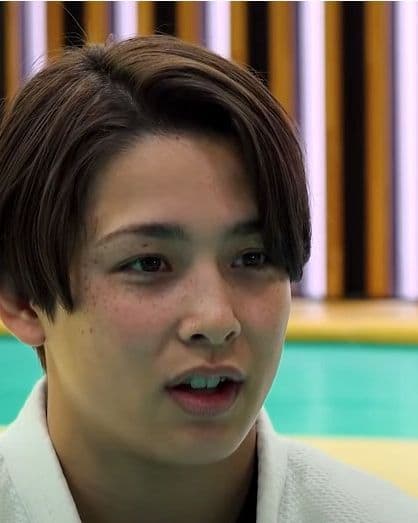
Okuri-ashi-barai is the 'sliding foot sweep'. You herd your partner sideways until their feet come together, then sweep both feet in the direction…
Kosoto-gari is the 'minor outer reap'. You drive your partner's weight back onto one heel, then sweep that heel away with the sole of your foot…
Uchi-mata is judo's inner thigh throw. You open your partner's feet, break their balance forward, turn in and swing your leg up between theirs,…



Kuzushi is breaking your partner's balance so they cannot resist your throw. In judo it is the first of three parts of every throw: kuzushi (break…