送足払Okuri-ashi-barai · say “oh-KOO-ree AH-shee BAH-rye” · “sending-foot sweep”
Sambo: подсечка в темп шагов Podsechka v temp shagov (“sweep in the tempo of the steps”)
Also called Sliding foot sweep, Sending foot sweep, Double foot sweep, Okuri-ashi-harai
Okuri-ashi-barai is the 'sliding foot sweep'. You herd your partner sideways until their feet come together, then sweep both feet in the direction they are already travelling, so nothing is left under them. It needs rhythm more than strength, and it is one of the three foot throws in the Nage-no-kata.
Satori's coaches are filming every technique, full speed and slow motion from two angles. Until it's up, the diagram shows the movement step by step.
How to do it
Start: Stand tall in a sleeve-and-lapel grip with soft knees. Your partner is shuffling sideways or backward, feet close together. In the Kodokan's description you drive them to your left and sweep their right foot with your left foot (left-handers mirror everything).
- 1Grip: sleeve in one hand, lapel in the other. Keep your knees soft and stay light on your feet.
- 2Kuzushi (off-balance): step sideways so your partner has to shuffle the same way. Push with one hand and pull with the other to keep their body travelling along that line, while their feet slide and come close together.
- 3Tsukuri (fit-in): move with them, keeping your hips under you and your chest close. Bend your supporting leg a little and keep your head up.
- 4Kake (finish), part one: as their trailing foot comes up to meet the leading foot, bring the sole of your free foot against the side of the leading ankle, following the way it is moving.
- 5Kake, part two: sweep along the way they are travelling, taking both feet with the whole length of your leg so they leave the mat together.
- 6Keep driving their upper body in the same direction with both hands, so they fall on their side or back with no foot left to catch them.
- 7Hold the sleeve all the way down, then step after them and finish in control.
- Move them first, sweep second.
- Both feet together, then sweep.
- Sweep along their path.
- Hands keep driving.
- Soft knees, light feet.
- Sweeping only one foot. Take both feet in one sweep so nothing is left to stand on.
- Sweeping before the feet come together. Wait for the trailing foot to catch up.
- Stopping the hands. Keep driving in the same direction as the sweep.
- Sweeping against the direction of travel. Go with the path your partner is already taking.
- Stiff knees. Bend your supporting leg slightly so you stay balanced.
Safety: Okuri-ashi-barai takes both feet off the mat at once, so your partner can land flat on their side or back from a real height. They need a solid break-fall before you try it for real. Keep hold of the sleeve through the fall, sweep with the sole in a brushing motion, and practise on mats at half speed first.
When to use it
- When your partner side-steps or retreats in a line with their feet close together.
- When they slide along the edge of the contest area to avoid your pressure.
- As a change of rhythm after several steps in one direction.
- Walk your partner sideways in a steady rhythm so their steps become easy to predict, then sweep.
- Push them toward the edge of the contest area so they have to shuffle along it.
- Follow a throw that made them step sideways to keep their balance.
- Push toward one side, then sweep as they shuffle to recover.
- A hold-down as they land.
- Ouchi-gari or osoto-gari if they hop over the sweep.
- Kosoto-gari on the trailing foot if only one foot gets swept.
- Tsubame-gaeshi: they fend off the sweep and counter-sweep with the same foot (the Kodokan lists this counter to foot sweeps).
- Step wide instead of sliding, so the feet are never together.
- Lift the feet one at a time as the sweep arrives, then throw forward.
- Keep your feet a shoulder-width apart and avoid shuffling with your feet together.
- Change direction when you feel your partner herding you sideways.
- If you do go over, tuck your chin and slap the mat.
The physics
Okuri-ashi-barai is a couple of forces applied sideways, in the frontal plane. As your partner steps to the side, your sole sweeps their trailing foot into and past their leading foot, carrying both feet out from under them in the direction they are moving, while your hands lift and push their upper body the other way.
Sideways is the direction a standing body resists worst, as Sacripanti points out, and at the moment the feet close together the base is at its narrowest. The sweep only has to beat the friction on a foot that carries little weight, so timing matters more than strength. Their centre of mass keeps its sideways momentum while the feet travel faster, so they rotate about their own centre and land on their side; Sacripanti uses it as an example of a couple throw that works without a separate kuzushi.
Masters and famous moments
After five minutes of golden score, Cuba's Antomarchi swept Hungary's Erdelyi-Joo with okuri-ashi-barai for ippon. The IJF called it a titanic tussle; she went on to win her first major medal, a world bronze.
Basile was the 29th-ranked judoka in his class. He beat the second-ranked Tömörkhüleg with a sumi-otoshi waza-ari early and an okuri-ashi-barai waza-ari at 3:50 for the ippon, then went on to win the gold medal.

The London 2012 Olympic champion swept Poland's Kulaga with okuri-ashi-barai for waza-ari, then moved straight into yoko-shiho-gatame to finish the match.
Australia's Haecker scored ippon with okuri-ashi-barai after two seconds. The IJF called it the fastest throw of the day.
Across the arts
The formal Kodokan demonstration of the throw. Okuri-ashi-harai is the first of the three foot throws in the Nage-no-kata, followed by sasae-tsurikomi-ashi and uchi-mata.
Today it shows up as a sudden finisher. Katharina Haecker scored ippon with it after two seconds at the 2024 Worlds, per JudoBase, while Kaliema Antomarchi needed almost five minutes of golden score to land hers in 2017.
It differs from de-ashi-barai, which sweeps one foot as it lands. Okuri-ashi-barai sweeps both feet sideways.
Russian-language sources describe a sweep timed to your partner's steps and name it podsechka v temp shagov. Sport sambo scores it like any other throw.
Wrestlers sweep the feet of an opponent who is shuffling. Leg trips are legal in freestyle and illegal in Greco-Roman wrestling.
In Brazilian jiu-jitsu it scores 2 points when you land on top and hold for three seconds (IBJJF). In MMA the ABC foul list does not ban foot sweeps, and judges count takedowns as effective grappling.
History
Okuri-ashi-barai is in the Kodokan's first Gokyo list of 1895 (in the third group) and in the 1920 revision to forty throws (moved to the second group, beside kosoto-gari and kouchi-gari). The Kodokan describes it as driving the opponent sideways and sweeping so that both feet are put together. It is also one of the three foot throws in the Nage-no-kata, the Kodokan's formal demonstration of throwing. Recent examples include Kaliema Antomarchi's second-round win on her way to a world bronze medal in 2017 and Italy's Fabio Basile, who used it in his run to the 2016 Olympic title.
In the rules
Drills
Hold a wall for balance. Sweep an imaginary pair of feet with a long brushing arc of your sole, keep your hips level, and reset. Twenty reps each side.
Your partner shuffles sideways along a line at a walking pace. Match their rhythm, and touch the outside of their leading foot with your sole as the feet come together, with no sweep. Five minutes each way.
Practise the Nage-no-kata version of okuri-ashi-harai slowly with a partner who knows the kata, both sides, before trying it in free practice.
Legends known for it

We teach it in Throws. A coach will fix the details you can't see yourself. Join now and book your first class for $20, paid online.
Related techniques
De-ashi-barai is the 'advancing foot sweep'. You wait for your partner to take a step, then sweep that foot along its path at the instant their…
Kosoto-gari is the 'minor outer reap'. You drive your partner's weight back onto one heel, then sweep that heel away with the sole of your foot…
 2005–2019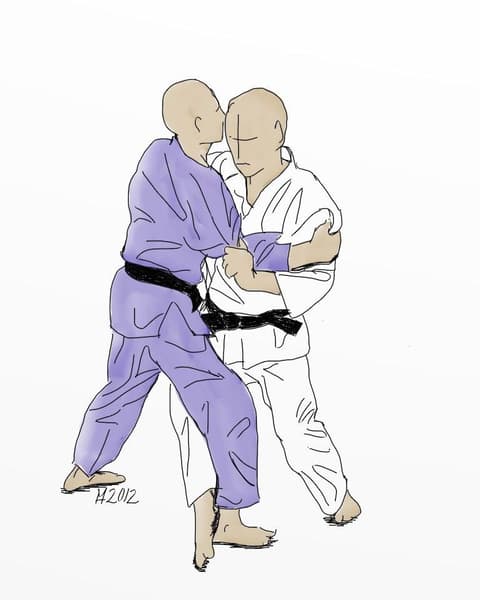
Kouchi-gari is the 'minor inner reap'. You catch your partner's heel from the inside with the sole of your foot and flick it forward just as their…
 1996–2014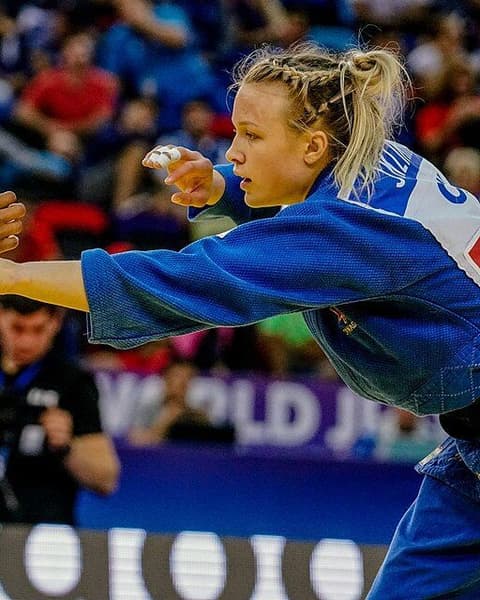
Sasae-tsurikomi-ashi is the 'supporting-foot lift-pull throw'. You pull your partner forward in a circle, block the leg they are stepping onto with…


Kuzushi is breaking your partner's balance so they cannot resist your throw. In judo it is the first of three parts of every throw: kuzushi (break…
Ukemi is the art of falling safely. Judo teaches four breakfalls (rear, side, forward and the forward roll) that spread the impact over your arm,…