大内刈Ouchi-gari · say “oh-OO-chee GAH-ree” · “major inner reap”
Sambo: зацеп изнутри Zatsep iznutri (“inside hook”)
Also called Major inner reap, Large inner reap, Inside trip, O-uchi-gari
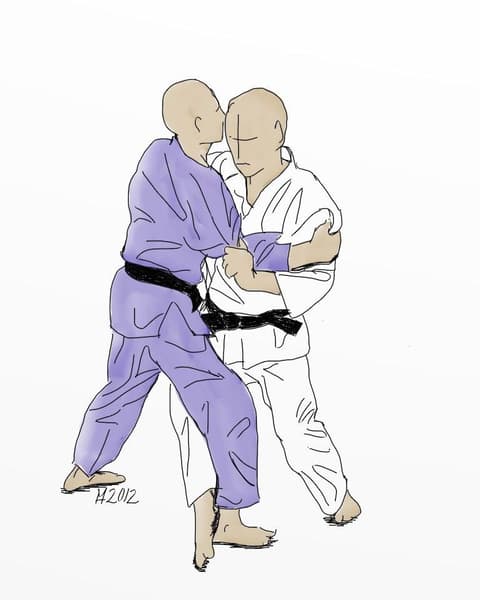
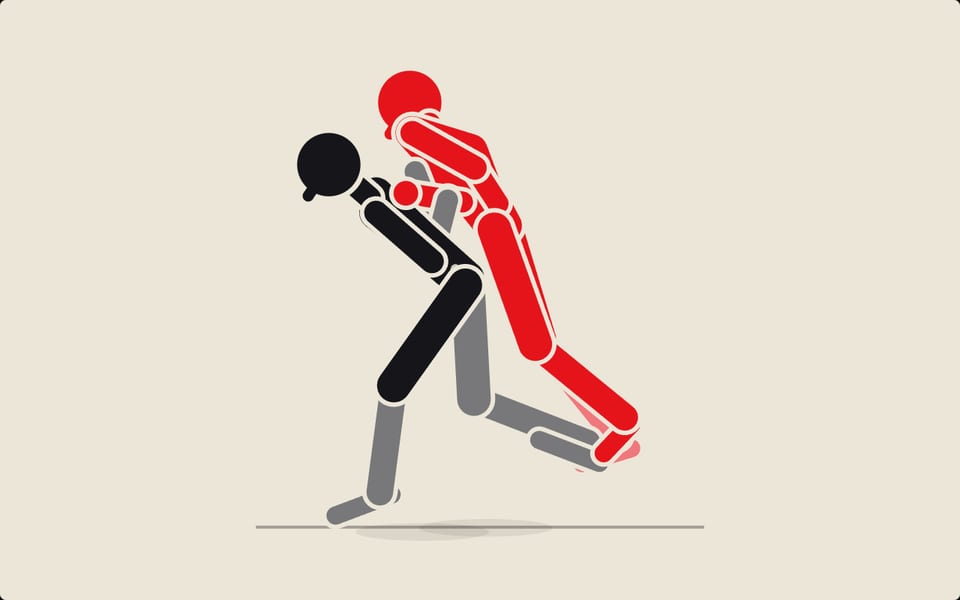
Ouchi-gari is the 'major inner reap'. You step in chest to chest, hook your leg around the inside of one of your partner's legs and sweep it out wide while driving them backward onto the mat. It is judo's version of the wrestler's inside trip, and it decided Olympic finals in 2016, 2021 and 2024.
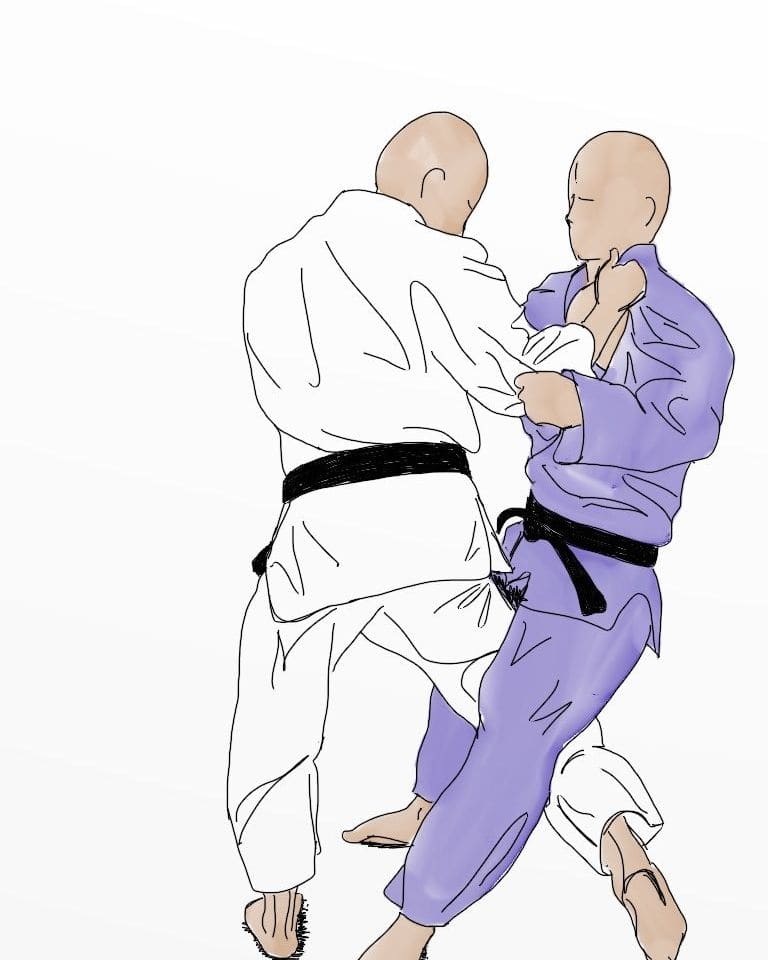
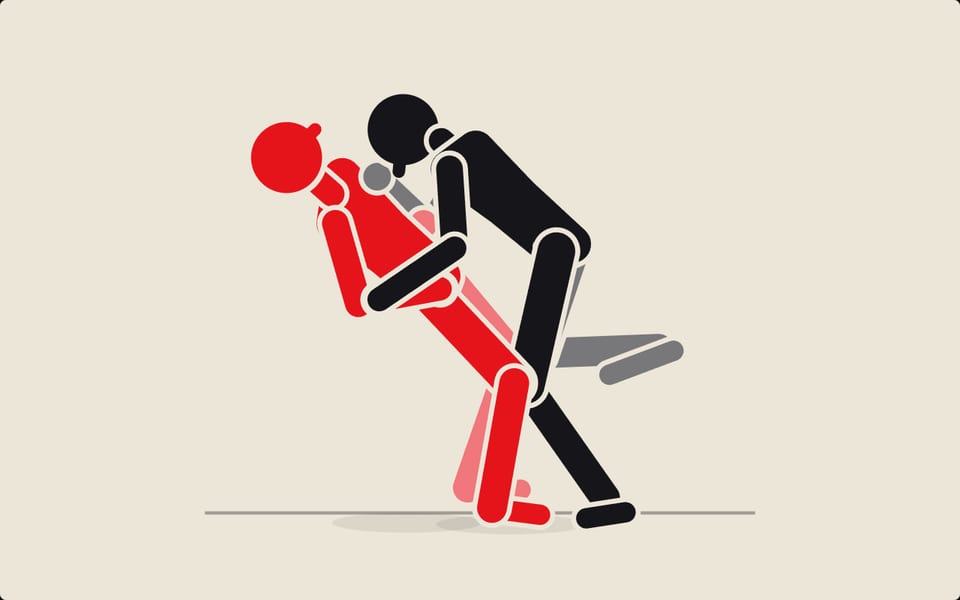
Satori's coaches are filming every technique, full speed and slow motion from two angles. Until it's up, the diagram shows the movement step by step.
How to do it
Start: Stand upright in a sleeve-and-lapel grip, left hand on their right sleeve and right hand on their left lapel (left-handers mirror everything). Your partner's stance is wide or they are stepping backward, with their weight sitting on the heel of their left foot.
- 1Grip: left hand on their right sleeve, right hand on their left lapel or collar. Stay tall with soft elbows.
- 2Kuzushi (off-balance): walk them back or push up with the lapel hand until their stance opens and their weight sits on the left heel, toward their rear-left corner.
- 3Tsukuri (fit-in): step your left foot in close, inside their right foot, and bring your chest against theirs with your hips forward.
- 4Kake (finish), part one: swing your right leg in between their legs and hook your calf around the back of their left calf or knee from the inside.
- 5Kake, part two: sweep that leg away in a wide arc out to your right, like opening a gate, while your chest keeps pushing into theirs.
- 6Drive their upper body back and down toward the rear-left corner, sleeve hand pulling down, until they land flat on their back.
- 7Follow them down on top, in control, and do not fall between their legs.
- Open their stance first, then hook.
- Belly to belly: no gap, no reap.
- Reap out wide, not up.
- Drive through to the back corner.
- Head up, looking over their shoulder.
- Reaping from far away with no body contact. Step in until your chest touches theirs.
- Hooking without driving, so they just hop free. Push your hips and chest through as you sweep.
- Going for it when their stance is narrow and balanced. Open the stance with a push or a small sweep first.
- Falling into their legs and landing in their guard. Keep your hips forward and land on top.
- Looking down at the feet. Keep your head up.
Safety: Ouchi-gari drops your partner flat on their back, so the back of the head is the danger. Only throw someone who can already do a backward break-fall, and keep hold of the sleeve. Two dummy-throwing studies both measured a bigger straight-line head acceleration from ouchi-gari than from osoto-gari, and an extra under-mat did not cut the rotational acceleration, so falling skills come before throwing.
When to use it
- When your partner stands with their feet wide and their weight on the heels, for example after they push back against your push.
- When they step back and plant a foot, or have just missed a forward attack.
- As the second attack after a small sweep that made them shift their weight.
- Kouchi-gari first, then ouchi-gari: the IJF described this combination scoring a waza-ari for Canada's Kyle Reyes at the 2024 Worlds.
- Push up on the lapel so they push back; their feet plant and the inside leg is ready to reap.
- Ouchi-gari into uchi-mata: the reap makes them step their leg back and wide, which opens the hip throw (Kosei Inoue's combination).
- Ouchi-gari into osoto-gari: drive the inside reap until they plant on the leg, then reap it from outside (Teddy Riner's chain).
- Uchi-mata when they step their leg back and wide to escape the hook.
- Osoto-gari on the same leg once it has taken their weight.
- A hold such as kesa-gatame as they land on their back.
- Ouchi-gaeshi: they counter-reap your reaping leg with the leg you were attacking (the Kodokan lists this counter).
- Ura-nage or hikikomi-gaeshi as you come in: Movlud Miraliyev beat Kosei Inoue at the 2004 Olympics by countering his ouchi-gari with ura-nage, and Lanir of Israel beat Italy's Bellandi at the 2023 Worlds with hikikomi-gaeshi.
- Seoi-otoshi as you step in: Diyora Keldiyorova braced against a strong ouchi-gari at Paris 2024 and answered with a seoi-otoshi for waza-ari.
- Bend your knees and sit your hips down so you are heavy, with your weight on both feet.
- Step the attacked leg back and out of the hook as their foot lands, or turn your hips toward them.
- Keep your chest up and your head over your hips so you do not fall backward; if you do go over, tuck your chin and slap the mat.
The physics
Ouchi-gari is a couple applied by arms and leg. Your hands and chest drive your partner's upper body backward and down while your leg hooks the inside of their leg and reaps it out from under them, so they rotate backward around their centre of mass.
Pushing their centre of mass back toward their heels brings it to the rear edge of their base, and taking away the leg they would step back onto removes the chance to rebuild that base. Sacripanti uses ouchi-gari as an example of a couple throw that can work without a separate kuzushi, because once the partner is unstable, gravity helps the rotation. The two forces should arrive together: the more simultaneous and equal they are, the closer the throw comes to a pure rotation. The fall is a steep backward one, and in dummy tests the head struck the mat with even higher linear acceleration than in osoto-gari.
Masters and famous moments

With the final tied 3-3, a draw picked the heavyweights to decide gold. Riner threw Japan's Saito with ouchi-gari for ippon in golden score, about six and a half minutes in, to win the title for France. Earlier in the same final he had beaten Saito with uchi-mata.

In an otherwise scoreless final, Krpálek hit ouchi-gari late in the five-minute match for ippon. Olympedia calls it the Czech Republic's first judo medal since the split from Slovakia.
Both men had two shidos and nothing had scored after more than five minutes of golden score. Wolf then dropped in a perfectly timed ouchi-gari for ippon and Japan's eighth gold of the Games.
In his first full MMA fight, the Olympic judo champion threw former UFC tournament winner Frye with ouchi-gari, then finished him with an armbar that ended the bout.
Across the arts
You hop on your supporting leg while the other leg stays hooked and chase them in the same direction. The IJF called Sanshiro Murao an ashi-waza specialist for his ken-ken ouchi-gari at the 2023 Worlds, and described Christa Deguchi's hopping ouchi-gari opening the final that year.
You lower your hips and drive through with a low, forward-moving hook. Ryoma Tanaka won the 2024 world final with one, per the IJF.
Wrestlers call the same idea an inside trip and can pair it with a leg grab, which judo rules no longer allow. Greco-Roman wrestling bans tripping altogether.
Russian-language sources call the judo ouchi-gari a zatsep iznutri, an inside hook. Sport sambo scores it like any other throw.
It scores as a takedown in Brazilian jiu-jitsu: two points under IBJJF rules when you end on top and hold for three seconds.
Olympic judo champion Hidehiko Yoshida threw Don Frye with ouchi-gari in his first full MMA fight, then finished him with an armbar.
History
Ouchi-gari belongs to the first group of the Gokyo no waza, the forty-throw teaching list the Kodokan revised in 1920. The Hall of Fame lists ouchi-gari into uchi-mata as a Kosei Inoue signature and ouchi-gari into osoto-gari as a Teddy Riner signature. Hidehiko Yoshida used it in his first full MMA fight, against Don Frye at PRIDE 23 in 2002. Research teams have thrown dummies with it to study head injuries, which is why coaches insist on ukemi first.
In the rules
Drills
Stand side-on to a wall, one hand on it. With the outside leg, hook an imaginary calf and sweep it out wide in an arc, hips forward, then reset. Ten reps each side.
Your partner steps back and forward in a wide stance. Each time their weight lands on the heel, step in and touch your calf to theirs, then stop. Twenty reps, no throw.
Push your partner so they push back, then throw with ouchi-gari onto crash mats. Five throws each side with a partner who breaks falls well.
Legends known for it



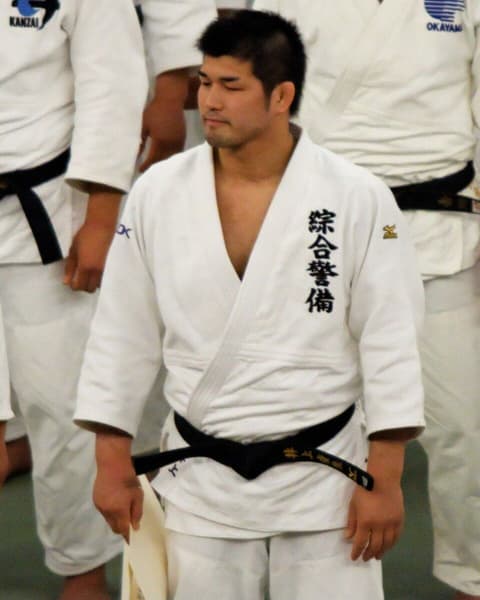

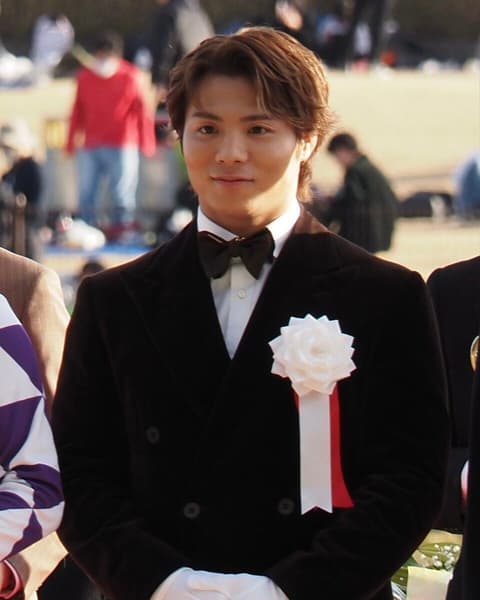

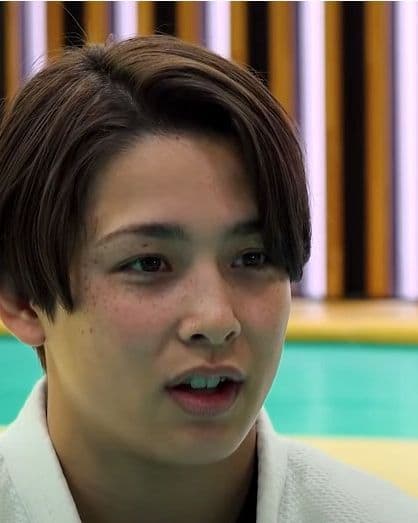

We teach it in Throws. A coach will fix the details you can't see yourself. Join now and book your first class for $20, paid online.
Related techniques
Osoto-gari is the 'major outer reap'. You break your partner's balance back onto one heel, step deep beside that leg and reap it away from behind…
Kouchi-gari is the 'minor inner reap'. You catch your partner's heel from the inside with the sole of your foot and flick it forward just as their…
 1996–2014
Kosoto-gari is the 'minor outer reap'. You drive your partner's weight back onto one heel, then sweep that heel away with the sole of your foot…
Uchi-mata is judo's inner thigh throw. You open your partner's feet, break their balance forward, turn in and swing your leg up between theirs,…

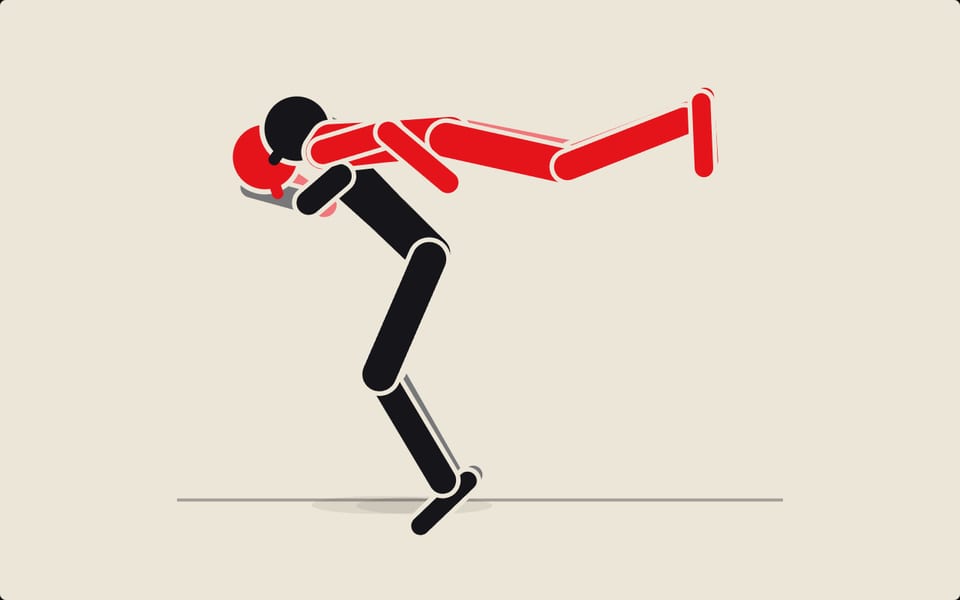
Seoi-nage is judo's shoulder throw. You turn your back into your partner, tuck an arm under theirs, load them onto your back and tip them forward…
Kuzushi is breaking your partner's balance so they cannot resist your throw. In judo it is the first of three parts of every throw: kuzushi (break…