小内刈Kouchi-gari · say “koh-OO-chee GAH-ree” · “minor inner reap”
Sambo: подсечка изнутри Podsechka iznutri (“inside sweep”)
Also called Minor inner reap, Small inner reap, Ko-uchi-gari
Kouchi-gari is the 'minor inner reap'. You catch your partner's heel from the inside with the sole of your foot and flick it forward just as their weight arrives on it, while your upper body drives them backward. It is short, fast and hard to see, so it scores on its own and sets up bigger throws.
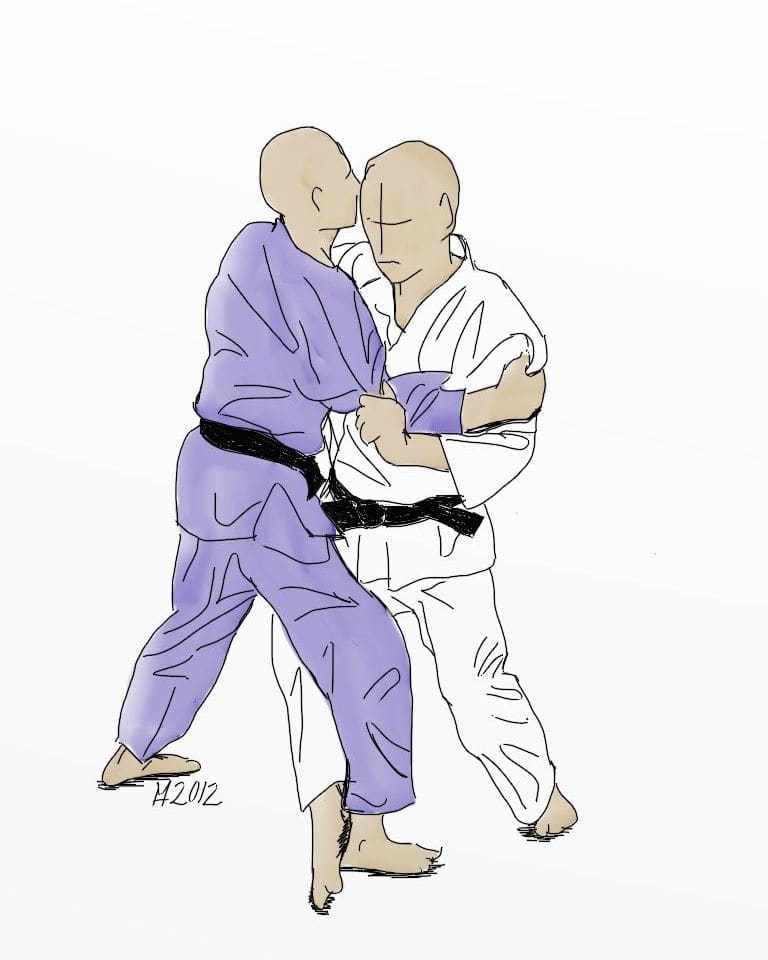
Satori's coaches are filming every technique, full speed and slow motion from two angles. Until it's up, the diagram shows the movement step by step.
How to do it
Start: Stand tall in a sleeve-and-lapel grip. Your partner is moving or has just taken a step, with their weight about to land on one heel. In the Kodokan's own description, your right foot sweeps their right heel from the inside (left-handers mirror everything).
- 1Grip: sleeve in one hand, lapel or collar in the other. Stay tall with soft elbows.
- 2Kuzushi (off-balance): move so your partner steps, and as that foot lands press your hands back toward the rear corner on that side, so the weight rolls onto the heel.
- 3Tsukuri (fit-in): step your other foot up close, chest near theirs, hips forward and back straight. Do not bend at the waist.
- 4Kake (finish), part one: place the sole of your sweeping foot against the back of their heel, from the inside, just above the floor.
- 5Kake, part two: flick the heel forward, toward their toes, in a short fast arc as the weight arrives.
- 6Drive your chest and lapel hand back at the same time so they fall straight back over the heel.
- 7Keep the sleeve, stay over your supporting leg and follow them down to the top.
- Sweep the heel, not the toes.
- Time it when the foot lands.
- Chest pushes while the foot flicks.
- Short and sharp, not a big kick.
- Stay tall: no bending at the waist.
- Sweeping after the foot is planted and heavy. Time it as the foot lands and the weight arrives.
- Reaching with the leg while your body stays back. Step in close and push with the chest.
- Kicking with the toes or shin. Use the sole of your foot against the heel.
- Only sweeping the foot and forgetting the upper body. Drive their chest back so the weight rolls over the heel.
- Looking down at the feet. Keep your eyes on their chest.
Safety: Kouchi-gari drops your partner straight back onto the mat, so they need a solid backward break-fall before you throw them for real. Keep hold of the sleeve so they can land safely, stay off the ankle with your shin, and practise on mats only.
When to use it
- When your partner is walking forward or stepping back and a heel is about to load.
- When a grip fight has them standing square with their weight on their heels.
- As a quick first attack to make them shift before a bigger throw such as ouchi-gari or seoi-nage.
- Pull and step back so they step forward, then sweep the landing foot.
- Push up with the lapel hand so they step back and plant a foot.
- Kouchi-gari into ouchi-gari: sweep one heel, then hook the other leg. Canada's Kyle Reyes scored with this combination at the 2024 Worlds, per the IJF.
- Circle with grip pressure until a heel loads, as Jessica Klimkait does: the IJF describes her dancing around her opponent before diving in for seoi-nage or ouchi-gari.
- Ouchi-gari on the other leg if they step away from the sweep.
- Seoi-nage or another forward throw if they push back hard against the sweep.
- A hold-down as they land, or a pass to top position if you are in BJJ.
- Kouchi-gaeshi: they dodge the sweep and throw you (the Kodokan lists this counter).
- Lift the targeted foot just before contact so the sweep passes under it, then step in and throw forward.
- Step in and press your chest into theirs so there is no room for the foot to get behind your heel.
- Keep your weight on the balls of both feet, not the heels.
- Lift or slide the targeted foot back as their foot comes in.
- Keep your posture tall and your hips forward so the push does not land you on your heels; if you go over, tuck your chin and slap the mat.
The physics
Kouchi-gari is a small couple of forces applied by arm and leg. The sole of your foot reaps your partner's heel from the inside toward where their toes point, while your hands push their upper body back and down.
Time it for the instant that foot is about to take their weight or is just unloading, because the friction pinning a foot to the mat is proportional to the weight on it: little weight, little friction, little force needed. With the heel carried forward and the chest pushed back, they turn backward about their centre of mass and the edge of their base is suddenly behind them. Because it costs so little, it is a classic small technique for provoking a reaction, and Sacripanti describes Japanese players using couple throws like kouchi-gari to set up big lever throws such as seoi-nage.
Masters and famous moments
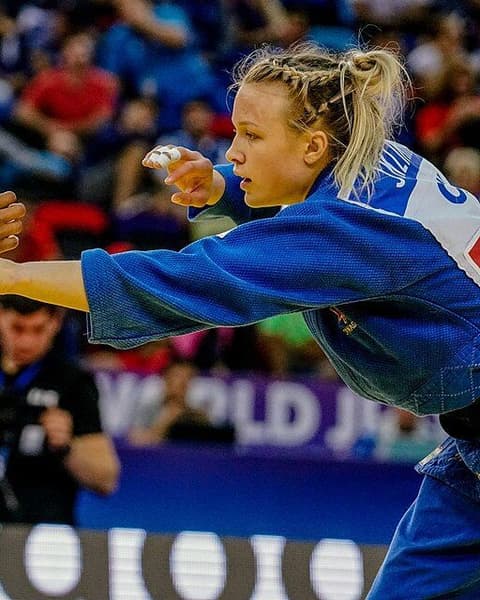
Both women had been penalised and the final went into golden score. About a minute in, Klimkait's kouchi-gari, which the IJF said seemed to start from the far side of the mat, scored the waza-ari that made her world champion for the first time.
Pareto scored a waza-ari with kouchi-gari in under two minutes, and it was enough to win even after two late penalties. Olympedia notes it was the first Olympic gold for Argentina in any sport by a woman.
Bekauri scored his second waza-ari with a kouchi-gari in the closing seconds, after an earlier one from sukui-nage, and so kept his Olympic title.
Slovenia's Leški took down the six-time world champion and defending Olympic champion with a kouchi-gari that the referees confirmed on video review, then went on to win the gold.
Across the arts
You attack from a greater distance, often while circling. The IJF said Jessica Klimkait's winning kouchi-gari at the 2021 Worlds seemed to come from the other side of the tatami.
You hook the heel from the inside, then wrap your partner around your body and fall with them. Olympedia calls Shohei Ono's ippon in the Rio 2016 final over Rüstəm Orucov a ko-uchi-makikomi, while JudoBase logs the same throw as ko-uchi-gari, which shows how close the two look.
Sweep one heel, then hook the other leg when they shift. Kyle Reyes (CAN) used it at the 2024 Worlds.
Russian-language sources call the judo kouchi-gari an inside sweep (podsechka iznutri). Sport sambo scores it like any other throw.
It is a standing takedown in Brazilian jiu-jitsu. The Hall of Fame lists kouchi-gari among Saulo Ribeiro's signatures, and IBJJF rules give two points when you end on top and hold for three seconds.
History
Kouchi-gari was already in the Kodokan's first Gokyo list of 1895, and the 1920 revision to forty throws kept it in the second group, beside kosoto-gari and okuri-ashi-barai. The Kodokan defines it as reaping the foot from the inside while breaking balance backward. Olympedia credits it with the gold at Seoul 1988, where France's Marc Alexandre won the lightweight final with a late koka from it. More recently it decided the Rio 2016 women's 48 kg final and the Paris 2024 men's 90 kg final.
In the rules
Drills
Hold a wall for balance. With the free foot, practise a short sole-first arc forward at ankle height, then reset. Twenty reps each side.
Your partner walks forward and back in a sleeve-and-lapel grip. Touch the sole of your foot to their heel just as it lands, with no sweep. Ten minutes, both sides.
Sweep the heel with a little force, then finish with a full throw onto crash mats with a partner who can fall. Five throws each side.
Legends known for it
 1996–2014
 2005–2019
We teach it in Throws. A coach will fix the details you can't see yourself. Join now and book your first class for $20, paid online.
Related techniques
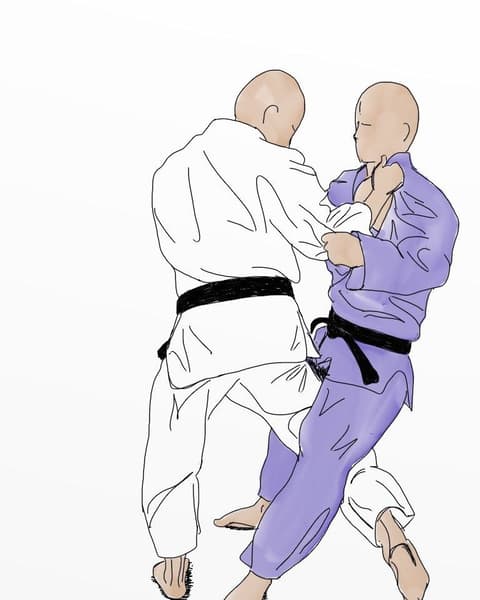
Ouchi-gari is the 'major inner reap'. You step in chest to chest, hook your leg around the inside of one of your partner's legs and sweep it out…



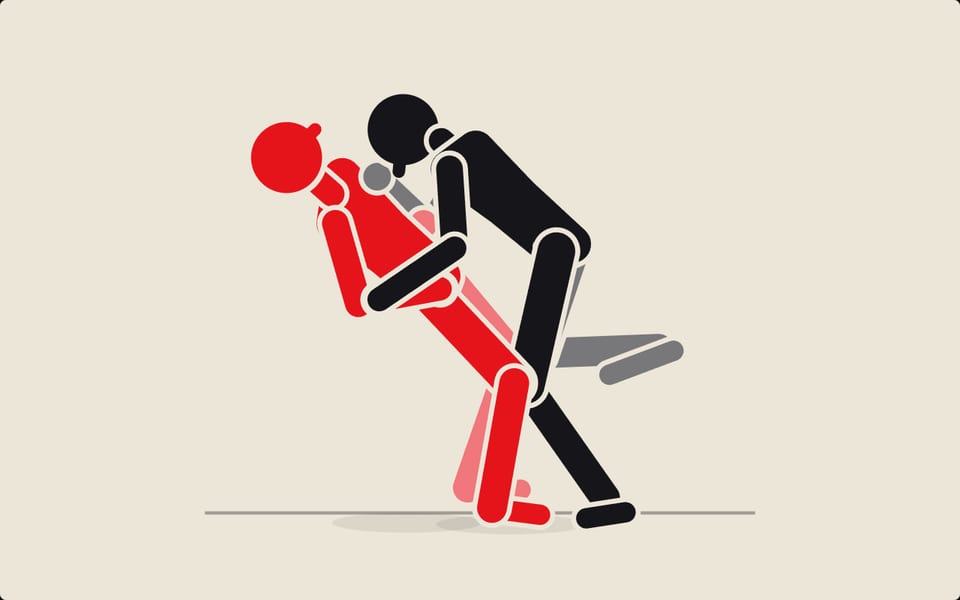
Osoto-gari is the 'major outer reap'. You break your partner's balance back onto one heel, step deep beside that leg and reap it away from behind…
Kosoto-gari is the 'minor outer reap'. You drive your partner's weight back onto one heel, then sweep that heel away with the sole of your foot…
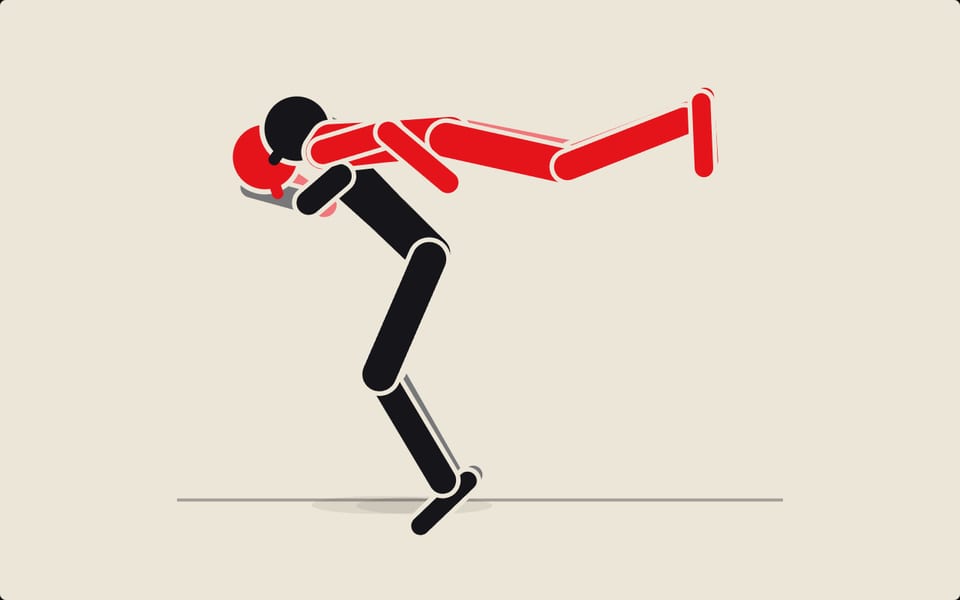
Seoi-nage is judo's shoulder throw. You turn your back into your partner, tuck an arm under theirs, load them onto your back and tip them forward…

Kuzushi is breaking your partner's balance so they cannot resist your throw. In judo it is the first of three parts of every throw: kuzushi (break…
Ukemi is the art of falling safely. Judo teaches four breakfalls (rear, side, forward and the forward roll) that spread the impact over your arm,…