朽木倒Kuchiki-taoshi · say “koo-CHEE-kee tah-OH-shee” · “dead-tree drop”
Sambo: бросок за ногу Brosok za nogu (“throw by the leg”)
Also called Dead tree drop, One-handed throw-down, Single-leg takedown
Kuchiki-taoshi is judo's single-leg takedown, sometimes translated 'dead tree drop'. You step outside your partner's leg, grab it with one hand behind the knee, pull it up and push their chest backward with your other hand and body. The IJF no longer allows it, but the Kodokan still teaches it, and Japan's All-Japan Championships have brought it back since 2025.
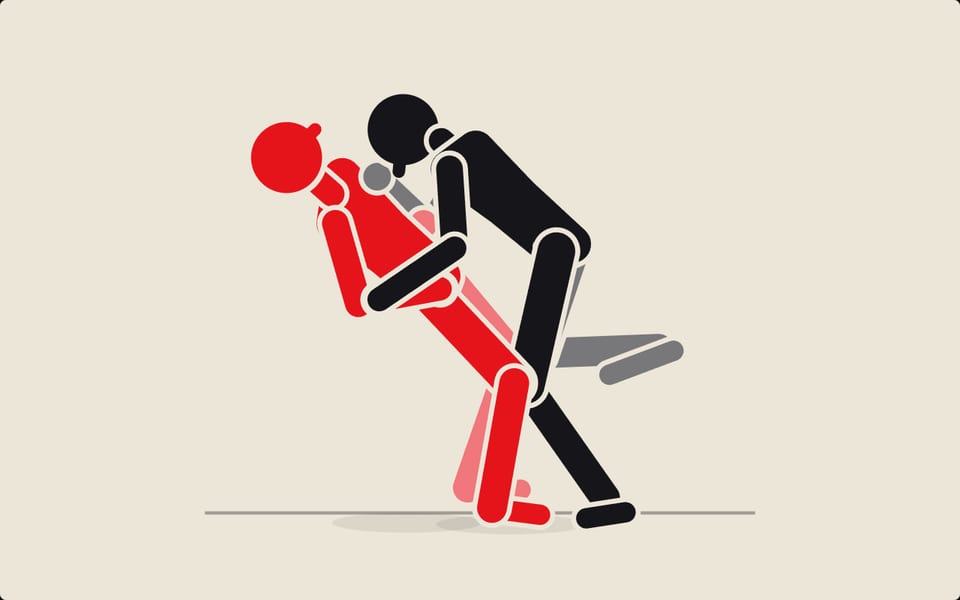
Satori's coaches are filming every technique, full speed and slow motion from two angles. Until it's up, the diagram shows the movement step by step.
How to do it
Start: Stand in a sleeve-and-lapel grip, or with one hand free, close enough to reach a knee. Your partner is upright and stepping, or straightening after a push. Everything below is written for a right-handed stance (left-handers mirror it).
- 1Grip: start in a normal grip with your left hand on their sleeve or lapel. Your right hand is free to reach for the leg.
- 2Kuzushi (off-balance): step back so your partner steps forward, then ease off the pull and push with your hand so they straighten up and step back. Their weight rises and moves back onto the leg you will take.
- 3Tsukuri (fit-in): a moment before they settle, step your left foot to the outside of their right foot and bring your chest close to theirs, turning your hips toward them.
- 4Kake (finish), part one: reach your right hand around the inside of their right knee and grip the back of the leg behind the knee. (The IJF also describes the opposite-hand grab from the outside.)
- 5Kake, part two: pull that leg up with the right hand while your left hand pulls straight down and your body pushes their chest backward.
- 6Keep driving until they fall on their back. The Kodokan stresses the whole action takes a split second.
- 7Stay on your feet if you can and follow them down in control.
- Step outside first, then grab.
- One hand up, one hand down.
- Pull the leg up; push the chest back.
- Stay close, shoulder to their chest.
- Commit in a split second.
- Grabbing before stepping outside. The Kodokan's entry steps to the outside of their foot first, then takes the leg.
- Holding only the ankle. Reaping a heel with one hand is kibisu-gaeshi, a different throw.
- Stepping in deep behind the legs and falling. The Kodokan calls that tani-otoshi.
- Sweeping their other leg while you hold the first. The Kodokan calls that kosoto-gake.
- Lifting without pushing. The other hand must pull down and the body must drive their chest back.
Safety: Kuchiki-taoshi pulls a leg up and pushes the body back, so your partner falls hard and their knee can twist. Never yank the leg sideways. They need a strong backward break-fall, and you should practise only where leg grabs are allowed and with a coach. Start at half speed on crash mats, keep hold of the leg through the fall, and stop if a knee or ankle twists. In IJF events a leg grab is a shido.
When to use it
- When your partner straightens up or steps back to recover their posture, the moment the Kodokan points to.
- When they lean back to block a forward throw such as seoi-nage, or attack with osoto-gari and leave a leg exposed.
- Only in rule sets that allow leg grabs, such as the All-Japan Championships, wrestling, sambo, BJJ and MMA.
- Seoi-nage feint: start ippon-seoi-nage, and when they lean back to block it, turn half way, step outside their leg and grab it, says the Kodokan. A full 360-degree spin into the same grab also works.
- Kata-guruma entry: if they lean back against your shoulder lift, turn to face them and grab the leg instead.
- As a counter to osoto-gari: when they reap, step back and pick up the attacking leg from the inside, pulling up as your other hand pulls down (Kodokan).
- Spinning version: at the 2025 All-Japan Championships, commentators described Kosuke Masuyama spinning out of a one-handed seoi-nage into a leg grab.
- Follow them to the mat and hold down if the rules allow it.
- Kosoto-gake: if you hold the leg with one hand and sweep their supporting foot, the Kodokan calls the result kosoto-gake.
- Kata-guruma, if you hold the leg and they stay upright. eJudo's panel described Masuyama's spins leading into a leg grab for either kata-guruma or kuchiki-taoshi.
- Sprawl: they throw the leg back and drop their hips onto your shoulders.
- Hook the lifted foot into your crotch or hip so it cannot be lifted any higher.
- Pull the leg back and step away the moment your hand arrives.
- Keep your legs apart and your knees bent, so there is no easy leg to lift.
- Keep your chest tall and your hips forward, and drop your hands onto their shoulder or head.
- If you go over, tuck your chin and slap the mat.
The physics
Kuchiki-taoshi is a couple applied by the arms alone. One hand pulls the back of your partner's knee toward you and up while the other hand pushes their upper body back through the lapel or shoulder, and the two opposite forces tip them backward about their centre of mass, like felling the dead tree the name describes.
Taking one leg away leaves them on a single foot, so their base shrinks to one footprint and a small push moves their centre of mass outside it. The farther apart your two hands act, the longer the arm of the couple and the less force each hand needs. Stepping in as you pull adds your body weight to the push instead of leaving your arms to do it alone.
Masters and famous moments
Kanda avenged his 1930 defeat by beating his old rival Sudo with kuchiki-taoshi in the final, which gave him his second national title.
At 1:58, in the first year leg grabs were allowed again, Kagawa went from a kata-guruma entry into a kuchiki-taoshi and badly broke Takagi's balance, though Takagi escaped onto his belly. Kagawa won the match on the flags and went on to win his first All-Japan title.
Masuyama attacked with a spinning (kaiten) kuchiki-taoshi in the first exchange and again with 30 seconds left, along with a leg-grab kosoto attack. He won 3-0 on the flags and finished third. Commentators called it a model for how a lighter fighter can take on a heavyweight.
Across the arts
The IJF describes either grabbing the leg from the inside with the same-side hand or from the outside with the opposite hand, lifting while pushing back.
You start a one-handed seoi-nage that spins past, then grab the leg. eJudo's panel called it a nostalgic move that Masuyama used with real effect in 2025.
The Kodokan separates the two: in kibisu-gaeshi one hand reaps the heel, inside or outside, instead of lifting the leg behind the knee.
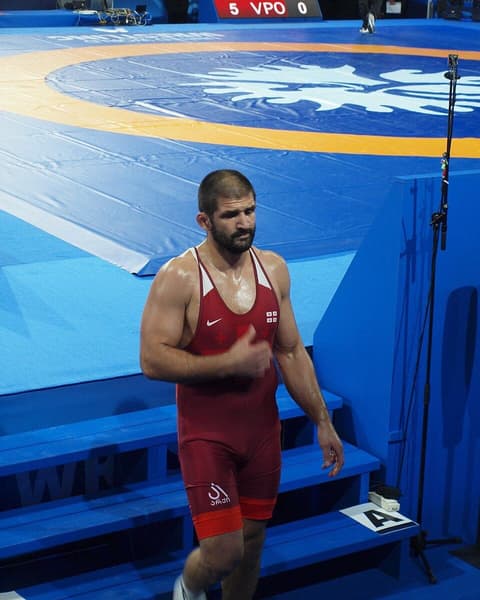
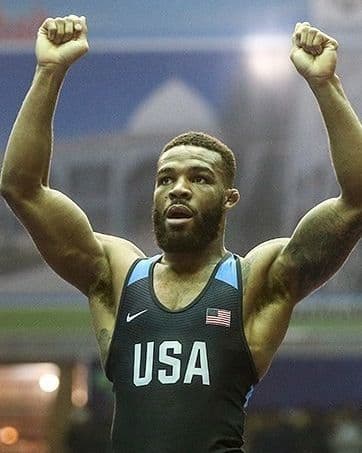
Kuchiki-taoshi is often equated with the single-leg takedown. The Hall of Fame lists single legs as signatures of John Smith, Kyle Snyder and Geno Petriashvili. It is illegal in Greco-Roman wrestling.
Russian-language sources describe a throw made by grabbing the opposite knee-pit from the outside, or simply a throw by the leg (brosok za nogu). Sport sambo scores it like any other throw.
In Brazilian jiu-jitsu it scores 2 points when you land on top and hold for three seconds (IBJJF). In MMA the ABC foul list does not ban leg attacks, and judges count takedowns as effective grappling.
History
Kuchiki-taoshi was taught in jujutsu schools long before judo, and in most schools it and morote-gari were treated as one move. Kyutaro Kanda popularised it in 1926, and the Kodokan later added it to its list of newly accepted techniques (shinmeisho-no-waza). Yaichihyoe Kanemitsu criticised it as lacking finesse in his 1926 book New Style Judo but still included it. Kanda used it to beat Kinsaku Sudo at the 1936 All-Japan Championships, winning his second title. The IJF banned direct leg attacks from 2010, so the throw largely disappeared from international judo until the All-Japan Championships allowed leg grabs again in 2025.
In the rules
Drills
Stand tall, step your far foot to the outside of an imaginary leg, reach behind the knee with your near hand, pull up and pull the other hand down. Ten reps each side.
With a partner standing still, do twenty fit-ins: grip, step outside, touch the back of their knee, and stop. No lifting.
Start ippon-seoi-nage, have your partner lean back to block, then turn half way and step outside into the grab with control. Five each side on crash mats in a rule set that allows it.
Legends known for it
 1984–1992

We teach it in Throws. A coach will fix the details you can't see yourself. Join now and book your first class for $20, paid online.
Related techniques
Morote-gari is judo's double-leg takedown. You drop your level, step between your partner's feet, wrap both arms around their legs above the knees…
Kosoto-gake is the 'minor outer hook'. You drive your partner's weight back onto one leg, hook that ankle or calf from the outside with your own…
Tani-otoshi is the valley drop. You slide one leg behind your partner's leg or legs, fall to your side, and pull them backward over their heel so…
Kata-guruma is judo's shoulder wheel. You get under your partner, load their upper body across your shoulders and roll them over like a wheel. The…
Osoto-gari is the 'major outer reap'. You break your partner's balance back onto one heel, step deep beside that leg and reap it away from behind…


Ukemi is the art of falling safely. Judo teaches four breakfalls (rear, side, forward and the forward roll) that spread the impact over your arm,…