腰車Koshi-guruma · say “KOH-shee goo-ROO-mah” · “hip wheel”
Also called Hip wheel
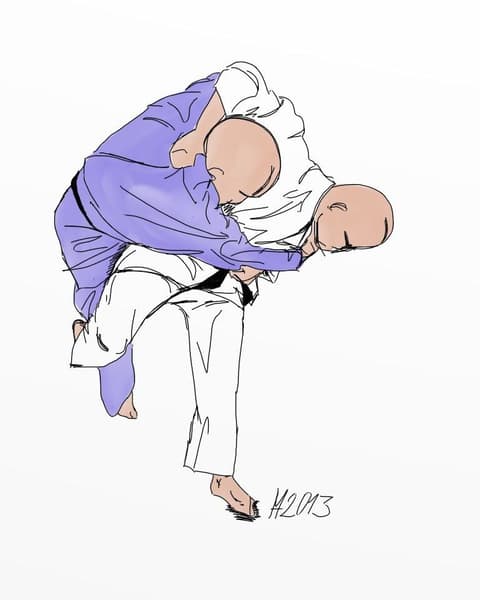
Koshi-guruma is the hip wheel. You turn in with your arm round your partner's neck or holding their collar, push your hip out and pull them over it in a large wheeling motion. It is a big, sweeping hip throw that works best against a partner who bends forward. Because the arm controls the head, it is taught carefully and kept away from young children.
Satori's coaches are filming every technique, full speed and slow motion from two angles. Until it's up, the diagram shows the movement step by step.
How to do it
Start: Take a right-handed grip: your right hand on the back of their collar, your left hand on their right sleeve. Stand a step apart in a natural stance. Your partner should be upright or bending slightly forward as they push.
- 1Grip. Right hand on the back of their collar, left hand on their right sleeve.
- 2Kuzushi. Step back pulling them down, then ease off. As they straighten, step your right foot inside the tip of their right foot. Lift with your right hand and pull up with your left, so their balance breaks toward their right front corner.
- 3Tsukuri, arm. Let go of the collar and reach your right arm deep over their left shoulder, wrapping it round the back of their neck with the forearm bent. The IJF describes a version that keeps the collar grip instead.
- 4Tsukuri, feet. Pivot on the ball of your right foot and step your left foot back inside their left foot, turning round in a large movement. Push your hip out from their right side.
- 5Tsukuri, load. Pull them tight against your body with both hands, hips out, so they wrap over your hip.
- 6Kake. Lean forward and open your body to the left. Turn the neck arm and the pulling hand together and draw them through a wide curve over your hips.
- 7Finish. Keep hold of the sleeve through the landing so they fall on their back, then control them or move into a hold.
- Hips out to their right side, back tight against them.
- The arm guides the head. It does not crank or choke.
- Pull with the left hand as you turn, so the wheel keeps going.
- Coaches differ on the right hand: the IJF keeps a collar grip, while the Kodokan Illustrated text wraps the neck.
- Yanking the neck. Fix: use the arm to guide the head, never crank or choke it.
- Hips too close, so the wheel is small. Fix: push your hip out past their right hip so the circle is big.
- Not breaking their balance before wrapping the arm. Fix: lift and pull first, then reach.
- A gap between your back and their belly. Fix: pull with both hands until they are tight against you.
- Letting go of the sleeve. Fix: keep it so they land on their back.
Safety: The arm around the neck puts your partner's head and neck at risk. Learn it only under a coach, on crash mats, at half speed, with a partner who can breakfall. Release the neck as they fall. Judo Canada's manual for its U12 and U14 groups says koshi-guruma should not be taught to those children or used in their randori.
When to use it
- When your partner bends forward to defend or hangs their head down.
- When they step back and straighten, and their right foot is stepping behind the left.
- Against a smaller partner whose head is easy to reach.
- Step back pulling them down, then ease off as they straighten (the Kodokan's own entry).
- Attack with a hip throw or sweep that makes them bend forward, then wheel in.
- Kesa-gatame. Done properly, the thrower lands in the hold.
- O-goshi or harai-goshi if they straighten out of the wheel.
- Hip block: drop your hips and push your belly forward so you can't be wheeled.
- Keep your head up and your posture tall so there's nothing to wrap.
- Ura-nage, lifting them as they turn in. The Kodokan teaches it as an answer to a hip throw.
- Keep your chin tucked and your head up, and pull your shoulder out of the neck wrap before it tightens.
- Stay tall with your hips back so they can't get their hip out past yours.
- Turn to face them as they enter.
The physics
Koshi-guruma is a variable-arm lever in which your hips go deeper across your partner's than in o-goshi, so the pivot sits past their centre line.
Your arm around their neck and your sleeve pull wheel their upper body around that deep hip, and because your arm works high on their body, the lever arm between the pivot and your pull is long. With their centre of mass already over the pivot, the throw is mostly rotation of your trunk rather than lifting. If your hips do not get past theirs, they can step around you and the wheel has no hub. As with other lever throws, bring their weight forward first so the pivot is loaded.
Masters and famous moments
Neither player scored in the four minutes of normal time, and golden score ran for about nine more minutes. Then Dorjsuren caught Japan's Yoshida with koshi-guruma for the waza-ari that gave her the world title.
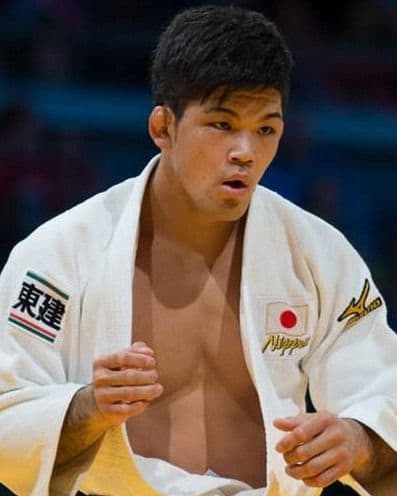
Ono opened the quarter-final with a waza-ari after 37 seconds and went on to win the Olympic gold medal. The IJF's JudoBase database tags that first score as koshi-guruma.
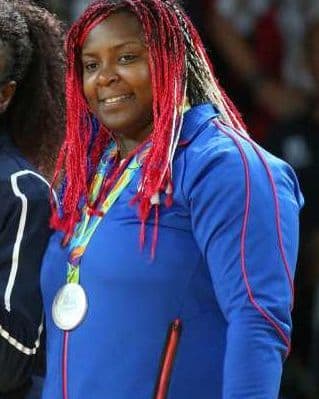
Jamaica's Drysdale Daley scored twice with koshi-guruma against Poland's Wroblewska: a waza-ari at 2:38, then ippon at 3:57, in the last seconds of the bout.
Across the arts
The form in the steps: the right arm goes over the left shoulder and round the back of the neck, with the forearm bent, and the pulling hand turns with it.
The IJF describes placing your right hip against their body and, continuing to grip their collar, drawing them up and over your hips in a large motion. There is no neck wrap.
It still scores at senior level, sometimes in a final. In the 2017 World Championships final, Sumiya Dorjsuren threw Tsukasa Yoshida with it after about nine minutes of golden score.
History
Koshi-guruma is one of the original forty throws of Jigoro Kano's Gokyo, in the second group. The Kodokan classes it with the hip throws. In some countries, Canada among them, it is treated with caution because of the risk to the neck, and Judo Canada's youth manual keeps it out of its U12 and U14 groups. At senior level it still scores: Sumiya Dorjsuren won the 2017 world title with it, in the long final against Tsukasa Yoshida.
In the rules
Drills
Practise the foot pattern alone: step in, pivot on the right foot, step the left foot back and round, hip pushed out to the right. Ten slow reps each side, then ten quick ones.
Your partner stands tall. Fit in with your arm on the collar rather than the neck, and hold the loaded position for a count of two. Ten reps each side.
Throw at half speed with a trained partner who can breakfall, five reps each side, keeping the sleeve. Release the neck as soon as they start to fall.
We teach it in Throws. A coach will fix the details you can't see yourself. Join now and book your first class for $20, paid online.
Related techniques
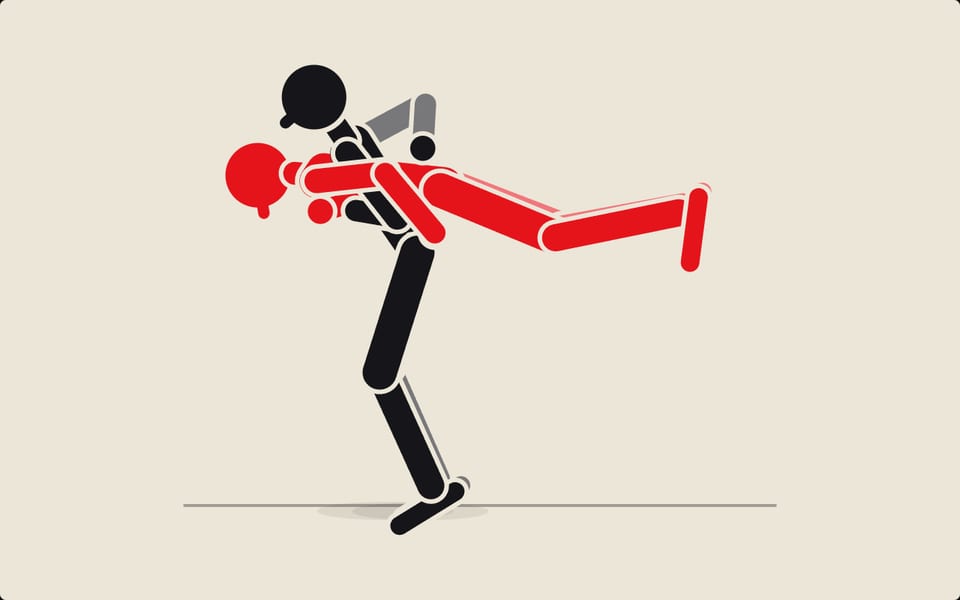
O-goshi is judo's major hip throw. You turn in with your hips lower than your partner's, wrap an arm around their back, load them onto your hips…

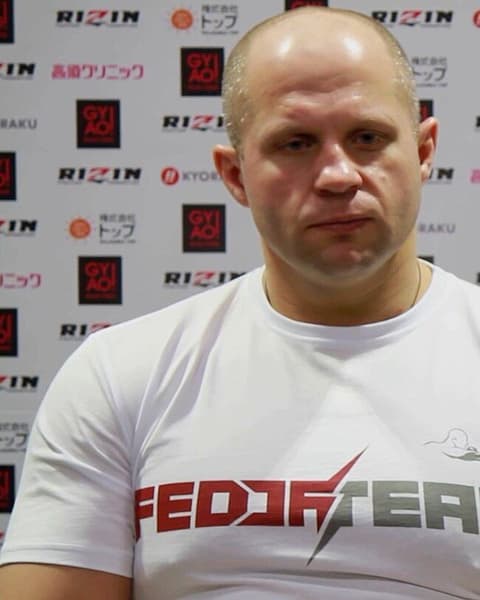

Uki-goshi is the floating hip throw. You reach an arm round your partner's waist, turn in with a shallow hip and twist them around it, without…
Harai-goshi is judo's sweeping hip throw. You pull your partner onto their toes, turn in with your hip against theirs and sweep your straight leg…


Tsurikomi-goshi is the lift-pull hip throw. You drop your hips to the level of your partner's thighs, then rise again while your lapel-side arm…
Kesa-gatame is judo's classic side pin. You sit beside your partner's chest, trap their near arm, wrap your other arm around their head and press…

Kuzushi is breaking your partner's balance so they cannot resist your throw. In judo it is the first of three parts of every throw: kuzushi (break…