跳腰Hane-goshi · say “HAH-neh GOH-shee” · “spring hip”
Also called Spring hip throw, Hip spring
Hane-goshi is the spring hip throw. You pull your partner tight against your side, then spring your leg and hip up from underneath their body so they rotate over you. Compared with harai-goshi, which sweeps the front of their leg with the back of your thigh, the hane-goshi leg goes inside theirs and lifts from below. It needs good balance on the supporting leg.
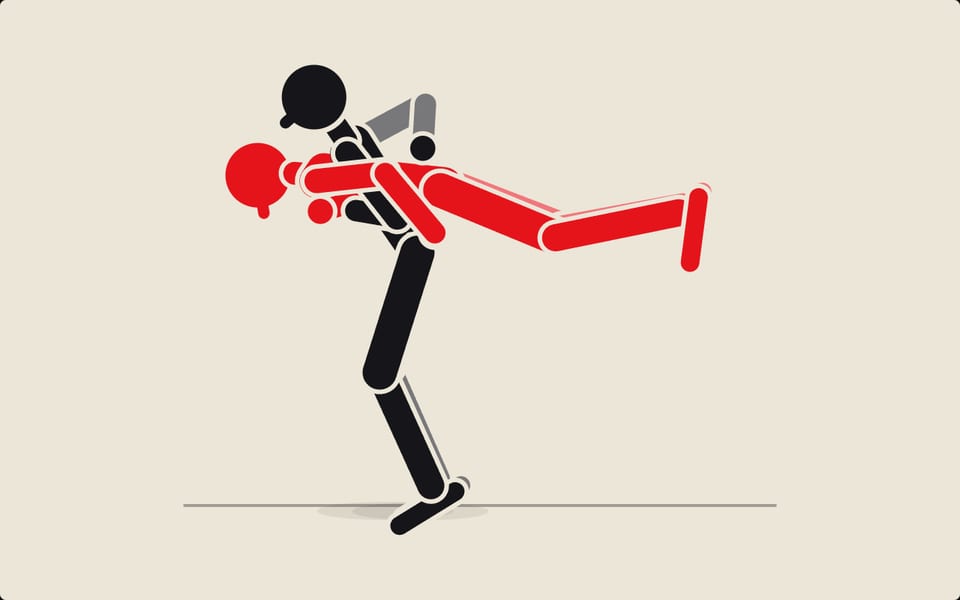
Satori's coaches are filming every technique, full speed and slow motion from two angles. Until it's up, the diagram shows the movement step by step.
How to do it
Start: Take the classic right-handed grip: left hand on their right sleeve, right hand on their left lapel. Stand a step apart in a natural stance. Your partner should be upright and starting to step their right foot back as you push.
- 1Grip. Sleeve in your left hand, lapel in your right. Keep your elbows loose.
- 2Kuzushi. Advance and push them back. When they begin to step back with the right foot, step your right foot in between theirs. Lift and pull with your right hand and pull up with your left. They rise onto their toes, straight ahead or toward their right front corner.
- 3Tsukuri, feet. Step your right foot inside their right foot and open your body to the left. Draw your left foot up, change step and turn your back to them, jumping in close to their chest with your weight on your left foot.
- 4Tsukuri, leg. Bend your right leg slightly and set the outside of it against the inside of their right leg, toes pointing down.
- 5Tsukuri, load. Pull again with both hands until they are tight against you and loaded onto your waist.
- 6Kake. Bend the left knee to carry your weight. Send your right leg and hip up from under their body in one big springing motion and twist to the left. They rotate over your hip and leg.
- 7Finish. Keep the sleeve through the landing so they fall on their back, then control them or move into a hold.
- Pull them in tight before you spring.
- Left knee bent, weight on the left foot.
- Leg and hip go up together, from underneath. It is not a kick.
- Keep the sleeve. It guides the landing.
- Springing before they are pulled tight. Fix: load them onto your waist first.
- Losing balance on the supporting leg. Fix: bend the left knee and keep your weight over the left foot.
- Kicking up with the lower leg. Fix: lift with the leg and hip together from underneath.
- Jumping in with your hips high. Fix: bend your knees and get your hips under theirs.
- Letting go of the sleeve. Fix: keep it so they land on their back.
Safety: The springing leg can catch your partner's knee if it lands low. Keep it high on the thigh and hip, start slow and only throw with a partner who can breakfall. Learn it under a coach.
When to use it
- When they step back with the right foot as you push. This is the Kodokan's timing.
- As a follow-up to a harai-goshi or uchi-mata threat, because all three break their balance forward or to the right front corner.
- Push them back a couple of steps, then go in as they start to step back.
- Threaten harai-goshi or o-soto-gari, then turn in and spring as they resist.
- A hold-down such as kesa-gatame. After a real attack that doesn't score, the IJF rules let you go straight to the ground.
- Uchi-mata or harai-goshi if they bend away from the spring: the same forward break of balance works for both.
- Ura-nage. The Kodokan's own example is an answer to an opponent's hane-goshi: lower your hips, wrap their waist, lift and fall back.
- Hane-goshi-gaeshi: block the spring and throw them. The Kodokan and the IJF list it as a counter-throw.
- Push your belly forward and keep your hips low so their leg can't get under you.
- Keep your hips back and your weight over both feet so they can't load you.
- Clamp your arm and turn to face them before their back is fully to you.
- Step your right foot back or across as they spring.
The physics
Hane-goshi belongs to Sacripanti's couple group, applied by trunk and leg, alongside uchi-mata and harai-goshi. Your chest and hands turn your partner's upper body forward and down while your bent leg springs up and outward against the inside of their leg, and these two opposite forces rotate them around their own centre of mass.
The spring comes from lifting the bent leg from the hip while your standing leg pushes into the floor. The height between your chest contact and your leg contact is the arm of the couple, and keeping your hip and chest tight to them makes both forces act at once, which Sacripanti says brings a throw closest to a pure rotation. Because a couple spins them about their own centre, you do not need to lift their whole weight onto your hip.
Masters and famous moments
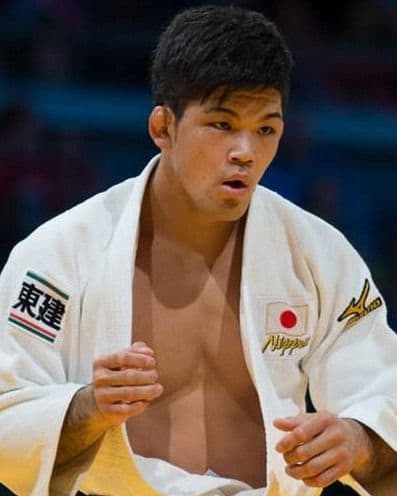
Ono scored a yuko with a double-sleeve uchi-mata, then won his first world title with a strong hane-goshi for ippon.
Zhitkeyev threw Kuwait's Al-Enezi with hane-goshi for ippon in his first match. He went on to win the silver medal.
Across the arts
The form in the steps, throwing them forward. The Kodokan also teaches breaking them toward the right front corner.
The counter: you block the spring and throw them. It is listed separately in the Kodokan and IJF technique lists.
Kyuzo Mifune's ushiro-guruma is a hip throw where you use your leg much as in hane-goshi.
In Shohei Ono's 2013 world final, a hane-goshi finished the match after an earlier double-sleeve uchi-mata had scored a yuko, which shows how it can work as a follow-up. Under IJF rules a leg hooked between theirs earns a shido unless you attack immediately with a throw, so commit to the spring.
History
Hane-goshi is one of the original forty throws of Jigoro Kano's Gokyo, in the third group. It also appears in the Danzan-ryu list of 20 techniques. The Kodokan teaches ura-nage as a counter to it. A counter-throw, hane-goshi-gaeshi, is on the Kodokan's list of newly accepted techniques.
In the rules
Drills
Hold a wall with your left hand, stand on a bent left leg and spring the right leg and hip up and back ten times, then switch sides. Keep the supporting knee bent.
Fit in with your right leg against the inside of their right leg and hold the loaded position for a count of two. Ten reps each side. Do not spring with force.
Throw at half speed with a trained partner who can breakfall, five reps each side, keeping the sleeve.
We teach it in Throws. A coach will fix the details you can't see yourself. Join now and book your first class for $20, paid online.
Related techniques
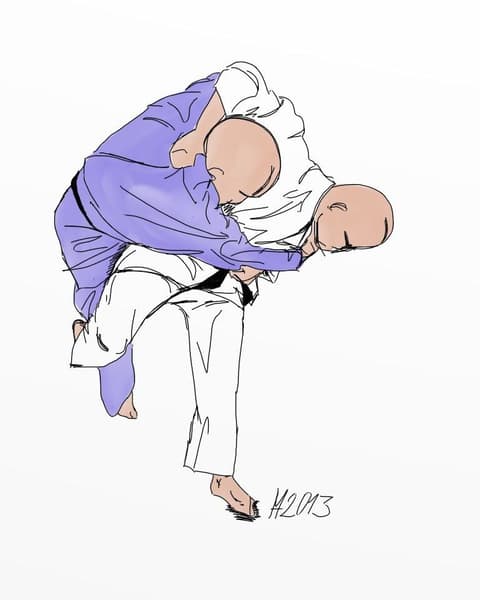
Harai-goshi is judo's sweeping hip throw. You pull your partner onto their toes, turn in with your hip against theirs and sweep your straight leg…

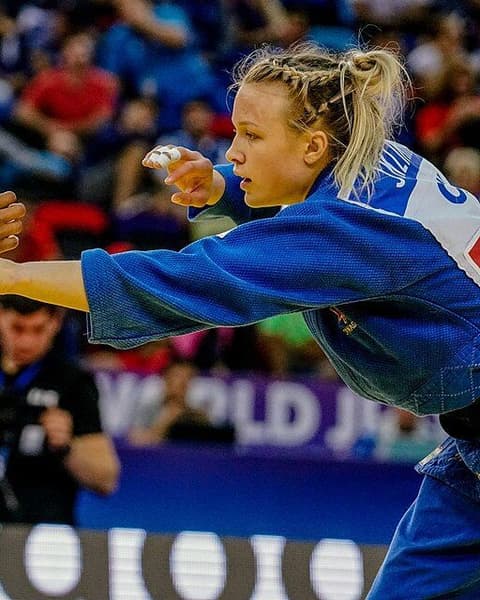


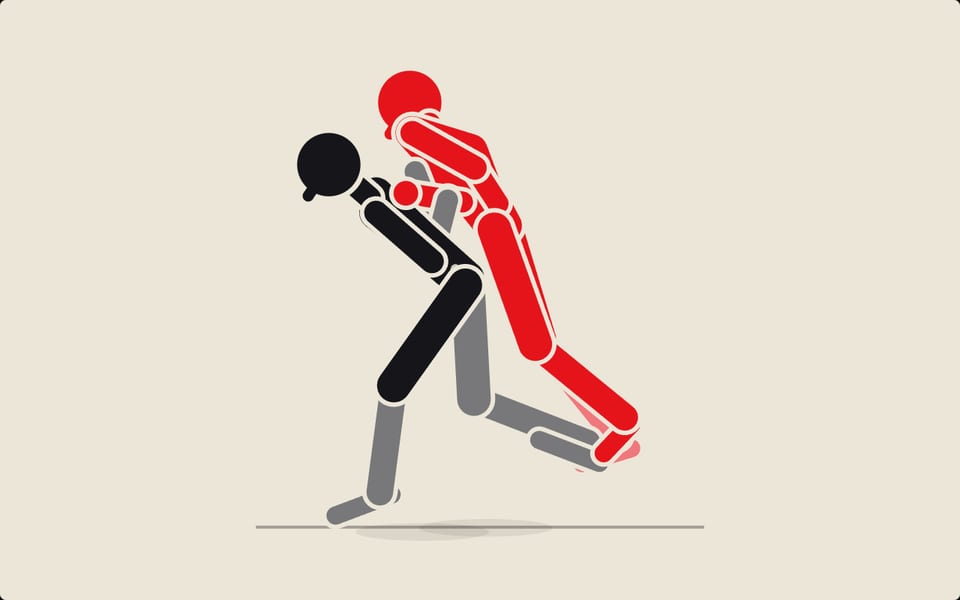
Uchi-mata is judo's inner thigh throw. You open your partner's feet, break their balance forward, turn in and swing your leg up between theirs,…



O-goshi is judo's major hip throw. You turn in with your hips lower than your partner's, wrap an arm around their back, load them onto your hips…



Ura-nage is judo's back throw. You wrap both arms round your partner from the side, lift them off the mat and fall backward, throwing them in a…
Kuzushi is breaking your partner's balance so they cannot resist your throw. In judo it is the first of three parts of every throw: kuzushi (break…
Ukemi is the art of falling safely. Judo teaches four breakfalls (rear, side, forward and the forward roll) that spread the impact over your arm,…