Also called Ring cutting, Cutting off the cage, Pressure footwork, Trapping
Cutting off the ring means using sideways footwork to take space away from a moving opponent until their back is on the ropes or in a corner. Instead of following them, you step across to block the way they want to go, so every exit gets smaller. It is the pressure fighter's core skill and the answer to boxers who hit and move.
Satori's coaches are filming every technique, full speed and slow motion from two angles. Until it's up, the diagram shows the movement step by step.
How to do it
Start: Your stance at the edge of punching range, facing an opponent who is circling away from you. Jab ready, guard high.
- 1Take the centre of the ring and stay between your opponent and the open space.
- 2When they circle, step sideways in the same direction instead of stepping straight at them.
- 3Keep them in front of you with short, balanced steps.
- 4Use a light jab or a feint to make them stop or change direction.
- 5Each time they change direction, step across again so their exit keeps shrinking.
- 6When their back reaches the ropes or a corner, stay about half a step away so they can't slip past or grab you.
- 7Now let your hands go to the body and head while your feet keep the exits closed.
- Don't follow; cut them off.
- Mirror their feet.
- Step across, not forward.
- Take the centre, then the corner.
- Light shots to herd, hard shots to finish.
- Following the opponent in a circle. Fix: step sideways to meet them, not toward where they were.
- Lunging with big steps. Fix: short, balanced steps that keep you able to punch.
- Walking in with your hands low or your head still. Fix: pressure behind a high guard and head movement.
- Crowding too close once they're trapped, so they spin you. Fix: stay half a step back and keep them in front.
- Loading up on power shots too early. Fix: use light shots to herd them, then commit when they're trapped.
Safety: Keep contact light in ring-cutting drills; the goal is footwork, not trading. Spar with headgear, and don't practise shoving partners into the ropes: pushing an opponent into the ropes is also a foul in competition.
When to use it
- Against a mover who wins by hitting and getting out.
- When you have the heavier hands or the better inside game.
- Late in a fight, when a tired opponent's legs slow down.
- Jab to the body to slow their legs.
- Feint to one side so they commit to the other, then step across to meet them.
- Throw a hook to the side they're escaping toward to stop them moving that way.
- Body shots once their back is on the ropes
- Uppercuts through a high guard
- A half-step back if they try to spin out
- Pivots and spins that turn you onto the ropes instead.
- Clinching to stop your attack and reset.
- Straight punches and check hooks as you step in.
- Don't back up in a straight line; move sideways and take angles before you reach the ropes.
- If you're trapped, block or roll, then side-step and turn them onto the ropes.
- Punch as they step in; a pressure fighter is most exposed while closing the distance.
The physics
Cutting off the ring is geometry: a boxer circling along the ropes travels the long way around, while you, nearer the middle, can step across the shorter line to meet him.
Instead of following his path, step to the side he is moving toward, mirroring his lateral steps with your lead foot, so each step takes away more of his escape room than it costs you. Keep your feet under you and your weight centred, because you need to punch the moment he stops or tries to change direction. The ring is small, so a few well-placed steps pin him against the ropes or in a corner, where he can no longer move away from your punches. Chase him in a straight line and you do the opposite: you follow behind his circle and he can step around you all night.
- Myth: pressure means walking forward. Straight-line pressure lets a mover circle out; stepping across his path is what shrinks the ring.
Masters and famous moments
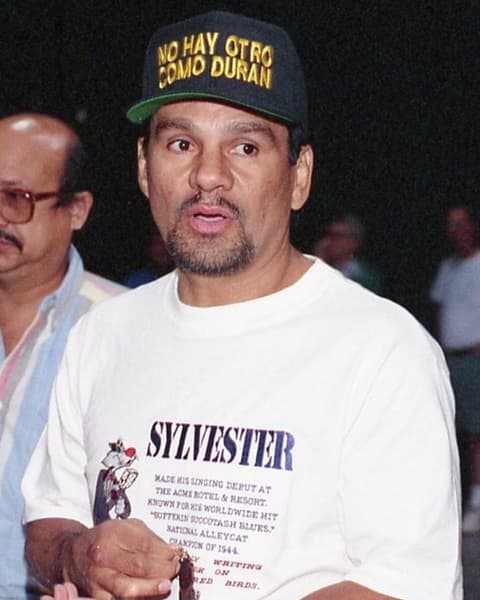
Durán kept forcing Leonard to the ropes and into his own corner, taking away the space the slicker champion needed, and won a close unanimous decision. It is the model of pressure that takes a mover's ring away.
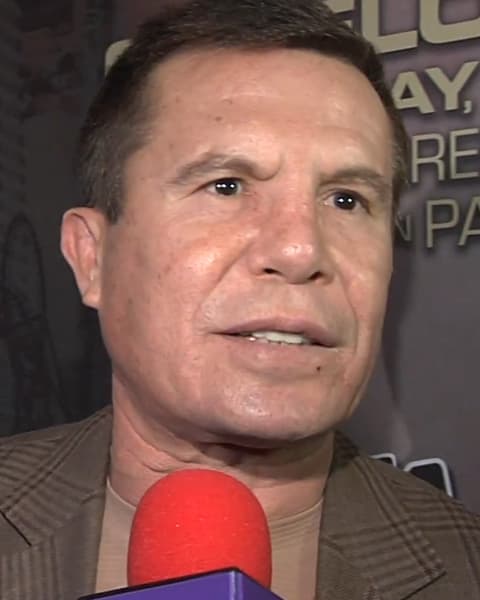
Taylor out-boxed Chávez for most of the fight and led on the scorecards, but as he tired he could no longer out-manoeuvre him. In the last round Chávez pinned him in a corner and dropped him, and the referee stopped it with two seconds left.

Saunders objected to an 18-foot ring before the fight, and it went ahead in a 22-foot ring with more room to move. Canelo still broke him down: an uppercut fractured Saunders's orbital bone and his corner stopped it after eight rounds.
Across the arts
A cage has no tight corners, so pressure fighters walk opponents onto the fence, where clinch work and takedowns take over.
Pressure fighters walk forward behind kicks and teeps to push opponents toward the ropes, where the clinch and knees are allowed.
Professional rings in North America run from 16 to 20 feet inside the ropes. A smaller ring is easier to cut off, which is why ring size is sometimes negotiated.
History
Pressure fighters have always tried to take space away from movers, and ring size has often decided how easy that is. For the 1927 'Long Count' rematch Gene Tunney fought Jack Dempsey in a 20-foot ring, which favoured Tunney's footwork; Dempsey liked to crowd opponents and usually fought in 16-foot rings. Muhammad Ali's camp won a 21-foot ring for the 1975 Thrilla in Manila so he could circle, and in 2021 Billy Joe Saunders objected to an 18-foot ring before facing Canelo Álvarez in a 22-foot one. Today North American commission rules allow 16 to 20 feet inside the ropes.
In the rules
Drills
Mark a square on the floor. One partner moves freely inside it; the other tries to trap them in a corner using only side steps and light touches with an open glove. Switch every minute.
Shadowbox while imagining an opponent circling left and right. Each time they 'move', step across to cut them off, then throw a combination toward an imaginary corner.
Once your partner is in a corner, keep them there for 30 seconds by mirroring their feet and stepping back when they try to squeeze out. No hard punches.
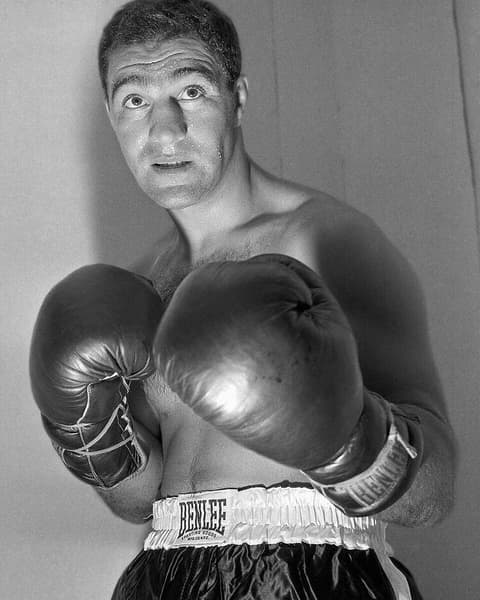
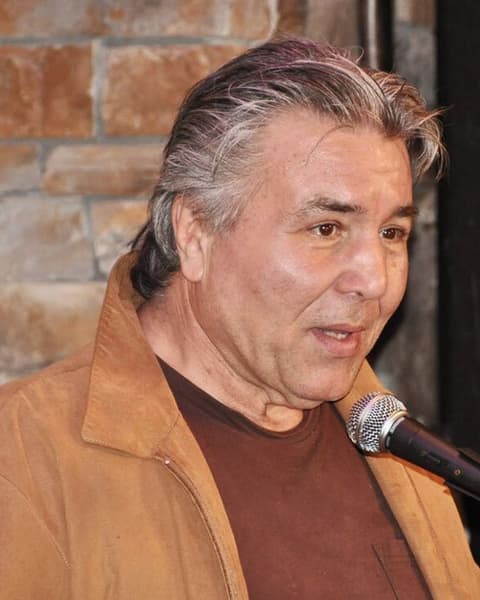
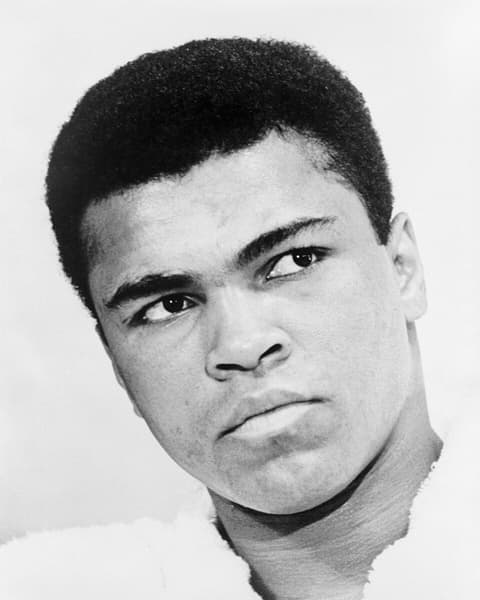
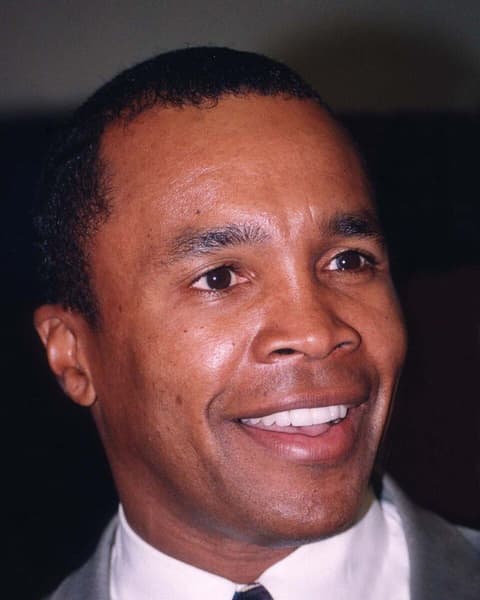
Legends known for it


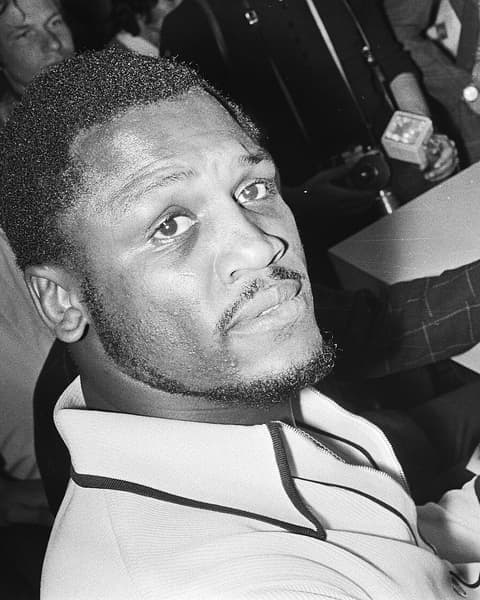

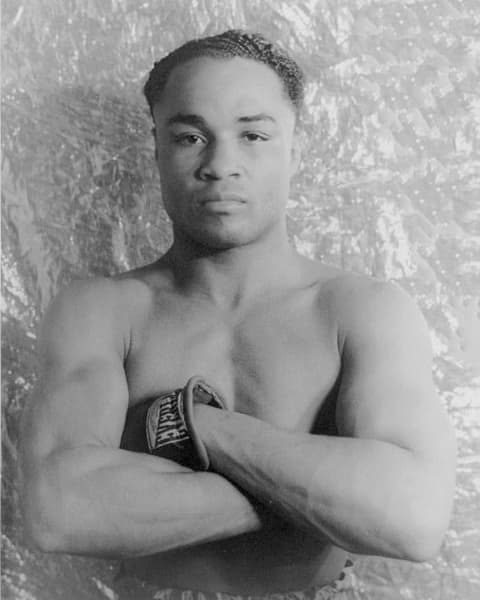





We teach it in Boxing. A coach will fix the details you can't see yourself. Join now and book your first class for $20, paid online.
Related techniques
Step and slide is boxing's basic way of moving: the foot nearest the direction you want to go steps first, pushed by the other foot, and the other…
A pivot turns your whole body around your lead foot, like a door on its hinge. The ball of the lead foot stays planted while the rear foot swings…


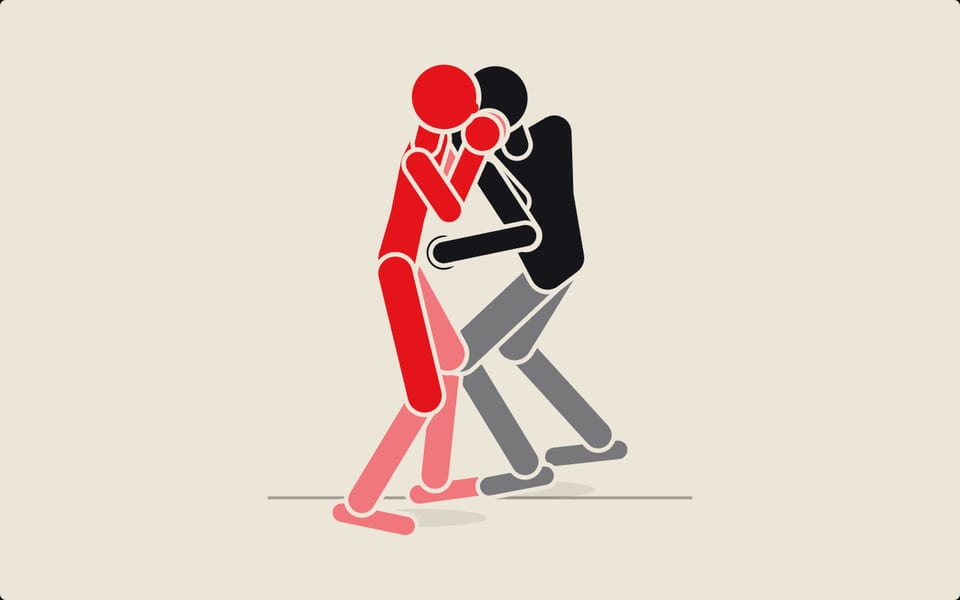
The body hook is a hook driven into the side of the ribcage. The classic version is the lead hook to the liver, which sits under the ribs on the…
Peek-a-boo is the tight, attacking defence taught by trainer Cus D'Amato: gloves held by the cheeks, elbows tucked to the body, and constant…

A boxing clinch ties up your opponent's arms at close range so neither of you can punch until the referee breaks it. Boxers use it to stop a…
An angle step moves you off your opponent's centre line so you can hit them while their punches point at empty space. It is a short step out to the…