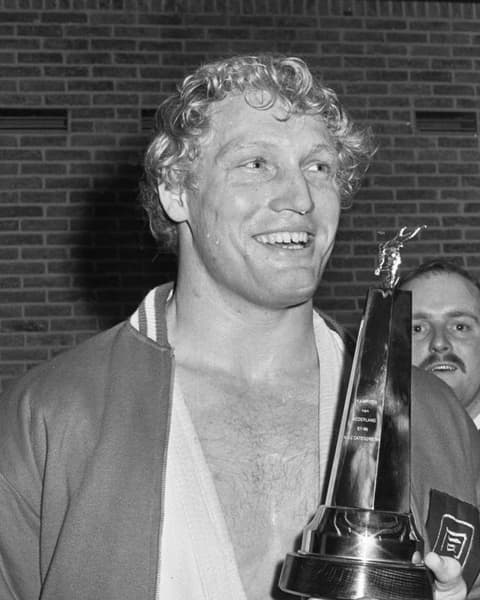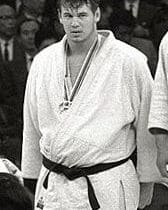
Doug Rogers
Canada's first Olympic judo medallist, trained by Masahiko Kimura
- Born
- January 26, 1941, Truro, Nova Scotia, Canada
- Died
- July 20, 2020 (aged 79)
- Nationality
 Canada
- Height
- 190 cm (6′3″)
- Style
- Kimura-trained heavyweight
- Weight
- +80 kg, +93 kg, Open
- Active
- 1958–1972
The medals
1964 Olympic silver, 1965 world bronze
The story
oug Rogers was born in Truro, Nova Scotia, joined the judo club at the Montreal YMCA at 15 and, at 19, passed up McGill University to train at the Kodokan in Tokyo, teaching English to pay his way. Training with Takushoku University's players, he met their coach, Masahiko Kimura. At the 1964 Tokyo Olympics, the first to include judo, he won his pool, beat the Soviet Parnaoz Chikviladze in the semifinal and lost the heavyweight final to his old training partner Isao Inokuma on a narrow decision, winning Canada's first Olympic judo medal. He then trained full-time under Kimura, won world bronze in 1965 and was named outstanding fighter at the All-Japan University Championships. Back home he became an airline pilot, won Pan American Games gold in 1967 and carried Canada's flag in Munich in 1972.
Tap a technique with an arrow to learn how it works.
- Olympic silver medallist, heavyweight (1964), Canada's first Olympic judo medal
- World bronze medallist, heavyweight (1965)
- Pan American Games champion, open (1967)
- Pan American champion (1965)
- Canadian champion ×5
- Canadian Olympic Hall of Fame (1973)
- BC Sports Hall of Fame (1976)
- Canada's Sports Hall of Fame (1977)
- Canada's flag bearer, 1972 Munich Olympics
- 7th dan (2017)
Defining matches
- 1964WINvs Parnaoz Chikviladze (Tokyo Olympic semifinal, decision)
- 1964LOSSvs Isao Inokuma (Tokyo Olympic heavyweight final, narrow decision)
- 1965WINAll-Japan University Championships (Takushoku team; named outstanding fighter)
- 1967LOSSvs Allen Coage (Pan American Games heavyweight final, Winnipeg)
- 1967WINPan American Games open category (Winnipeg)
Rogers trained under Masahiko Kimura, who demanded top fitness and drilled simple, strong techniques. Pick one or two throws and drill them until they work against resisting heavier partners, then do the conditioning to keep attacking with them late in a long match.