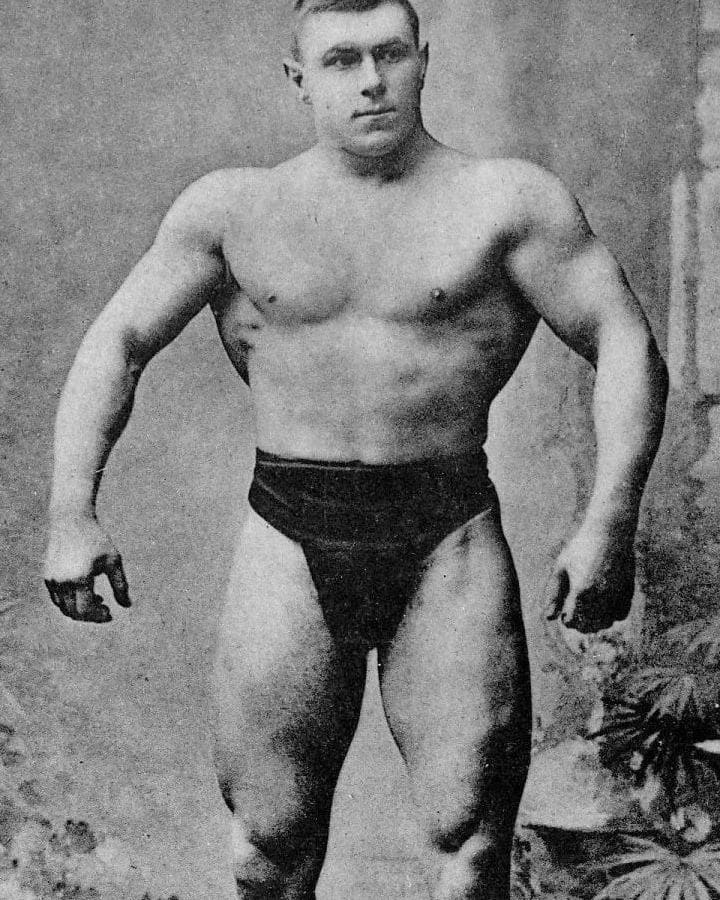
George Hackenschmidt
The strongman recognised as wrestling's first world champion
- Born
- August 1, 1877, Dorpat (now Tartu), Estonia, Russian Empire
- Died
- February 19, 1968 (aged 90)
- Nationality
 Estonia
- Height
- 175 cm (5′9″)
- Style
- Strongman Greco-Roman power
- Weight
- Heavyweight, Openweight
- Active
- 1898–1911
The story
eorge Hackenschmidt was born in Dorpat, now Tartu in Estonia and then part of the Russian Empire, and was an all-round athlete whose feats of strength made him famous before his wrestling did. In 1898 he won the European Greco-Roman championship in Vienna and took bronze at the world weightlifting championships, and in 1901 he won the World Championship of Wrestling in Paris. Billed as 'The Russian Lion', he beat American champion Tom Jenkins in London in 1904 and again in New York in 1905, and he is recognised as professional wrestling's first world heavyweight champion. His reign ended against Frank Gotch in Chicago in 1908, and Gotch beat him again in 1911. Settling in London, he wrote widely on physical culture and philosophy, and the hack squat and wrestling's bear hug are credited to him.
Tap a technique with an arrow to learn how it works.
- European Greco-Roman champion (1898, Vienna, openweight)
- World Championship of Wrestling winner (Paris, 1901)
- World heavyweight wrestling champion (until 1908)
- Bronze, 1898 World Weightlifting Championships
- Wrestling Observer Newsletter Hall of Fame (1996)
- Professional Wrestling Hall of Fame (2002)
- George Tragos/Lou Thesz Professional Wrestling Hall of Fame (2003)
- WWE Hall of Fame (2016)
Defining matches
- 1904WINvs Ahmed Madrali (about two minutes, Olympia London)
- 1904WINvs Tom Jenkins (two straight falls, Greco-Roman rules, Royal Albert Hall)
- 1905WINvs Tom Jenkins (catch rules, Madison Square Garden)
- 1908LOSSvs Frank Gotch (quit after about two hours, Chicago)
- 1911LOSSvs Frank Gotch (straight falls, Comiskey Park)
Borrow Hackenschmidt's base for upper-body wrestling: build leg and neck strength with hack squats and bridging, then use a tight body lock with your head on the chest side to off-balance the opponent and throw from the clinch.